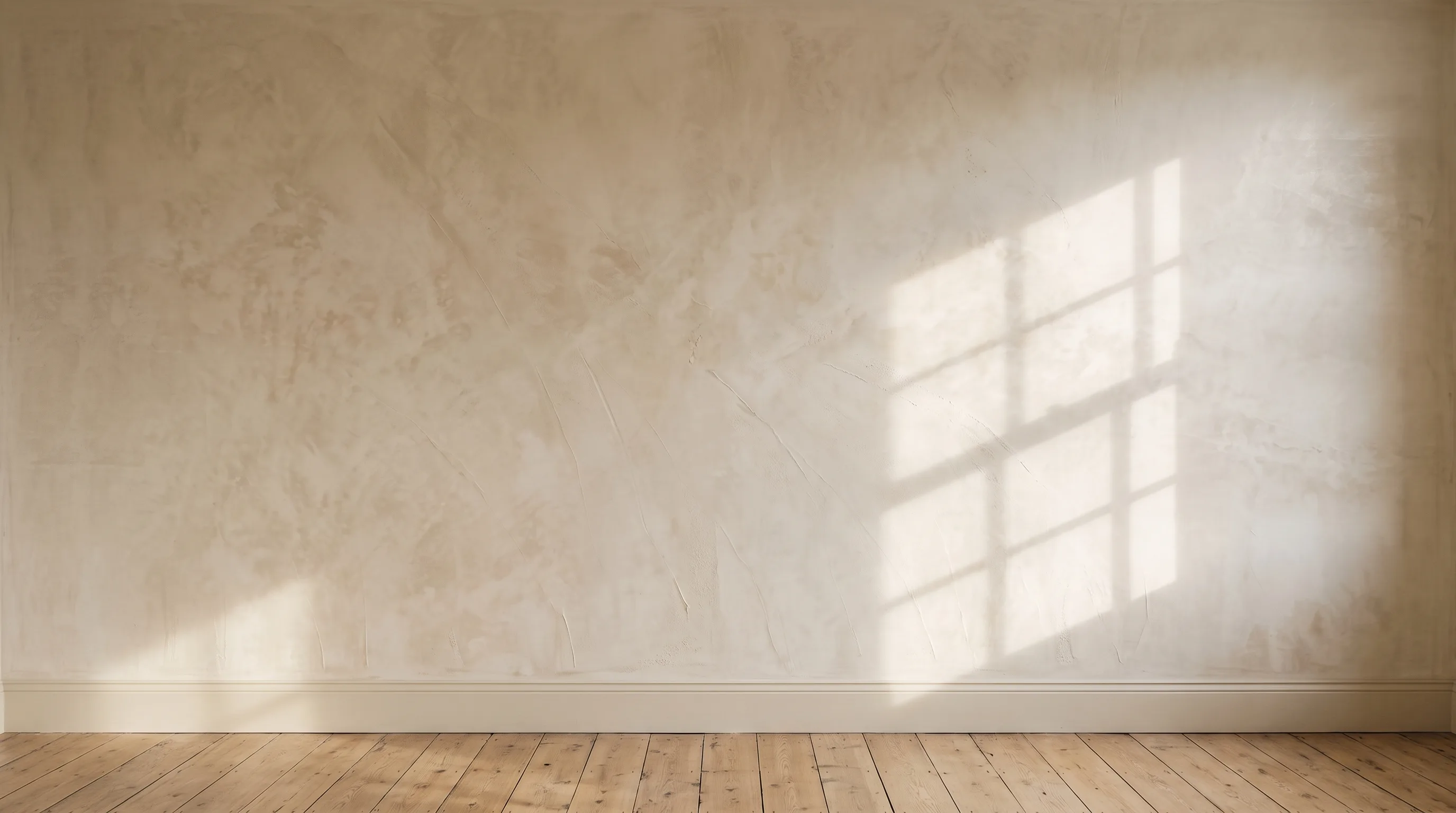
Venetian plastering in Chesterfield
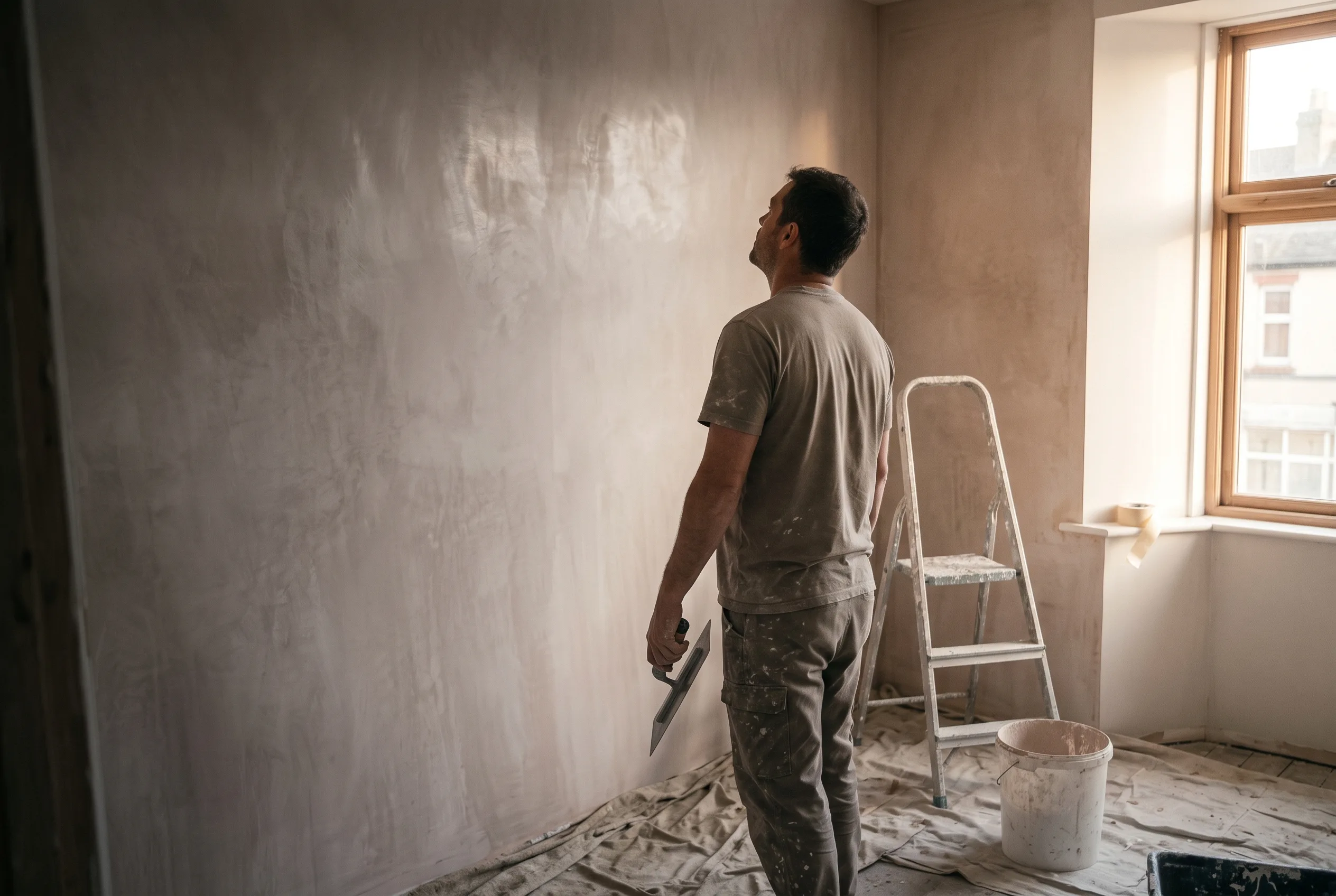
We carry out Venetian plastering in Chesterfield and across north Derbyshire, building up fine layers of plaster by hand and burnishing them until light moves across the wall.
From a single feature wall to a bathroom or a restaurant interior, every finish is chosen and developed around the room it is going into.
Considered surfaces, prepared and applied by hand
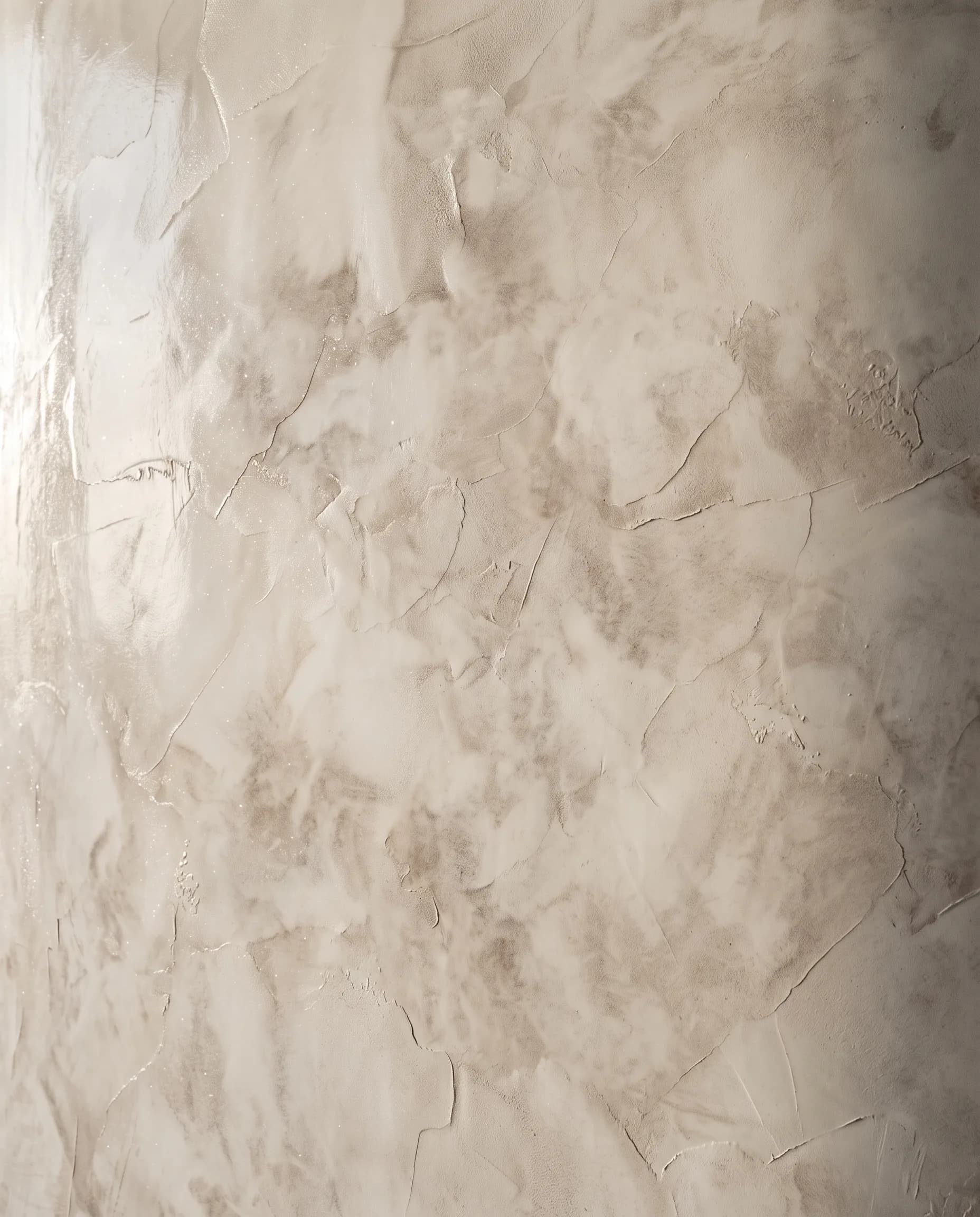
Traditional Venetian plaster is lime and finely ground marble, laid on in thin coats with a steel trowel and then burnished. Each coat is slightly translucent, so the colour you see has depth to it, and the burnishing gives a soft sheen that shifts as you walk past. Polished plaster is the wider family: some finishes are matt and chalky, some stone-like, some close to glass.
No two walls come out the same, and that is the point. The movement comes from the trowel, not from a printed pattern, which is why a good finish is developed around the room, the light and how the space is used, rather than picked from a brochure.
The walls people ask us about most
Most enquiries start with one surface. These are the ones that come up most, and what to think about for each.
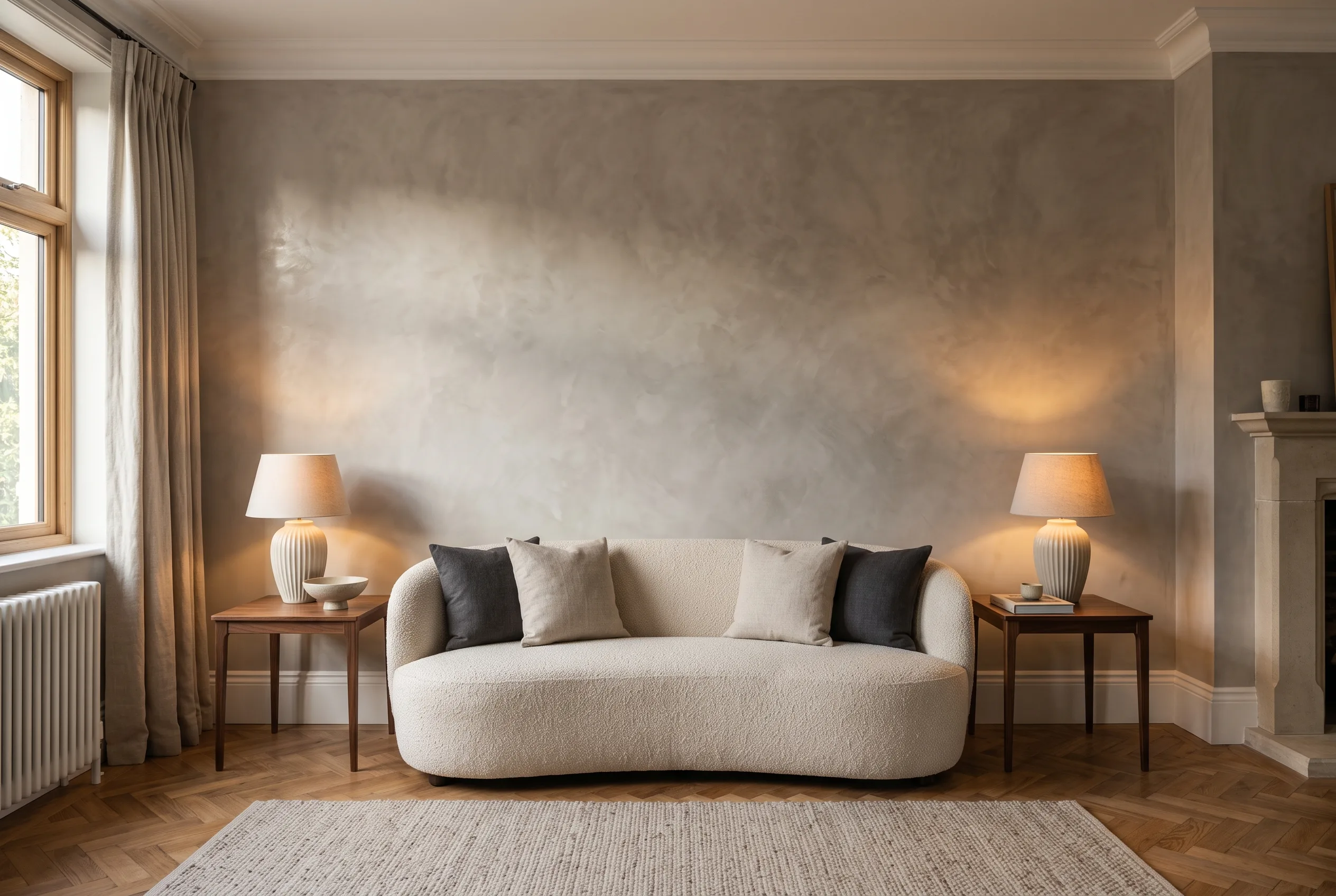
Feature walls
One wall with the depth and sheen paint cannot give.
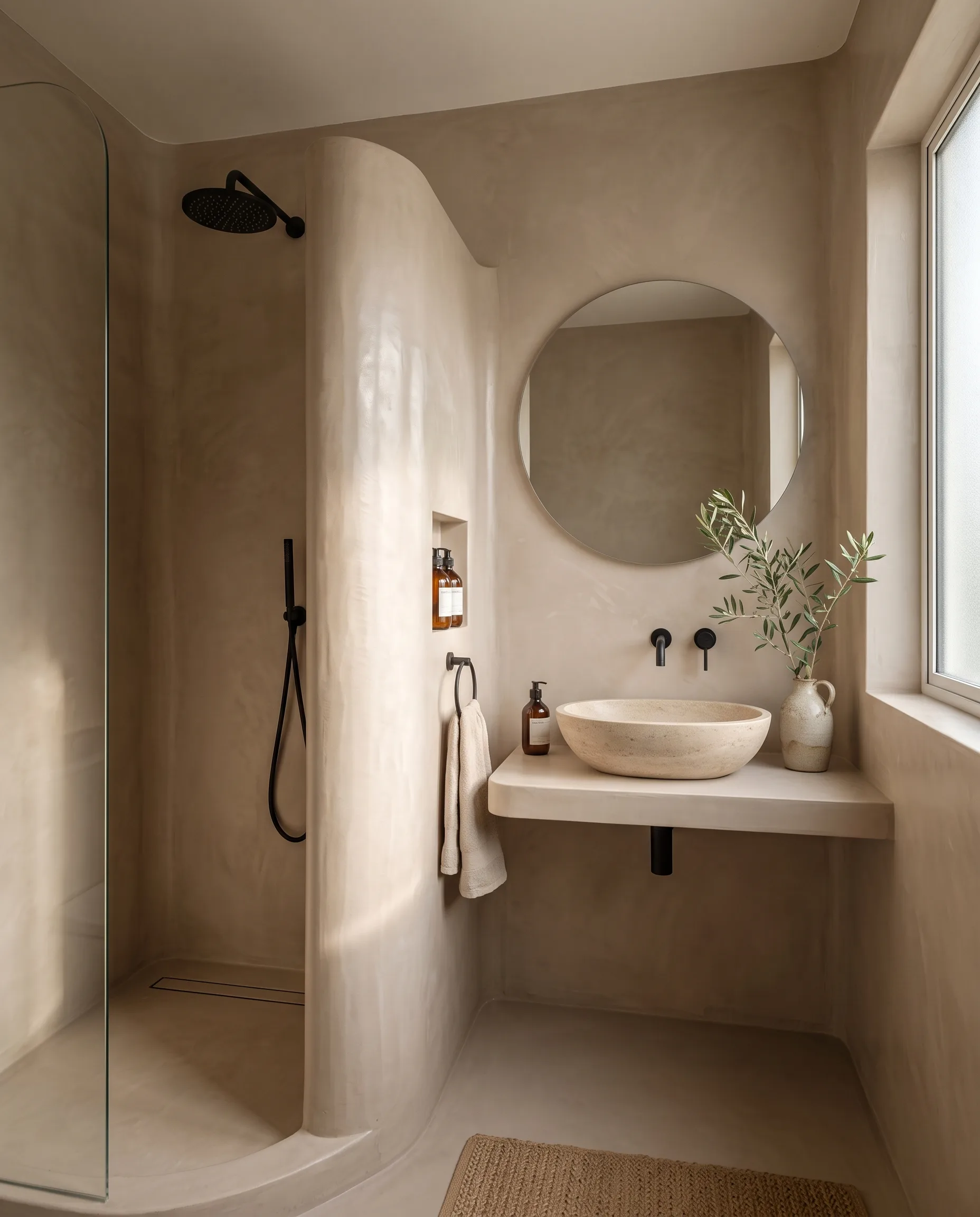
Bathrooms and wet rooms
Which finishes survive a shower, and what goes behind them.
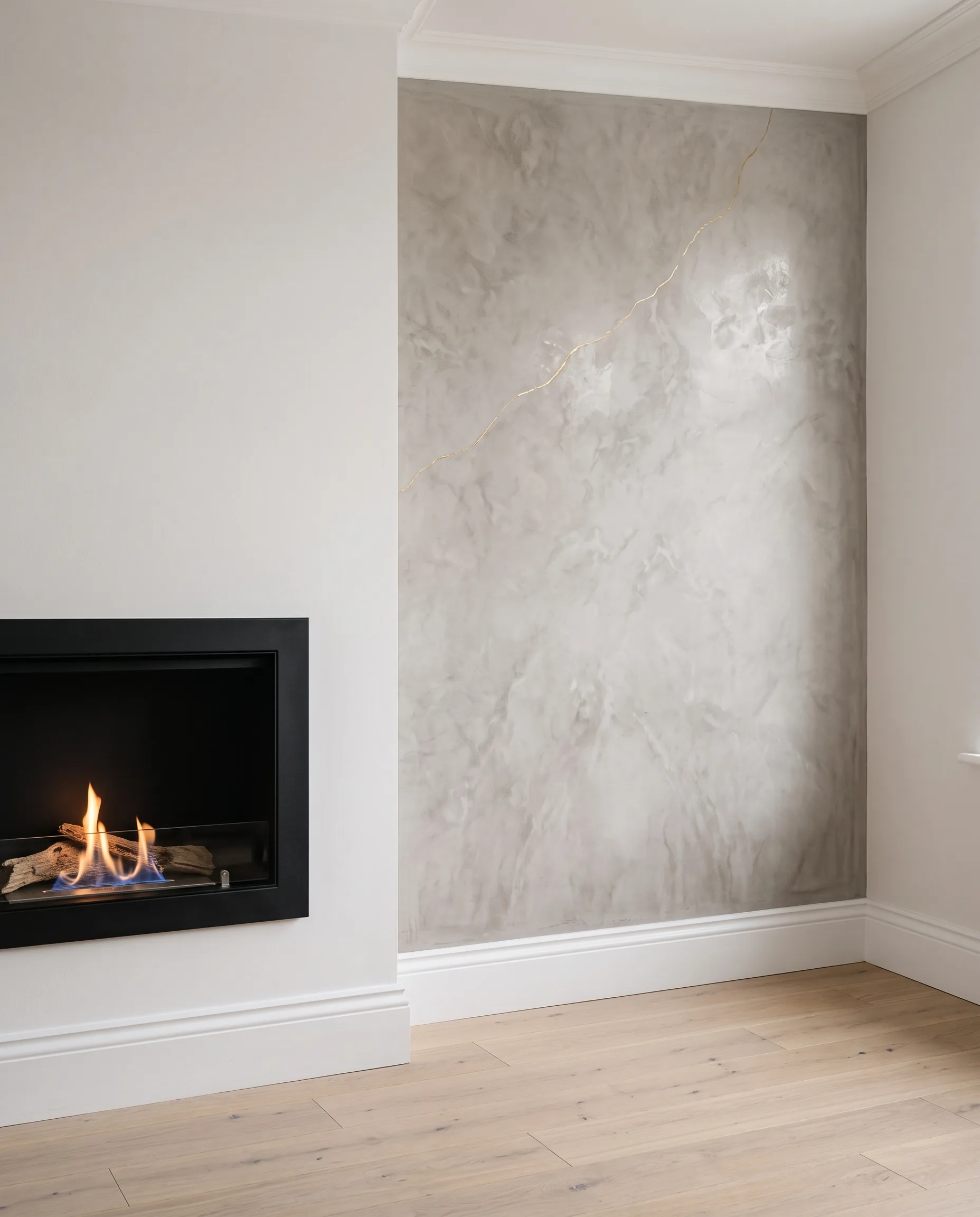
Fireplaces and chimney breasts
The wall the room is built around, with heat taken seriously.
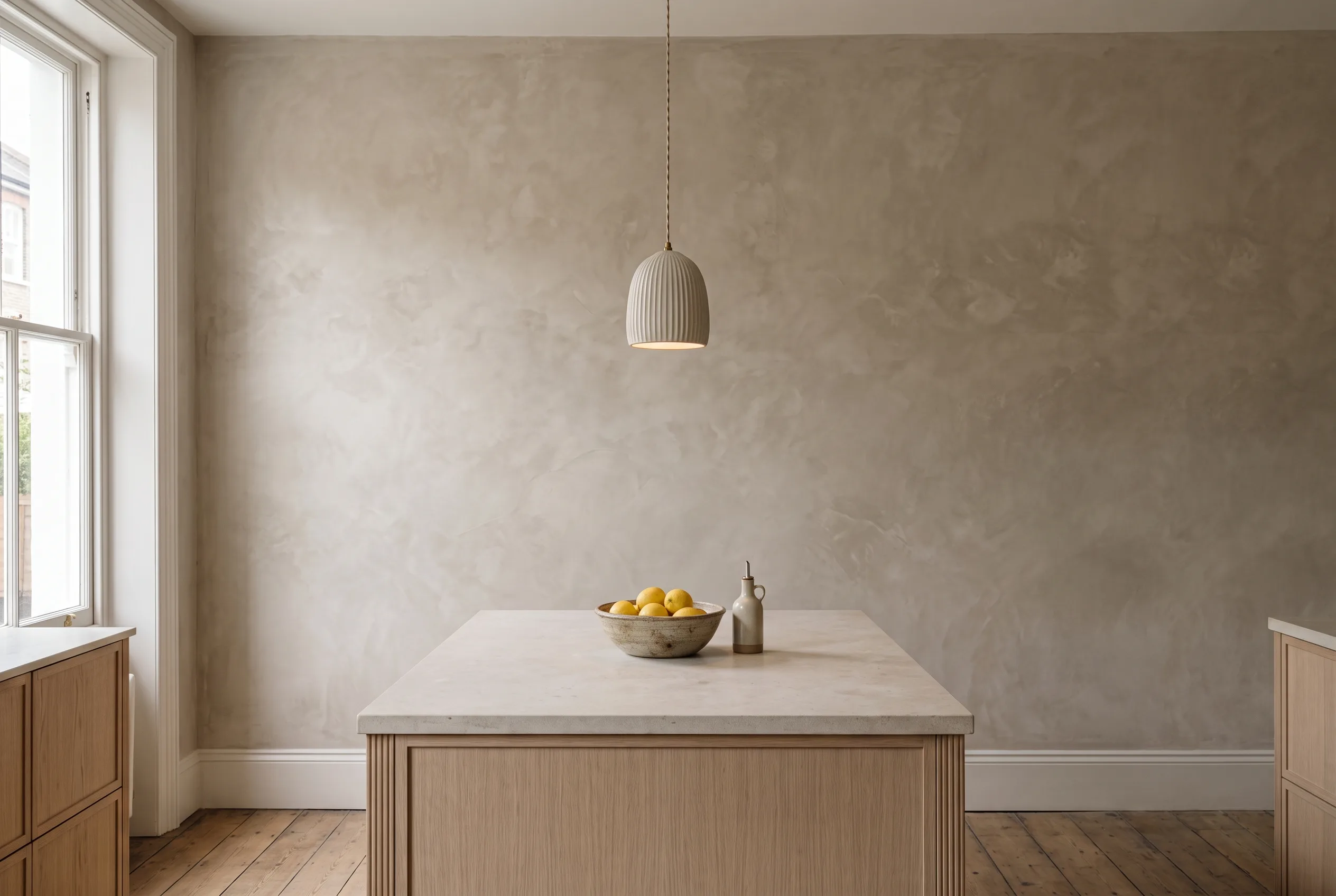
Kitchens
Island walls and hoods that soften the room and wipe clean.
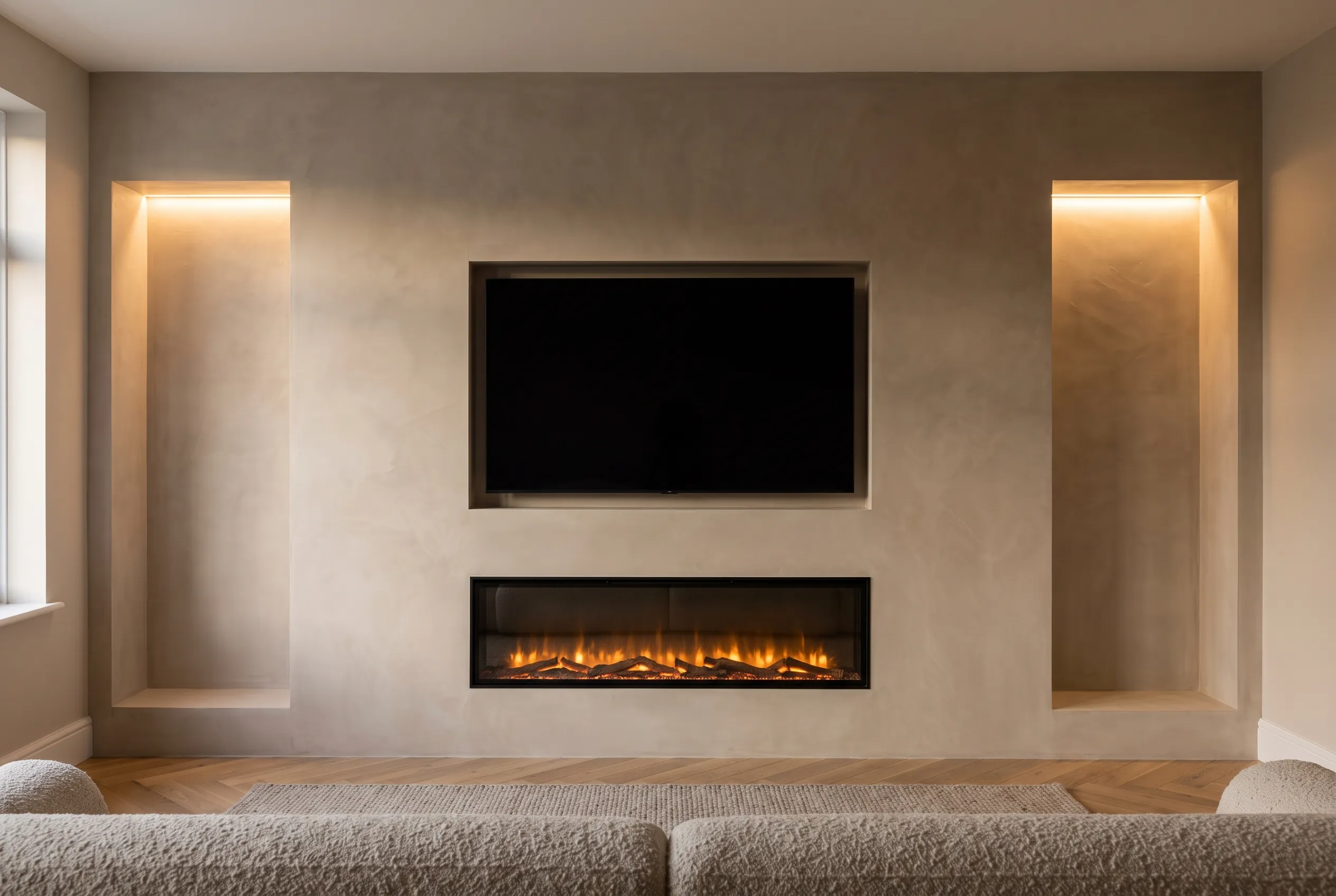
Media walls
A framed TV and fire wall that looks built in.
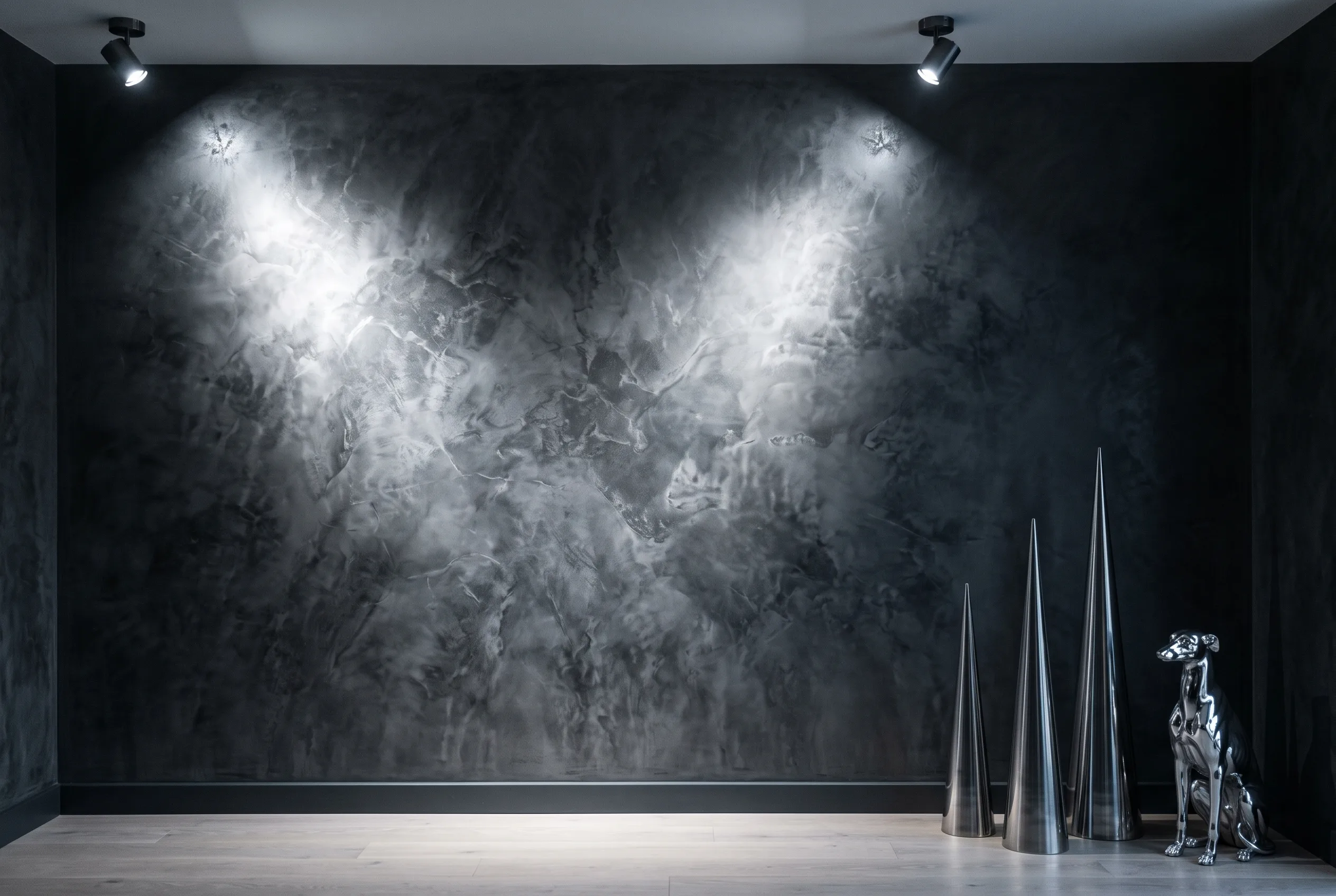
Commercial interiors
Restaurants, bars, hotels, salons and offices, planned around your programme.
Finishes from high polish to chalk
Venetian plaster is the best known, but it is not always the right choice. A stone-built cottage, a steamy bathroom and a bright modern kitchen each suit something different.
Venetian plaster
Lime and marble, burnished to a soft, moving sheen.
Marmorino
Lime and marble, matt to satin, with a calm stone character.
Tadelakt
Moroccan lime for showers and wet rooms, with no joints.
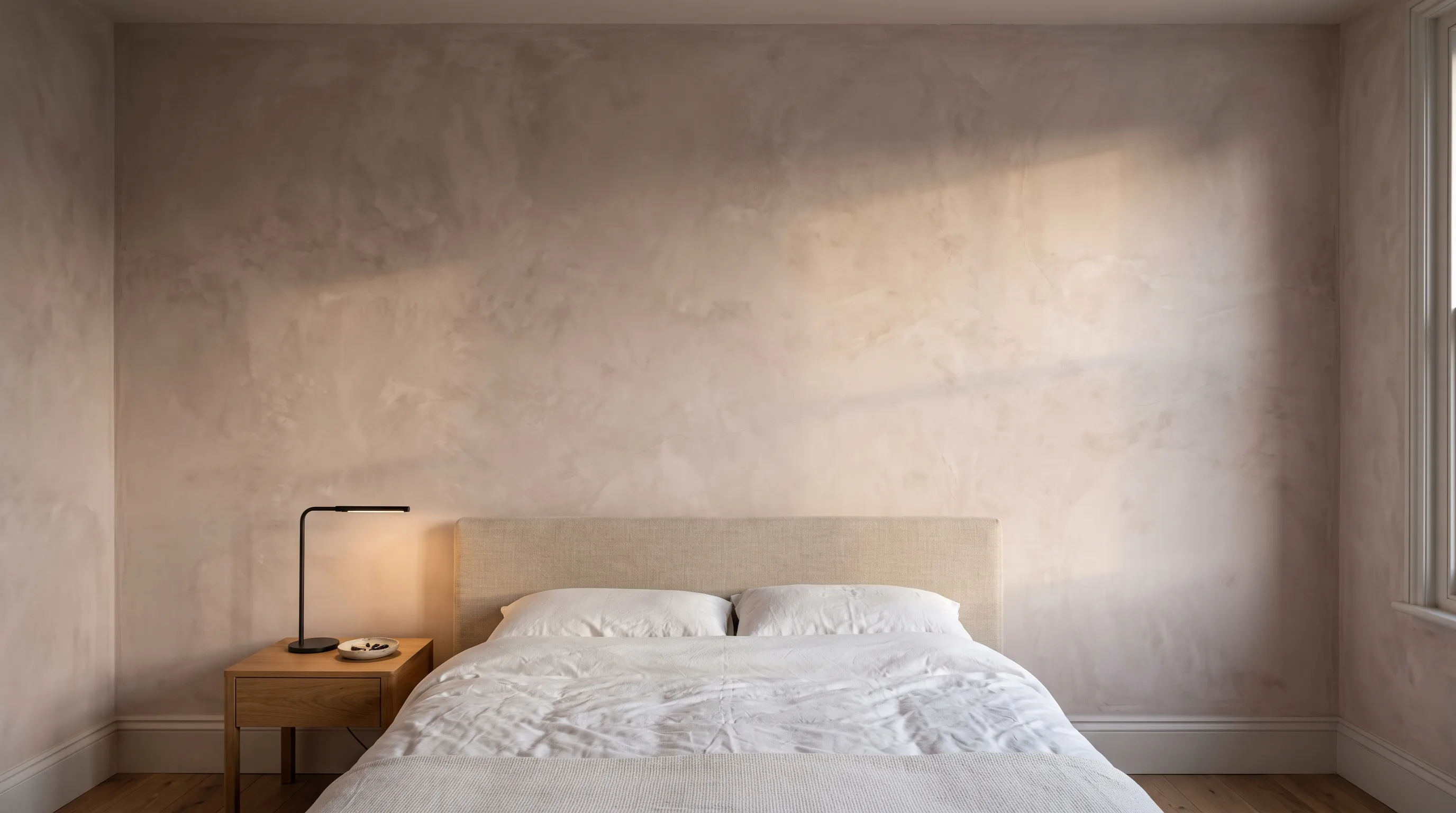
Limewash
Soft, cloudy and chalky, and kind to old walls.
Stone-effect plaster
Limestone and travertine character, applied by hand.
Suitability depends on the material system, the surface underneath, the room and how it will be used. We advise on the right finish for each space, and prepare every wall properly before decorative work begins.
From first conversation to finished wall
A clear, unhurried process. Hand-applied finishes carry natural variation, so a finished wall has more life than a small sample, rather than being an exact enlarged copy of it.
Share your ideas
Send photographs, rough measurements and any pictures of finishes you like.
Discuss the finish
We talk through which finishes and colours suit the room, and which do not.
Look at the wall
Where it matters, we assess the surface and the conditions in person.
A sample of your finish
Once the finish and colour are narrowed down, a sample can be arranged, with any cost agreed first.
Agree the finish
You approve the colour and texture, and we confirm the plan and the dates.
Prepare the surface
The wall is made sound, flat and ready. This is where a lasting result begins.
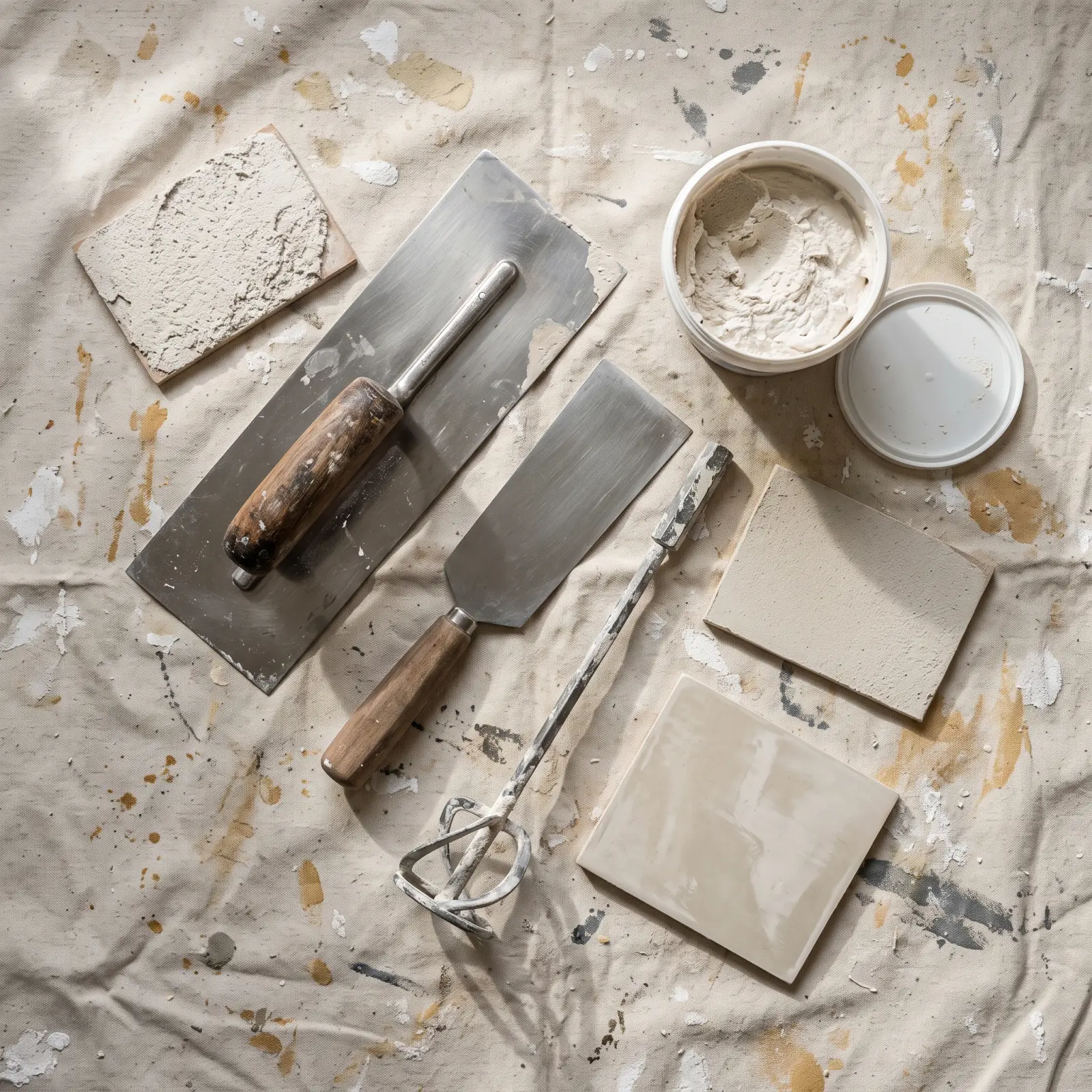
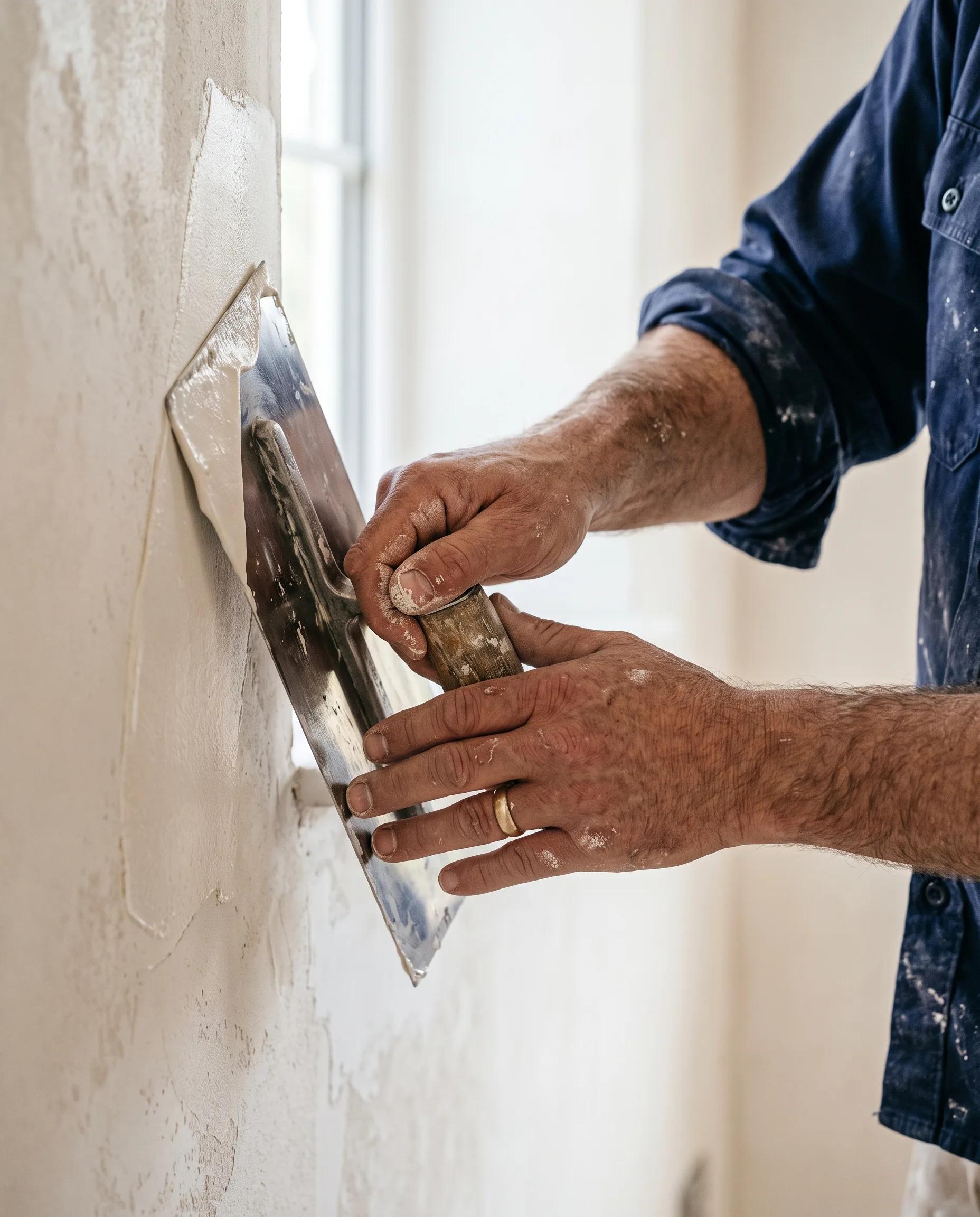
Apply by hand
The finish is built up coat by coat, each one left to dry before the next.
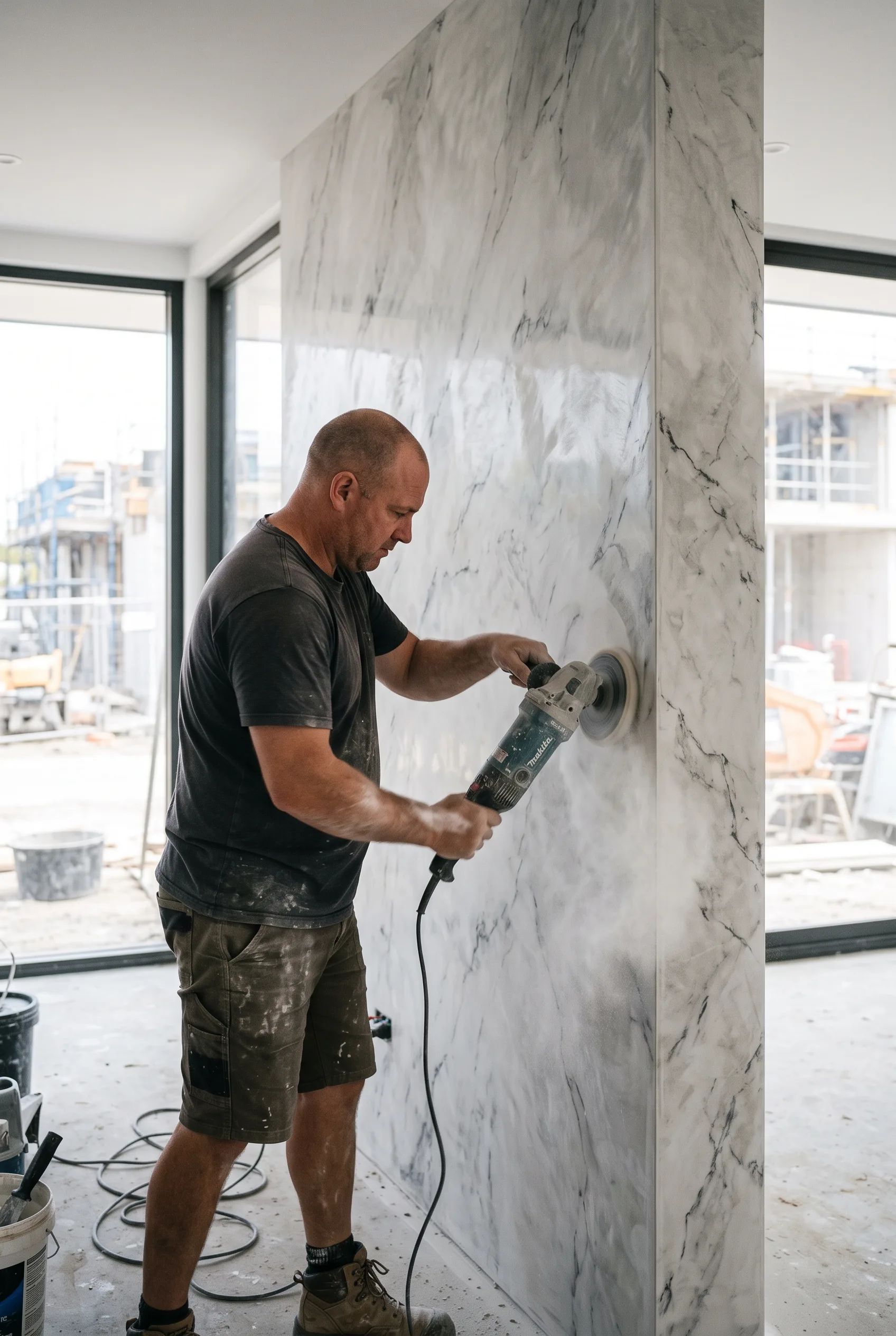
Finish and care
The surface is burnished or sealed as the finish requires, and you get clear care guidance.
The finish is the final layer. The result begins with the wall beneath.
Behind the work is 25 years of professional plastering experience. Decorative plaster may be the last thing you see, but a calm, even and lasting finish depends on proper preparation and a real understanding of the surface underneath.
That groundwork is where decorative work is won or lost. A polished finish on a wall that is uneven, damp or moving will show every fault, so the wall is put right first.
Chesterfield and north Derbyshire
We work across Chesterfield and north Derbyshire, out to Matlock, Bakewell and the Hope Valley. Larger or more specialist projects are considered further afield.
Venetian plaster across Derbyshire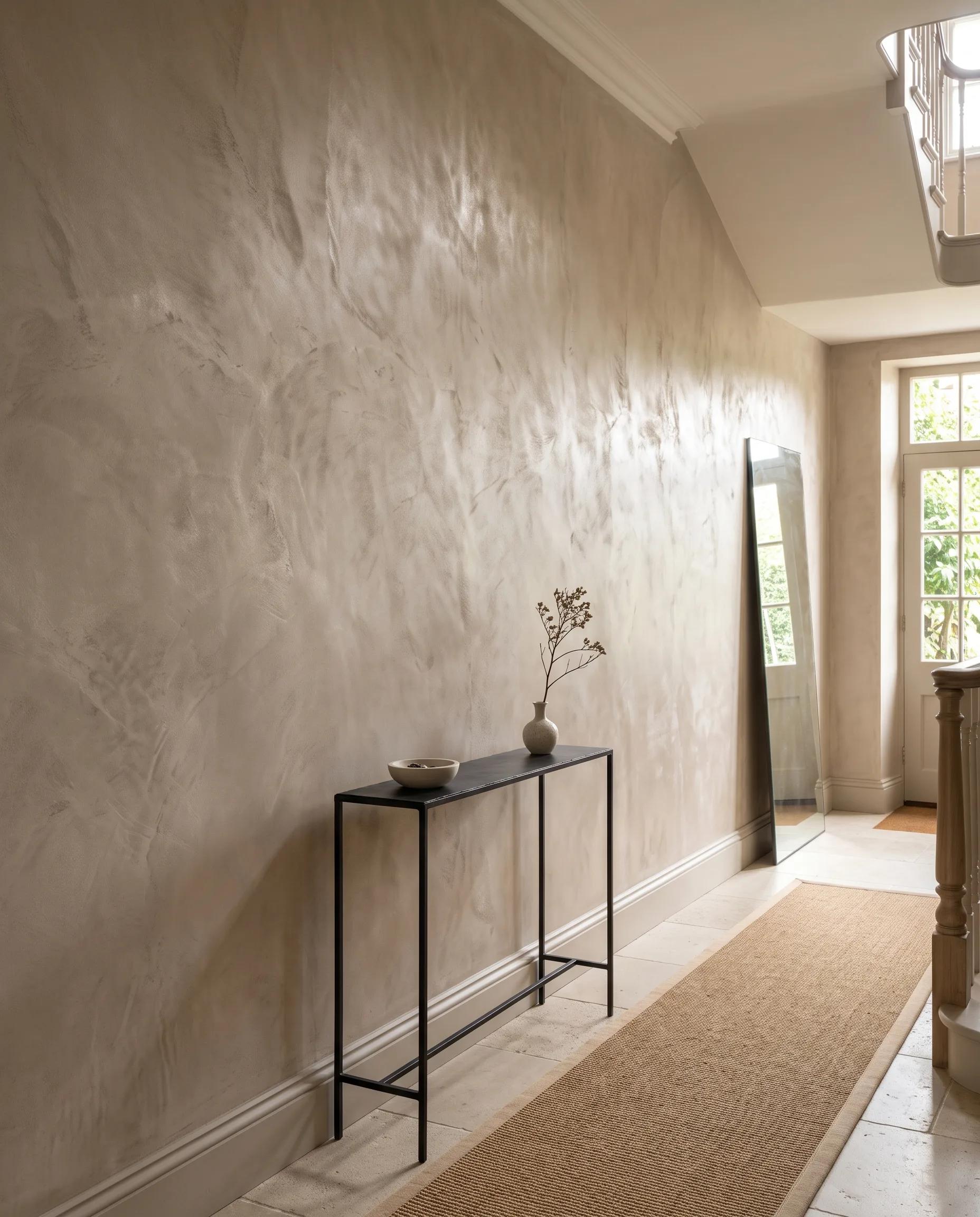
Common questions
What is the difference between Venetian plaster and polished plaster?
Polished plaster is the umbrella term for decorative plasters that are trowelled smooth and burnished or sealed. Venetian plaster is the best-known kind: traditionally lime and marble dust, built up in thin coats to a soft sheen. Marmorino, tadelakt and Grassello are other polished plasters, each with its own look and uses.
Can Venetian plaster go over my existing walls?
Usually, if the wall is sound, flat and dry. Old plaster that is cracked, hollow or damp has to be put right first, and painted walls need checking, because some paints stop the finish bonding properly. This is assessed before any finish is agreed.
How long does a Venetian plaster wall last?
A well-applied finish on a sound wall is a long-term surface, not a redecoration you repeat every few years. How long it stays looking right depends on the wall underneath, how the room is used and how it is cleaned. Lime-based finishes can often be repaired locally if they are marked.
Do you only work in Chesterfield?
Chesterfield and north Derbyshire are the core of the area, including Dronfield, Matlock, Bakewell and the Hope Valley. Larger or more specialist projects further out are considered case by case.

Start with a conversation about your space
Tell us about the room, the surface and the look you are after. Photographs and rough measurements are enough to begin, and we will talk you through suitable finishes and the next steps.