Polished plaster for bathrooms and wet rooms
Polished plaster in a bathroom gives you walls without grout lines, and the right finish can go inside a shower, but not every polished plaster can.
This page sets out which finishes suit which part of a bathroom, and what has to be behind them, so you can choose with your eyes open.
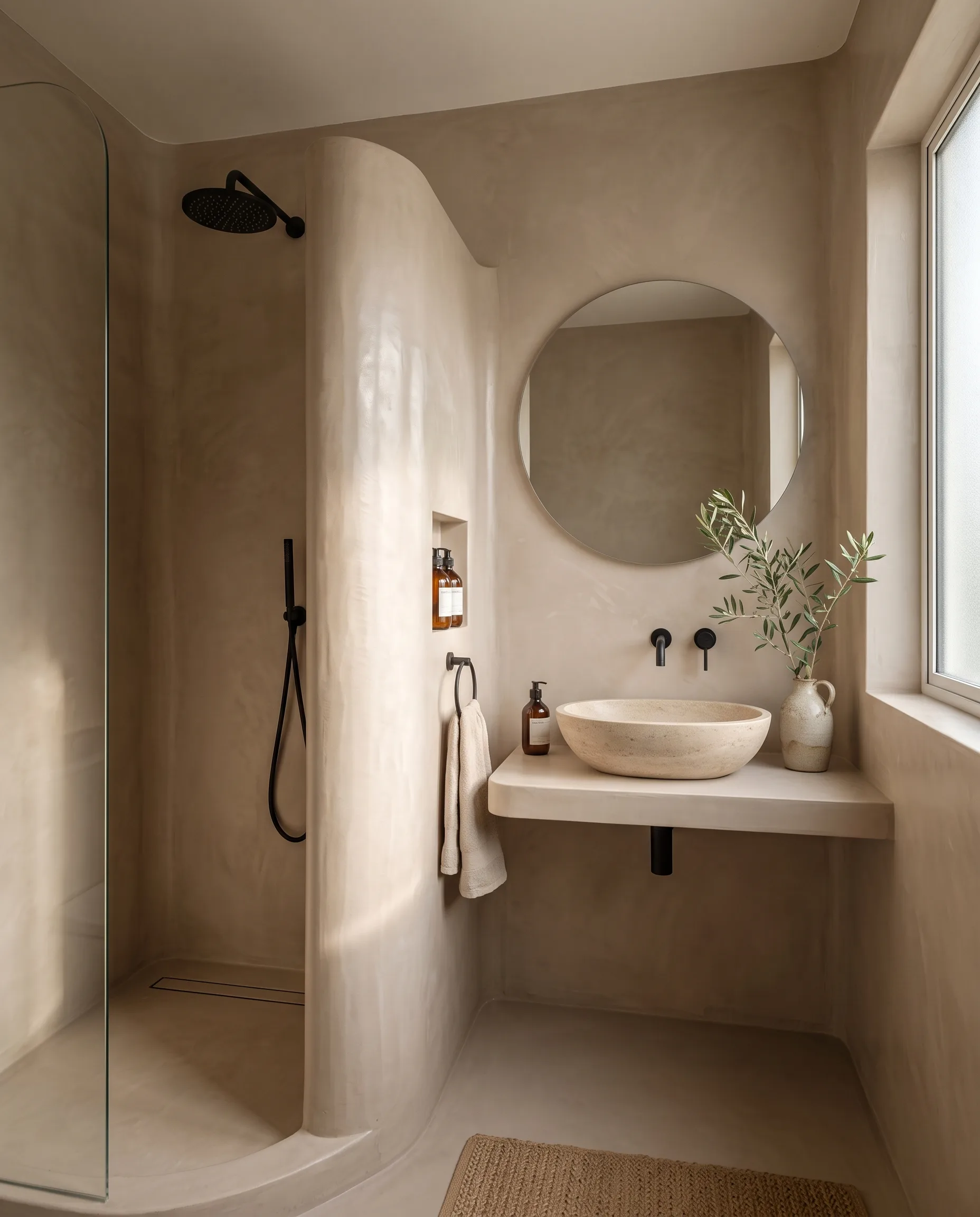
Bathroom finishes compared
The question is not whether a finish is waterproof, because the plaster is never the thing keeping water out of the wall. It is how well the surface copes with water, and how much looking after it needs.
| Finish | Inside a shower | Rest of the bathroom | Upkeep |
|---|---|---|---|
| Tadelakt | Yes. The traditional finish for Moroccan bathhouses, when properly applied and maintained | Yes | Re-treated with soap or wax from time to time. No acidic cleaners |
| Sealed Venetian plaster | Depends on the product and sealer. Often kept to splash areas | Yes | Wipe clean. Sealer may need renewing |
| Tiles | Yes | Yes | Grout lines need cleaning and occasional regrouting |
| Microcement | Yes, with the right system | Yes | A different trade. Not one we offer |
Is polished plaster waterproof?
No plaster should be described as waterproof, polished plaster included. What matters is which finish goes where, and what protects the wall behind it.
Tadelakt, properly applied and maintained, is highly water-resistant and is the finish used inside showers. Venetian plaster in a bathroom, once sealed, copes well with steam and splashes away from direct water. Anywhere water lands every day, the job of keeping it out of the wall belongs to the tanking underneath, not to the finish on top.
What goes behind the finish
In a shower or wet room, the waterproofing is a separate layer under the finish: a suitable backing board and a tanking system, installed and detailed properly at corners, the floor and around the tray or drain. Polished plaster, tadelakt included, goes on top of that. Leaving it out is how water gets into walls.
Outside the shower, where the walls only see splashes and steam, the demands are much lower and more finishes are suitable.
Ventilation matters as much as the finish
A bathroom that stays damp for hours after every shower is hard on any finish. A working extractor fan, sized for the room, protects the walls and the ceiling, and it is worth checking before a new finish goes on.
Basins, baths and curves
One advantage of tadelakt is that it can follow a curve or wrap a built-in bath, shelf or basin surround in one continuous surface. Shapes like these are designed at the start, because they are built before the finish goes on.
Common questions
Can Venetian plaster go on bathroom walls?
Yes, once sealed, on walls that see steam and the odd splash. Inside a shower, tadelakt is the usual choice instead.
Can I have tadelakt on the shower floor?
Floors take more wear and standing water than walls, and suitability depends on the product and system. It is discussed case by case rather than promised.
Will it go mouldy?
Lime is naturally alkaline, which discourages mould, but a bathroom that stays damp will grow mould on almost any surface. Good ventilation is the real answer.

Start with a conversation about your space
Tell us about the room, the surface and the look you are after. Rough measurements are enough to begin, and we will talk you through suitable finishes and the next steps.