Venetian plaster feature walls
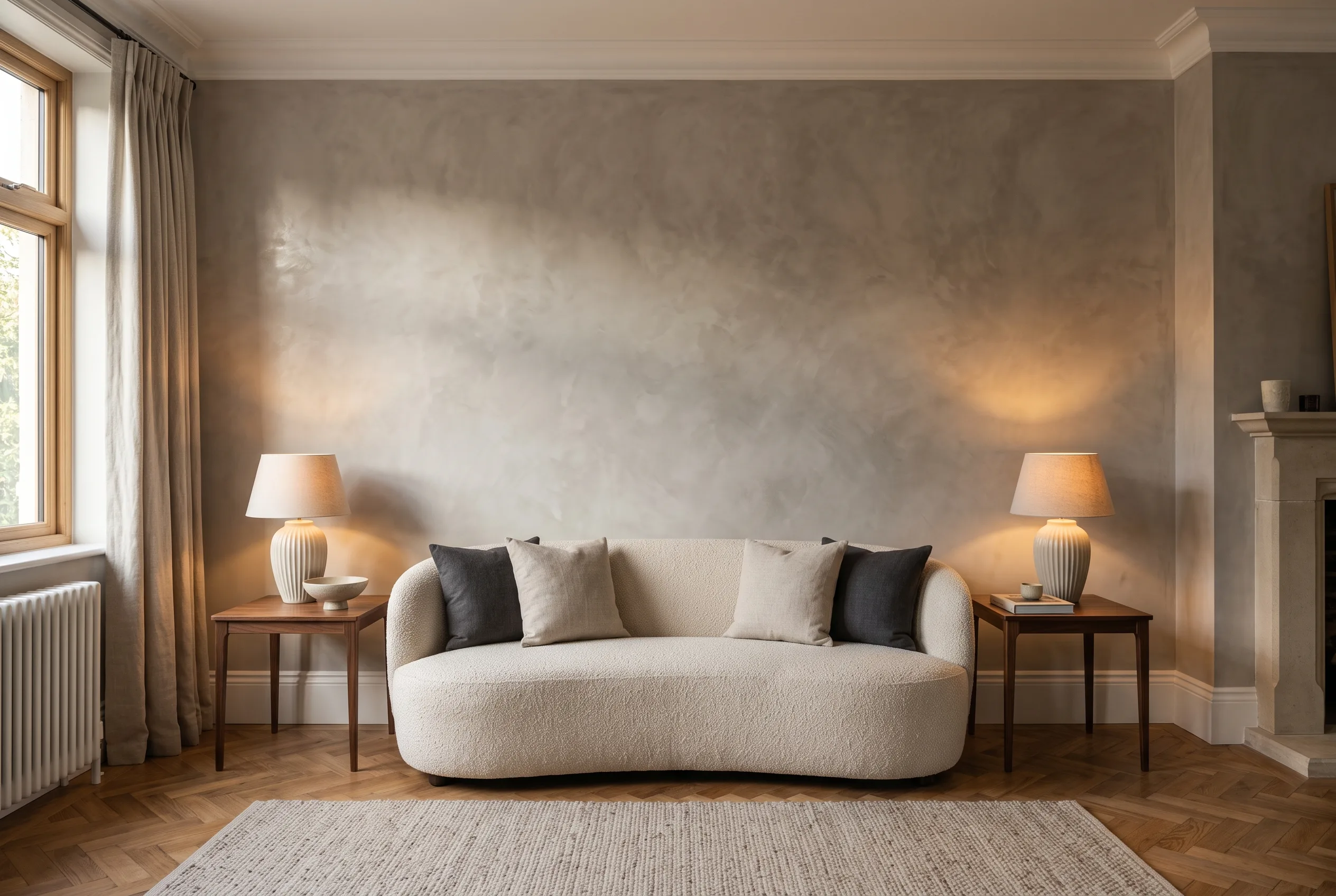
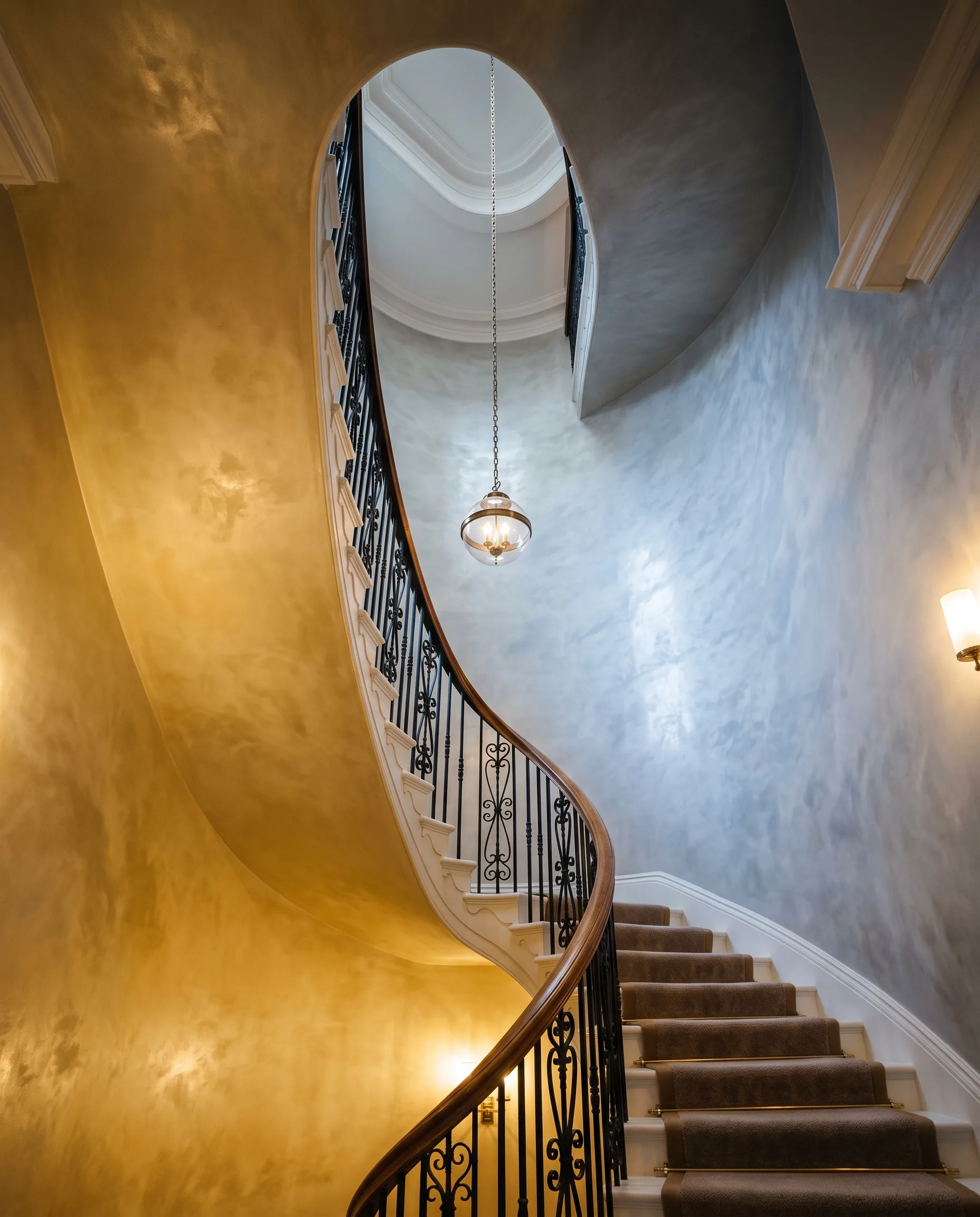
A Venetian plaster feature wall gives one wall in a room the depth and soft, moving sheen that paint cannot, and it is the most common place to start with polished plaster.
We take on feature wall plastering in homes across Chesterfield and north Derbyshire: behind a sofa or a bed, along a hallway, or across a chimney breast.
Choosing the wall
The best feature wall is usually the one you look at most: the wall facing you as you walk in, the one behind the sofa, or the wall behind the bed. It should be a wall the room is already arranged around, rather than one you have to turn to see.
Light matters more than size. Polished plaster shows its movement best when light falls across it from the side, from a window at one end or lamps along it. A wall lit flat from the front shows less of that depth, and a darker, more polished finish can help there.
Think about what will hang on it. You can fix into polished plaster, but holes are hard to hide later, so it is worth deciding on shelves, a television or artwork before the finish goes on.
Which finish suits a feature wall
Every finish on the site works as a feature wall. The choice comes down to how much sheen you want and the character of the room. See the finishes compared for the full picture.
| Finish | Look | Suits |
|---|---|---|
| Venetian plaster | Polished, with depth and a moving sheen | Living rooms and dining rooms where you want the wall to be the focus |
| Marmorino | Matt to satin, calm and stone-like | Rooms where you want texture without shine |
| Limewash | Soft, chalky and cloudy | Bedrooms and period houses |
| Stone-effect plaster | Limestone or travertine character | Studies, hallways and modern rooms |
What the work involves
The wall is checked and prepared first. Cracks are repaired, the surface is made flat, and anything that would stop the plaster bonding is dealt with. Floors, skirting and sockets are masked and protected before any decorative coat goes on.
The finish is then built up in thin coats, each one left to dry before the next. How many visits that takes depends on the finish, the size of the wall and how quickly it dries, which is why the dates are agreed once the wall has been seen. The application guide walks through each stage.
Seeing the colour before you commit
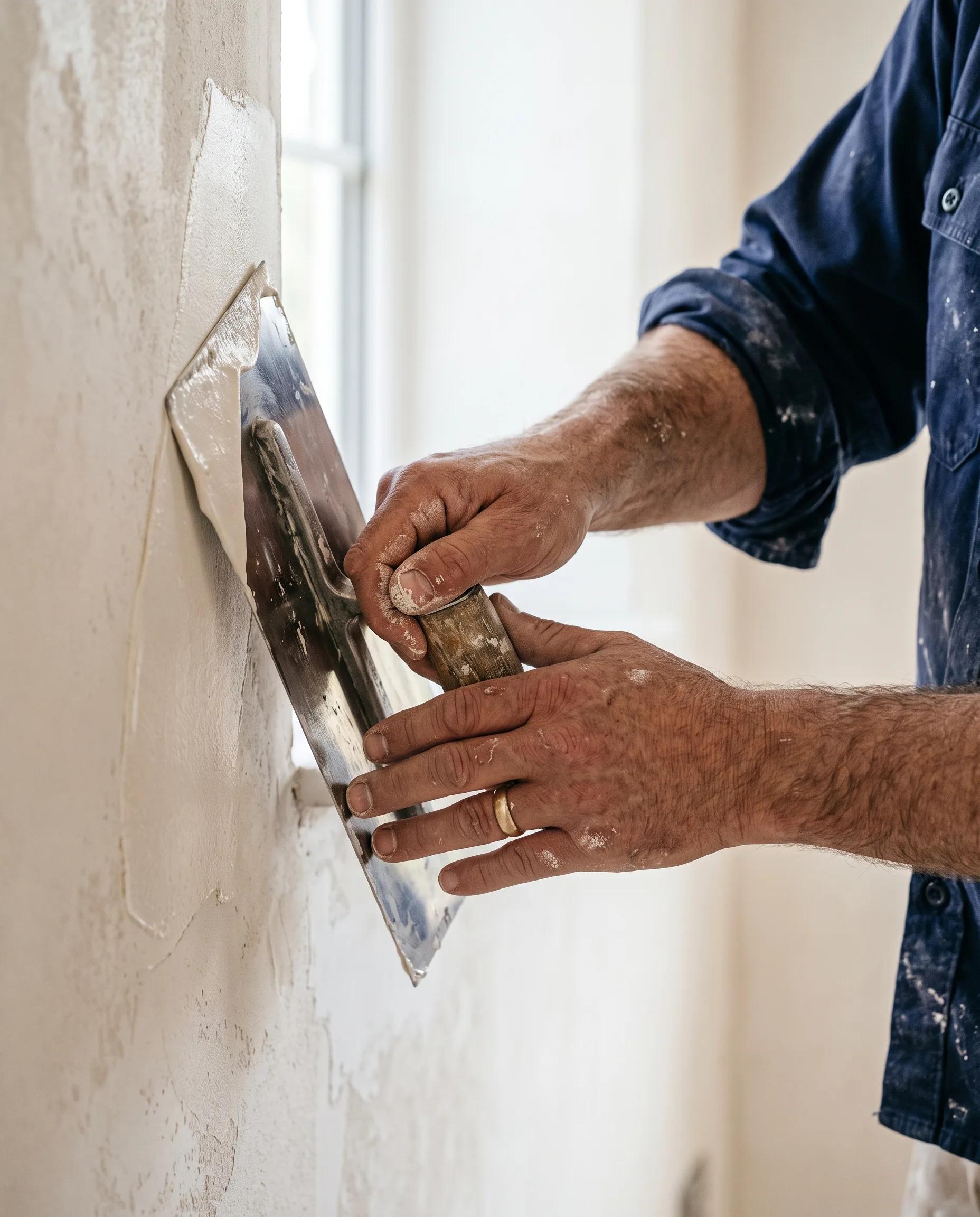
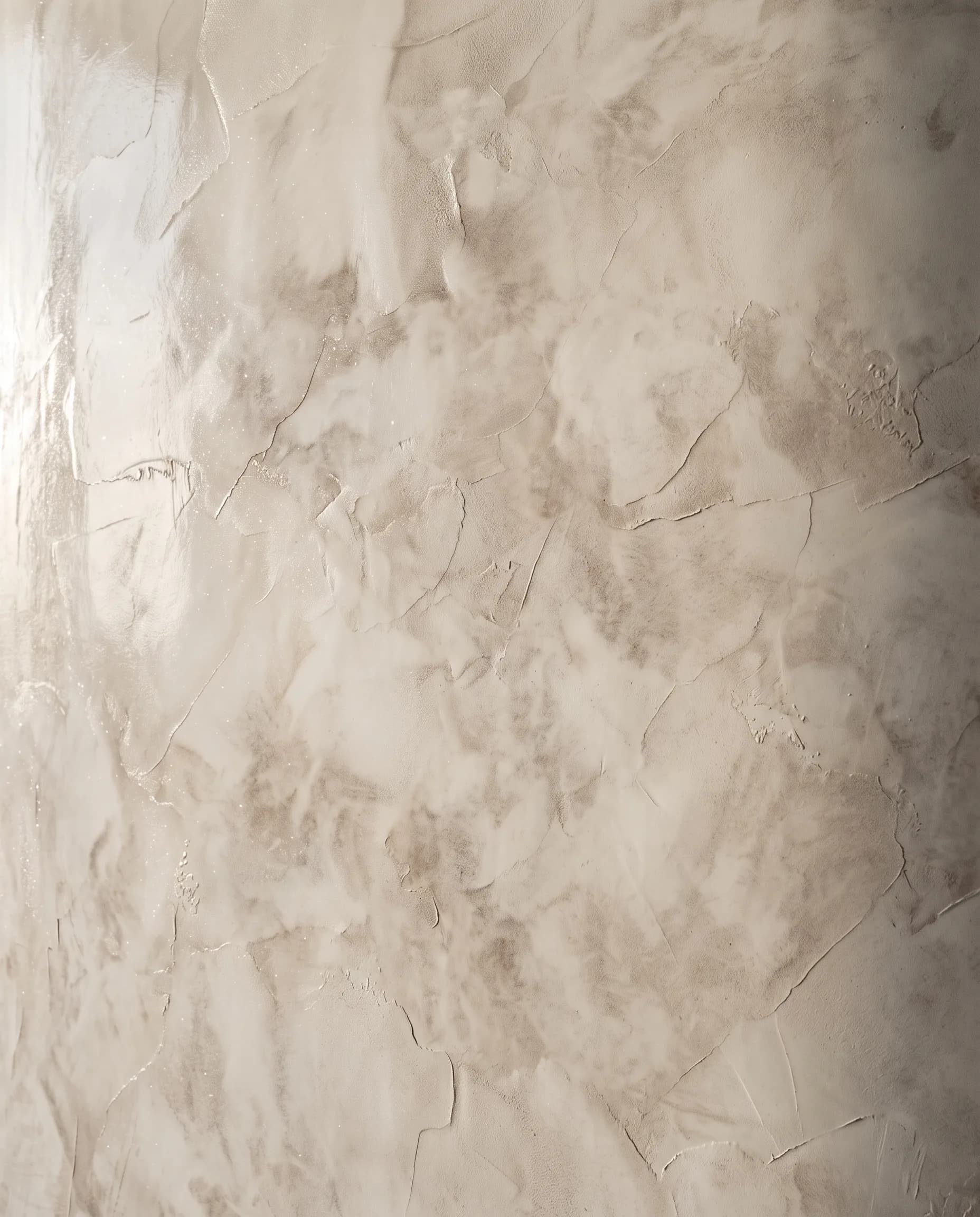
Colour on a card looks different on a whole wall in your own light. Once you have narrowed down the finish and colour, a sample of it can be arranged, so you can hold it against the wall at different times of day. Any cost is agreed first.
A finished wall will not be an exact enlarged copy of a sample. Hand-applied plaster carries natural variation, which is what gives it more life than the board.
What decides the price
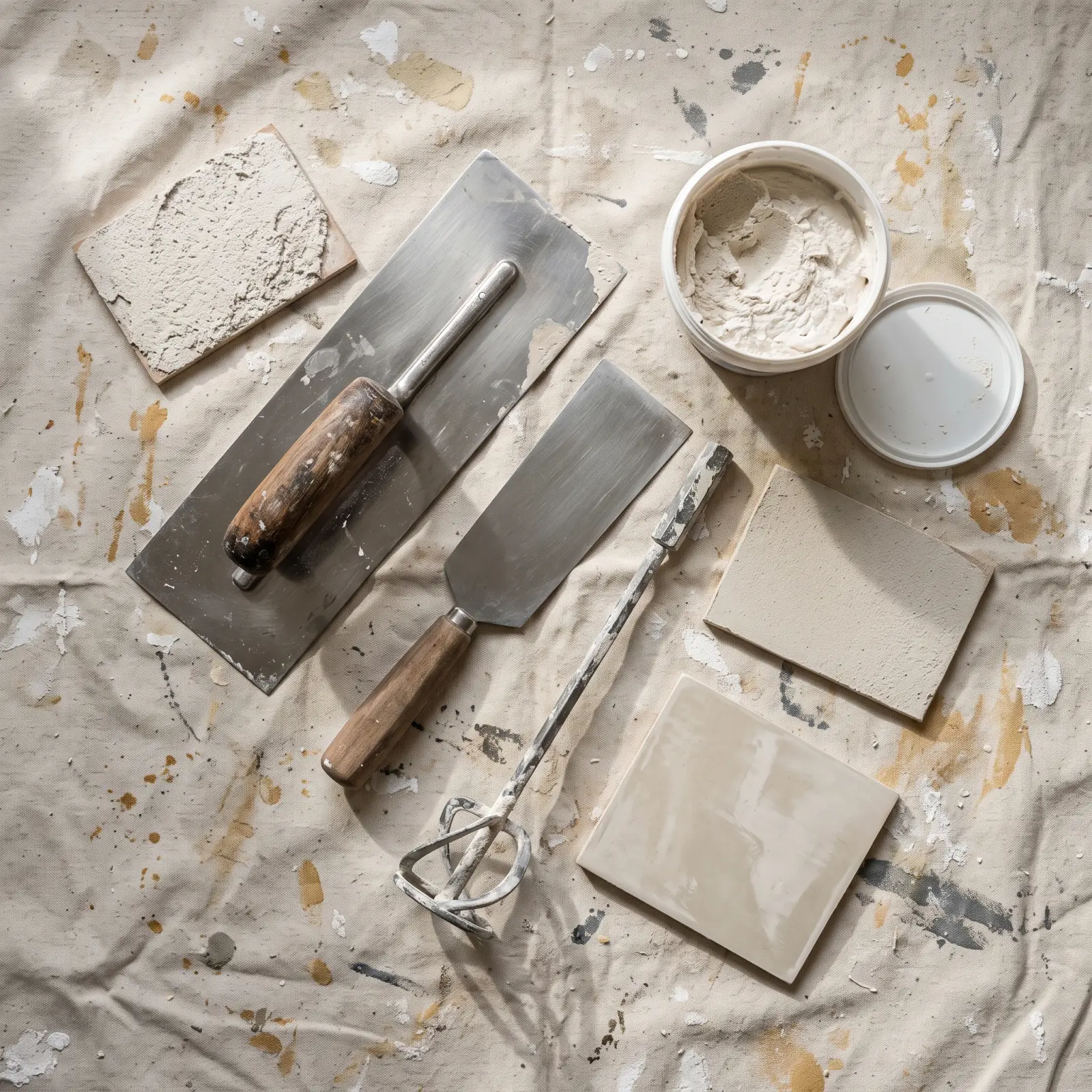
The size of the wall is only part of it. The condition of the wall underneath and the preparation it needs, the finish and colour, the number of coats, and access all change the price. A feature wall is quoted once the wall has been seen or described properly, and the cost guide explains each factor.
Common questions
Can a feature wall go over my existing plaster?
Usually, if it is sound, flat and dry. Cracked, hollow or damp plaster is put right first. Painted walls are checked, because some paints need treating before the finish will bond.
Will it crack?
The finish follows the wall behind it. On a sound, stable wall it should not. If the wall underneath moves or cracks, the finish can crack with it, which is why the preparation matters as much as the finish.
How do I clean it?
Dust it, or wipe it gently with a soft damp cloth. Avoid abrasive cleaners and scourers. Sealed and waxed finishes are more forgiving than open, chalky ones.
Can I do one wall now and more later?
Yes. A single wall is a common way to start. Matching a later wall exactly is not guaranteed, because each batch and each application varies a little, so if two walls face each other it is better to do them together.
Worth reading next

Start with a conversation about your space
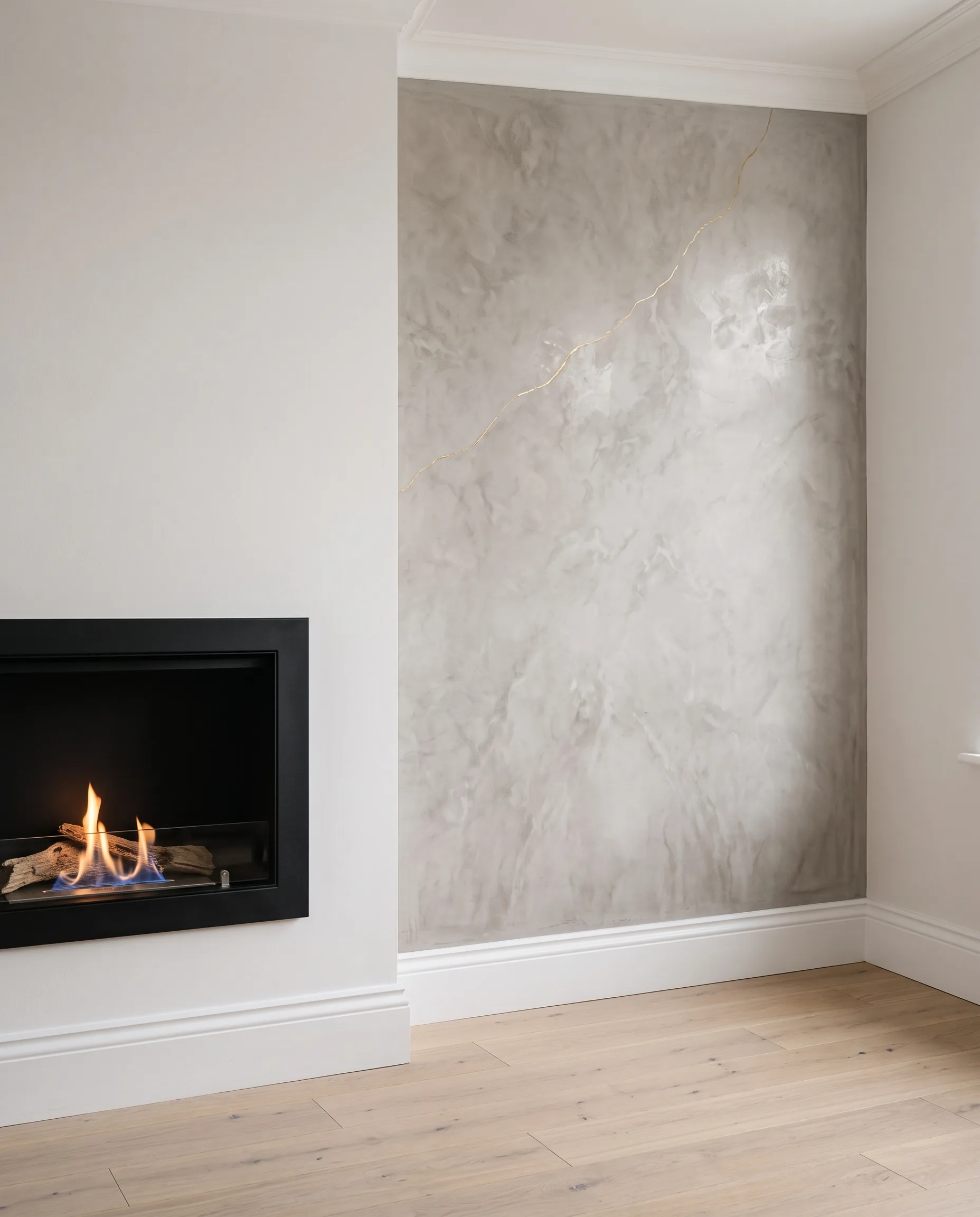
Tell us about the room, the surface and the look you are after. Rough measurements are enough to begin, and we will talk you through suitable finishes and the next steps.