Polished plaster wall finishes compared
Polished plaster wall finishes range from glass-smooth Venetian plaster to soft, chalky limewash, and the right one depends on the room, the light and how the wall will be used.
This page puts the five side by side, then compares polished plaster with paint, wallpaper and panelling.
What polished plaster is
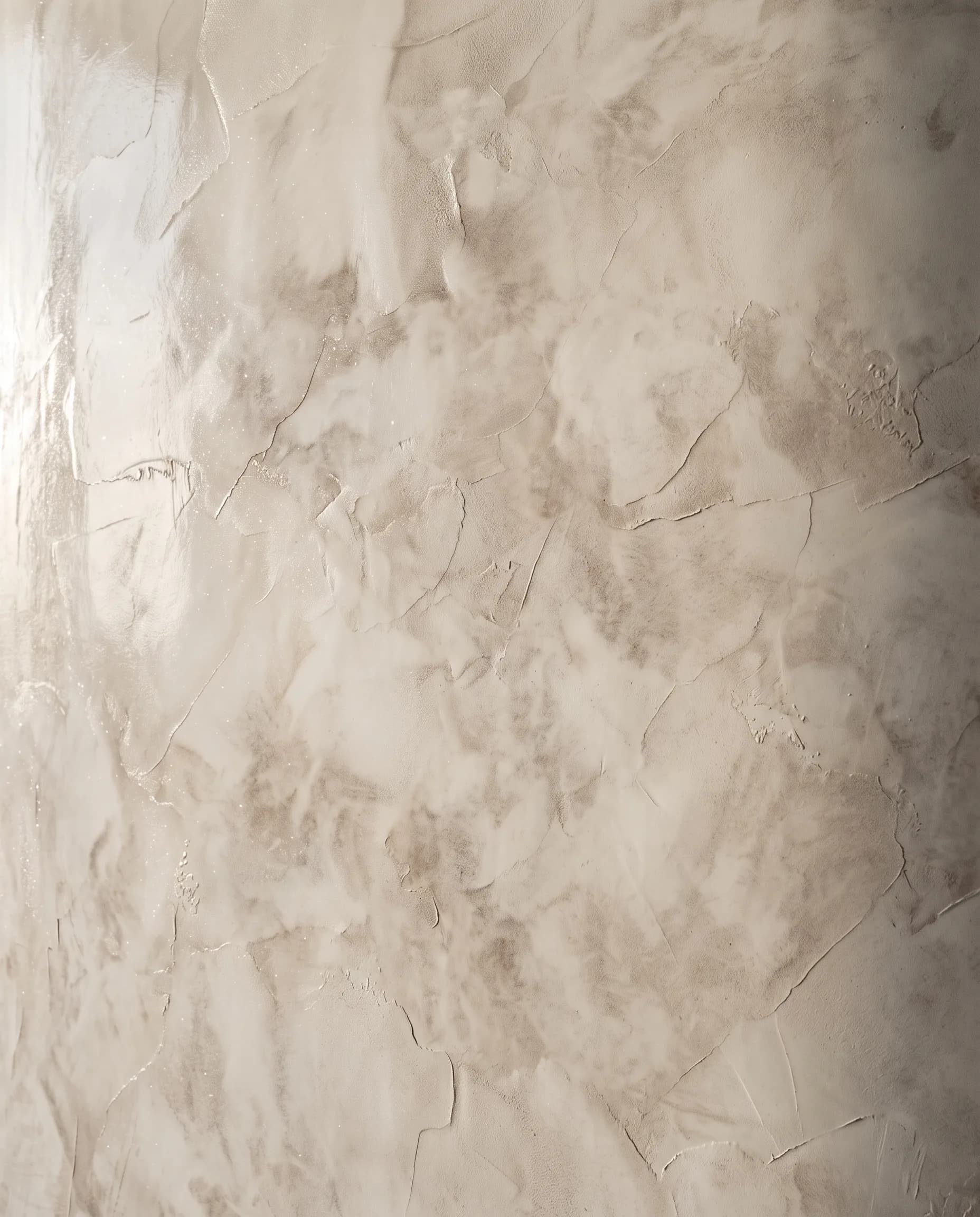
Polished plaster is a decorative plaster laid onto a wall in thin coats and then burnished, compacted or sealed, so that it has a smooth surface, a sheen and a sense of depth. It is a family rather than a single product. Traditional versions are based on lime and marble dust, others on clay or acrylic binders, and each gives a different look and feel.
Venetian plaster is the best-known member of the family. It is not the same thing as Venetian plaster paint, which imitates the look with a decorative paint. See Venetian plaster paint against the real thing.
The five finishes side by side
Every finish here is applied by hand, and each can be coloured. The differences are in sheen, texture, and where each one is at home.
| Finish | Sheen | Texture | At home in | Inside a shower |
|---|---|---|---|---|
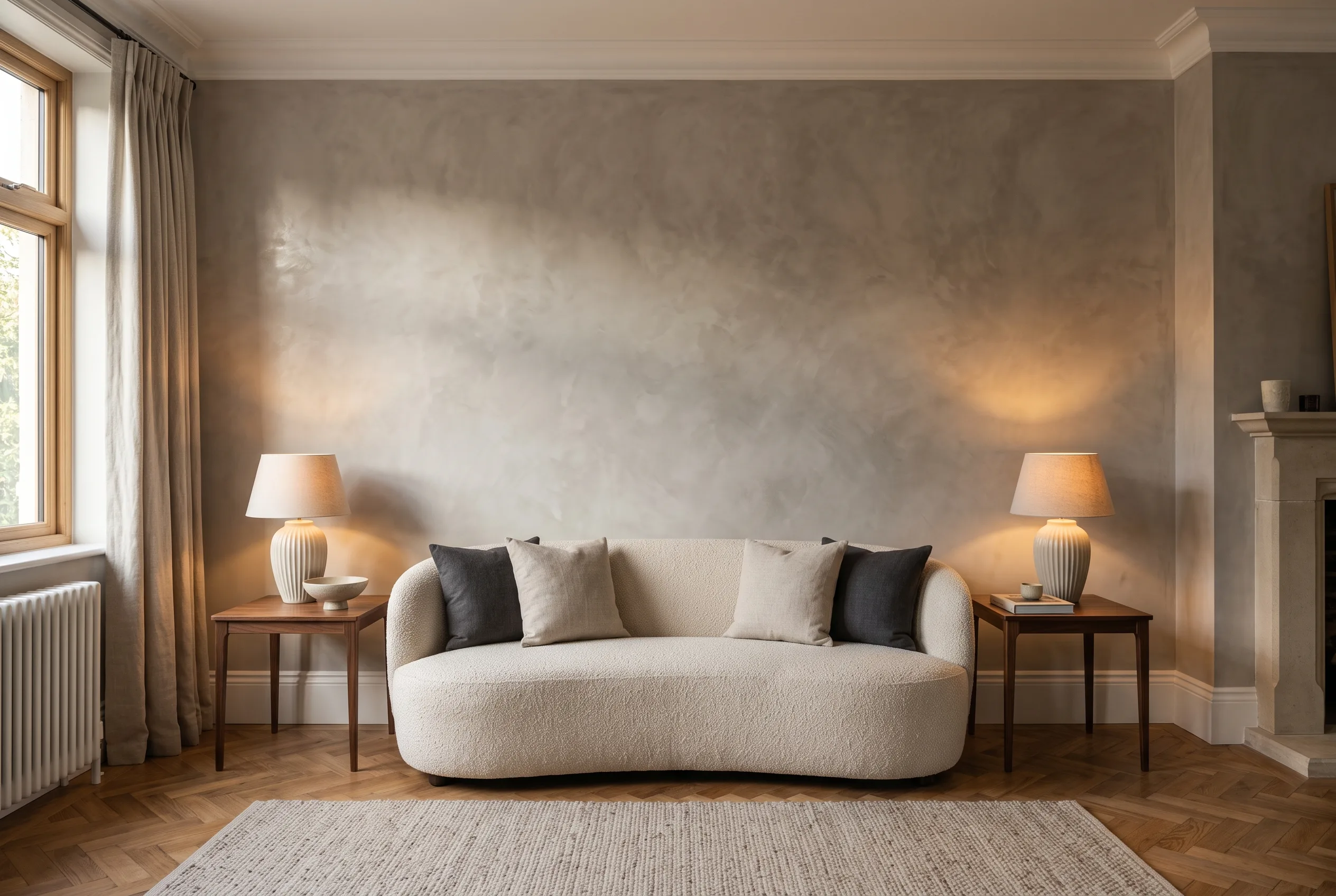
| Venetian plaster | Satin to high polish | Smooth, with depth | Living and dining rooms, feature walls, fireplaces | No |
| Marmorino | Matt to satin | Fine visible grain | Kitchens, bedrooms, older houses | No |
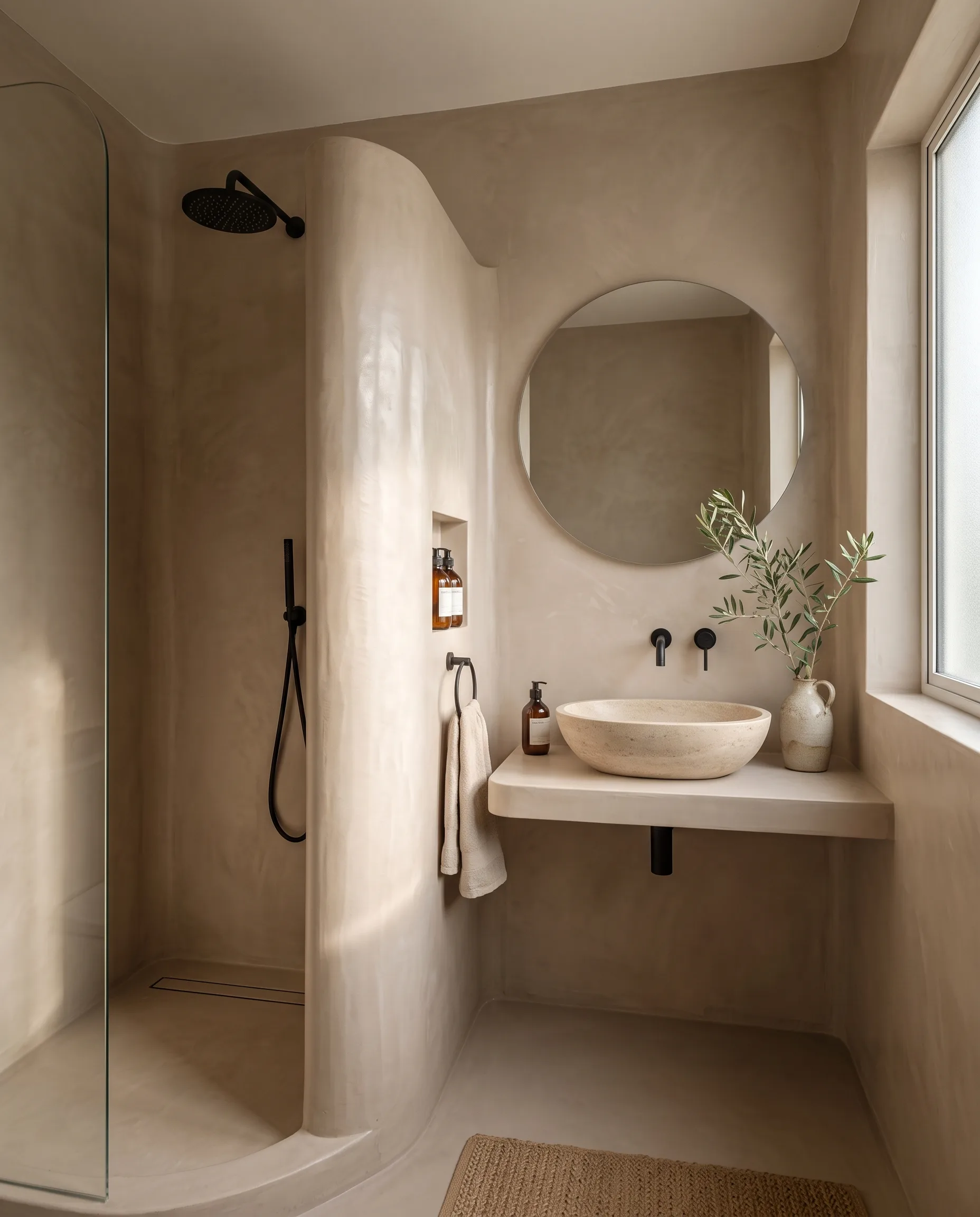
| Tadelakt | Low, soft sheen | Smooth, gently uneven | Showers, wet rooms, basins | Yes, with tanking behind it |
| Limewash | Matt | Soft, cloudy, chalky | Bedrooms, stone and period houses | No |
| Stone-effect plaster | Matt to satin | Textured like limestone or travertine | Fireplaces, media walls, studies, hallways | No |
Choosing by room
- A wall you want everyone to notice: Venetian plaster
- A calm room, or a wall under bright light: Marmorino
- A shower or wet room: tadelakt
- An old stone house, or a soft bedroom: limewash
- A fireplace or media wall that should feel built: stone effect
Polished plaster against paint, wallpaper and panelling
Polished plaster usually costs more than paint or wallpaper and takes longer to apply. What it gives back is depth, a surface that changes with the light, and a finish that is not redone every few years.
| Polished plaster | Paint | Wallpaper | Panelling | |
|---|---|---|---|---|
| Look | Depth and movement | Flat colour | Pattern | Relief and shadow lines |
| Joints | None | None | Seams | Joints and edges |
| Redecorating | Long-term surface | Every few years | Stripped to change | Repainted |
| Repairs | Often local, on lime finishes | Touch up or repaint | Hard to patch | Fill and repaint |
Common questions
Which polished plaster lasts longest?
On a sound wall, all of them are long-term finishes. How well each wears depends more on the room, the preparation and whether it is sealed than on the finish itself.
Can I mix finishes in one house?
Yes, and it often works well: tadelakt in the bathroom, Marmorino in the kitchen, Venetian plaster on a living room wall.
Start with a conversation about your space
Tell us about the room, the surface and the look you are after. Rough measurements are enough to begin, and we will talk you through suitable finishes and the next steps.