Venetian plaster fireplaces and chimney breasts
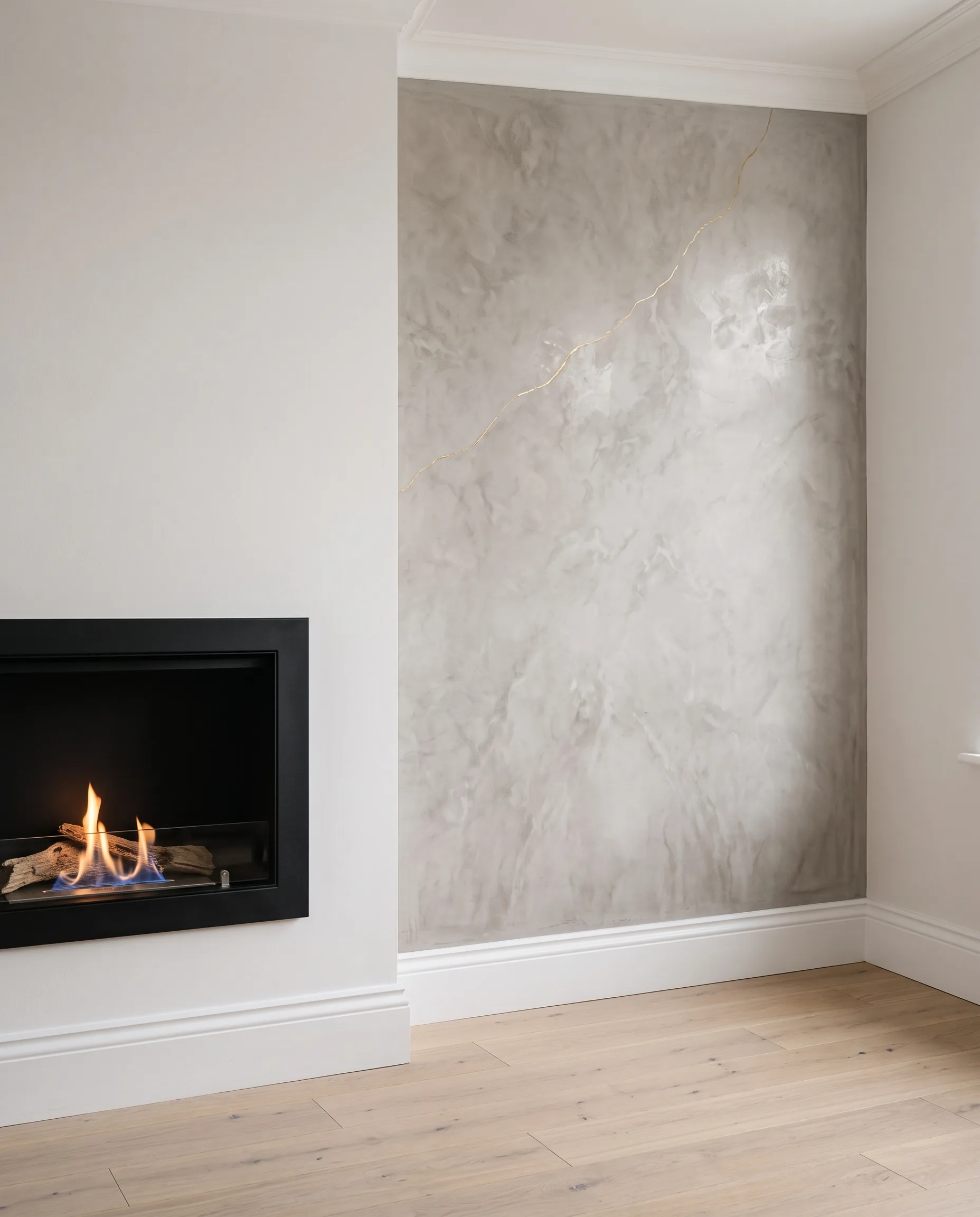
Venetian plaster on a fireplace or chimney breast turns the wall a room is already built around into its centrepiece, with one continuous surface and no joints or trims.
It is also the wall where heat, soot and old brickwork need thinking about first, which is what this page covers.
Heat comes first
Lime plasters are mineral and do not burn, but that does not make every finish suitable right next to a fire. Heat can discolour some finishes and soften waxes and sealers, and a stove or fire has its own required distances to surrounding materials.
So the appliance comes before the finish. We check the stove or fire, its installation instructions and the plaster manufacturer's guidance, then recommend a finish and where it should stop. Close to the heat that may mean a different material, such as stone or tile, with the plaster taking over further out.
A new finish needs to cure fully before the fire is lit. How long that takes depends on the product and the conditions, and you will be told before the work starts.
Old chimney breasts need preparing
Chimney breasts in older houses are often where the problems hide. Soot and salts from years of fires can work through the plaster and show as brown stains, and old chimney plaster is frequently hollow or crumbling.
Painting over that and applying a polished finish only hides it for a while. Loose plaster is removed, stains and salts are dealt with properly, and the surface is made sound before any decorative coat goes on. Where the stains point to damp in the chimney itself, that has to be fixed first.
Finishes that suit a fireplace
For a plaster fireplace surround or chimney breast, a polished Venetian finish gives the most depth and catches firelight well. Stone-effect plaster suits a fireplace that should look carved or quarried, and Marmorino gives a calmer, matt stone character. Soft greys, warm stone and pale neutrals are the most common choices, because the fire is already the focal point.
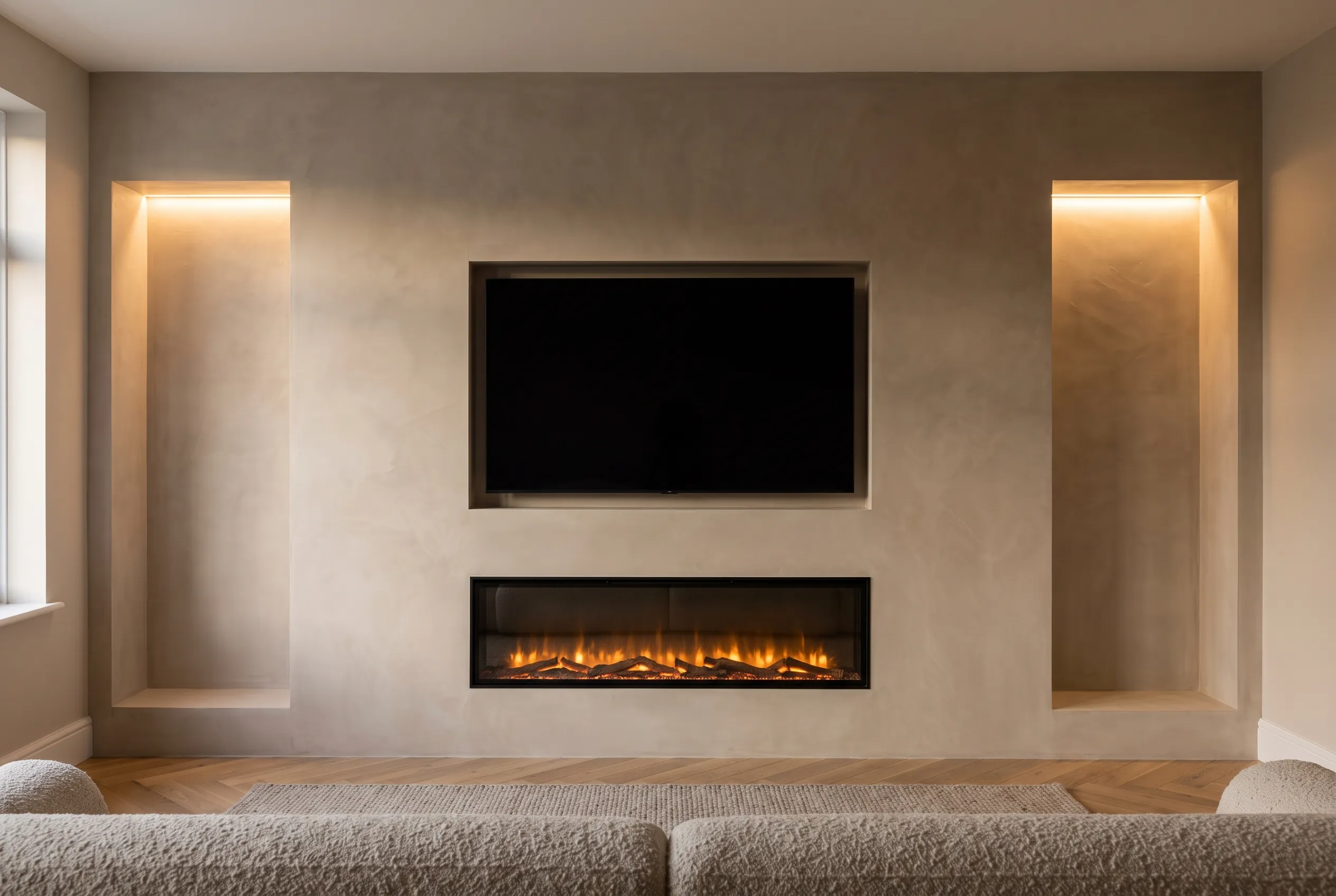
Recesses, shelves and the hearth
The alcoves either side of a chimney breast can be finished to match, or kept plain so the breast stands out. Floating shelves and fixings are best planned before the plaster goes on, because holes are hard to hide afterwards. The finish stops cleanly at the hearth and any surround.
Common questions
Is Venetian plaster heatproof?
No finish should be described that way. Lime plasters do not burn, but heat can mark some finishes and soften sealers. Suitability depends on the appliance, the distances from it and the manufacturer's guidance for the plaster, which is checked before a finish is recommended.
Will soot marks show on a pale finish?
Above an open fire, soot can mark a pale finish over time. A sealed finish is easier to clean, and a slightly deeper colour hides more. A closed stove produces far less of this.
Can you plaster around a wood burner that is already fitted?
Usually, yes, with the stove protected during the work. The clearances in the stove's instructions still apply, and the finish has to cure before the stove is used again.

Start with a conversation about your space
Tell us about the room, the surface and the look you are after. Rough measurements are enough to begin, and we will talk you through suitable finishes and the next steps.