Venetian plaster paint against real Venetian plaster
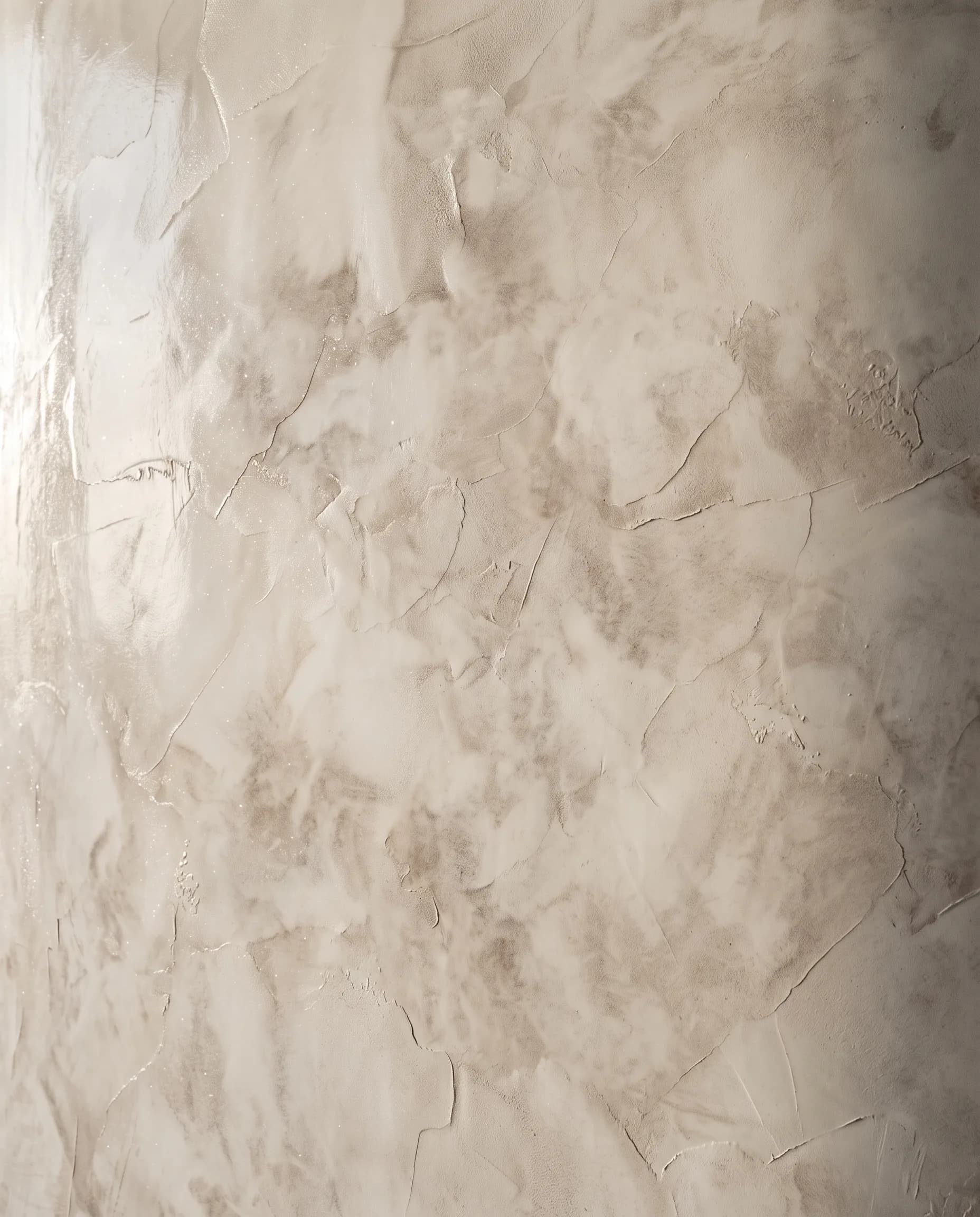
Venetian plaster paint is a decorative paint that imitates the mottled look of polished plaster, while real Venetian plaster is a lime and marble plaster built up in coats and burnished by hand.
Both have a place. This page sets out what each gives you, so you can choose the right one for your wall and your budget.
What Venetian plaster paint is
Venetian plaster paint, sometimes sold as a polished plaster effect paint, is a decorative paint with texture or a fine shimmer in it. It goes on with a brush, a roller or a trowel, usually in two or three coats, and leaves a mottled, softly shiny surface. It is designed for DIY, and it costs far less than a plastered finish.
The look sits on the surface of the wall. From across a room it can suggest polished plaster. Close up, and when light falls across it, the difference shows.
What real Venetian plaster is
Real Venetian plaster is a plaster, not a paint. Traditionally lime and finely ground marble, it is laid on in several thin coats with a steel trowel and then burnished until it tightens and takes on a sheen. Each coat is slightly translucent, which is where the depth comes from. The application guide shows each stage.
Side by side
| Venetian plaster paint | Real Venetian plaster | |
|---|---|---|
| What it is | A decorative paint with texture or shimmer | A lime and marble plaster, in several thin coats |
| Up close | Mottled colour on the surface | Layered colour with real depth |
| To the touch | Feels like paint | Cool, hard and stone-like |
| Sheen | A soft shimmer | Satin to high polish, from burnishing |
| Usually applied by | The homeowner | A specialist |
| When damaged | Repainted | Lime finishes can often be repaired locally |
When the paint is the sensible choice
- A rented home, or a room you expect to redecorate within a few years
- Trying out the look before committing to the real thing
- A small or tucked-away wall where close-up detail matters less
- A tight budget, where the paint gives you something you would not otherwise have
When it is worth having the real thing
Real plaster earns its cost on walls you look at every day and plan to keep: a feature wall, a fireplace, a hallway where light rakes along the wall, or an older house where a breathable lime finish suits the wall. What it costs sets out the published price guides and what moves the price.
Common questions
Do you paint Venetian plaster?
No. The colour is mixed into the plaster itself, so it runs through every coat. The finished surface is burnished, and sometimes sealed or waxed, but it is not painted.
Can Venetian plaster be painted over?
Yes, but it needs cleaning, sanding and a suitable primer first, because paint does not grip a burnished or waxed surface well. Painting over it hides the depth it was chosen for, so on a lime finish a refresh or a repair is often the better route.
Can I put Venetian plaster paint over real plaster later, or the other way round?
Paint can go over plaster with the right primer. Real plaster over a painted wall needs the wall checked and prepared first, because some paints stop the plaster bonding.


Start with a conversation about your space
Tell us about the room, the surface and the look you are after. Rough measurements are enough to begin, and we will talk you through suitable finishes and the next steps.