Tadelakt
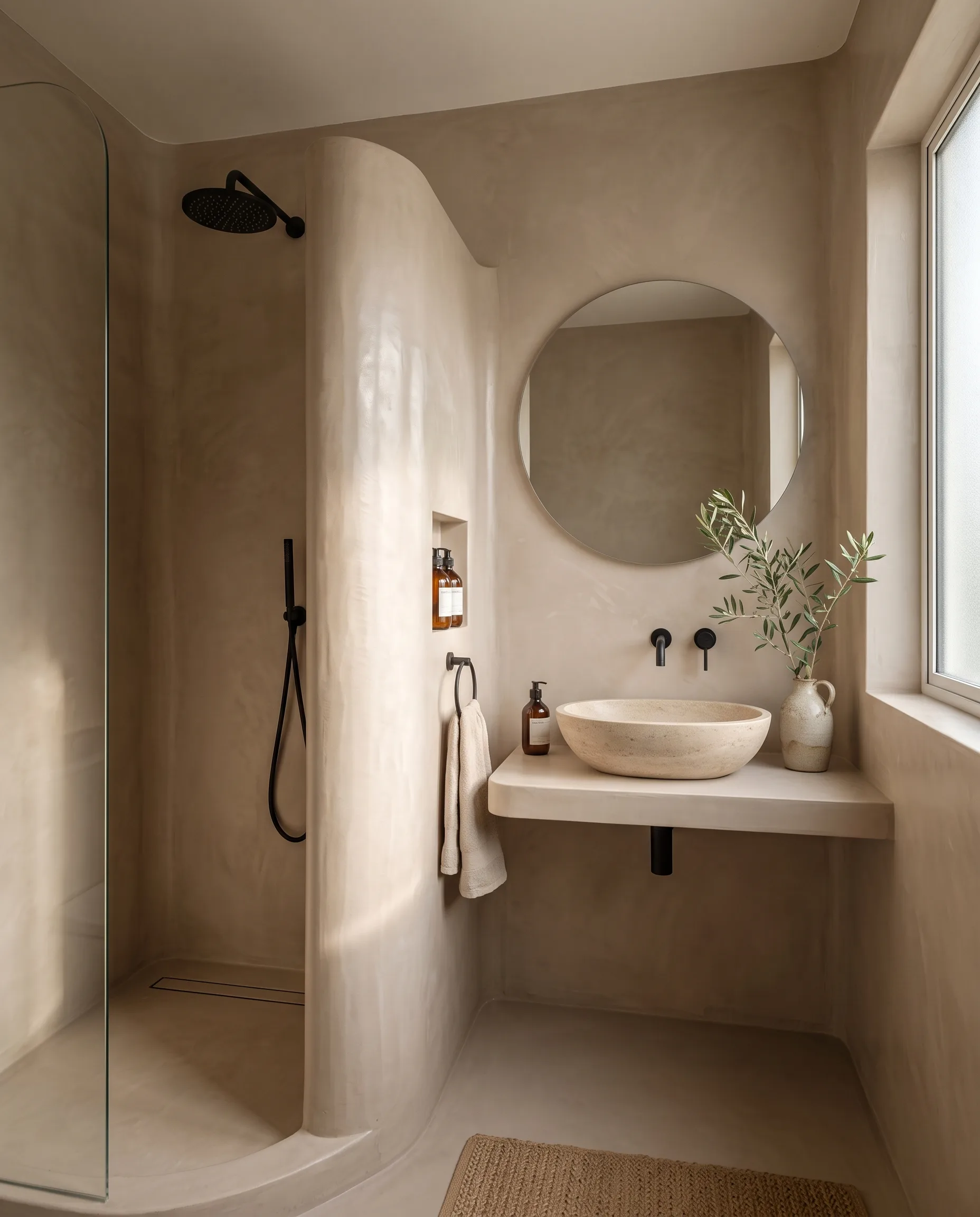
Tadelakt is a Moroccan lime plaster, polished with stones and treated with olive oil soap, that becomes highly water-resistant and can line a shower or wet room without a single joint.
We apply tadelakt in bathrooms across Chesterfield and north Derbyshire, on walls, shower enclosures and built-in shapes.
How tadelakt is made
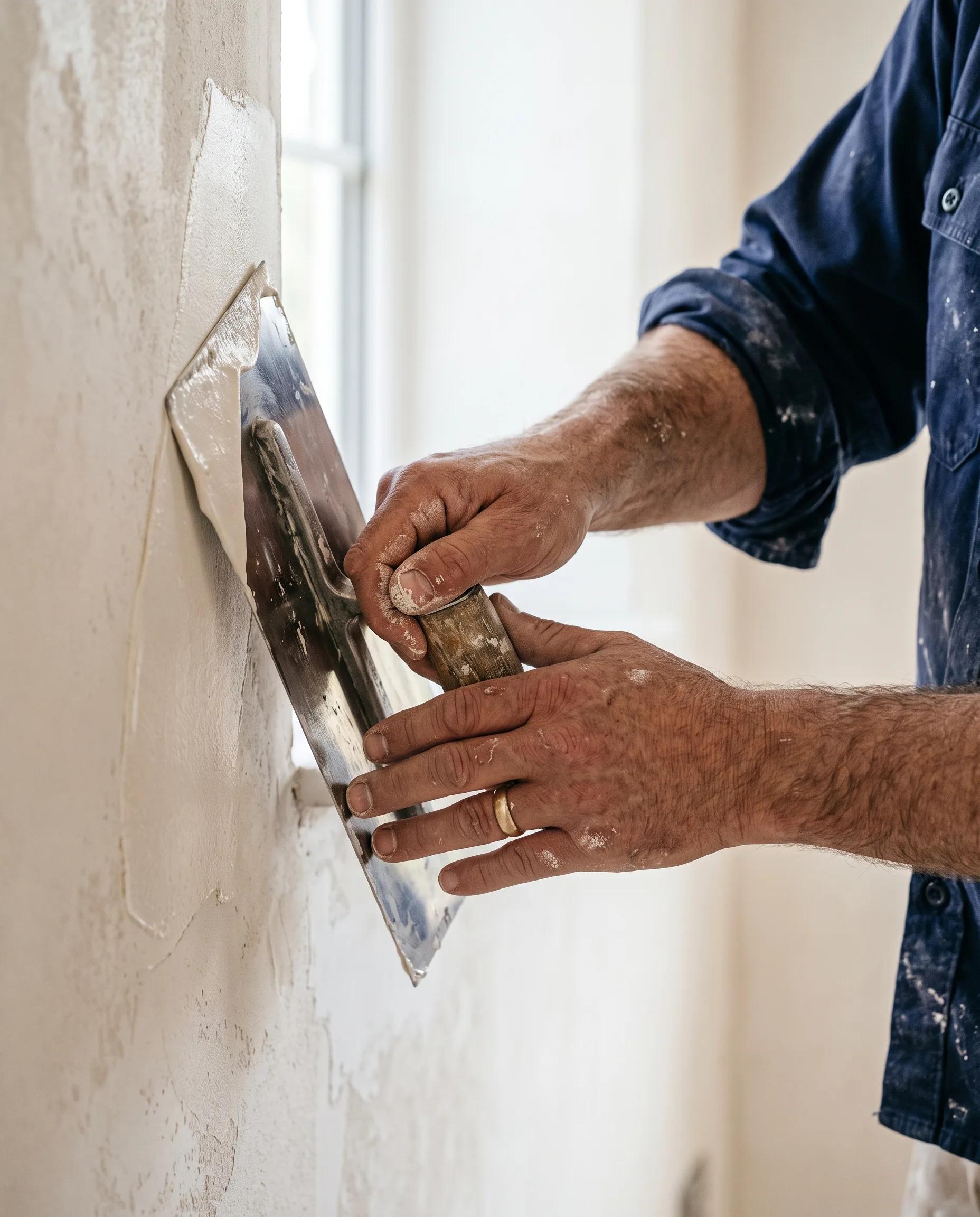
Tadelakt comes from Morocco, where it has lined bathhouses for centuries. The lime plaster is applied in layers, then compacted and polished by hand with smooth stones while it is still damp.
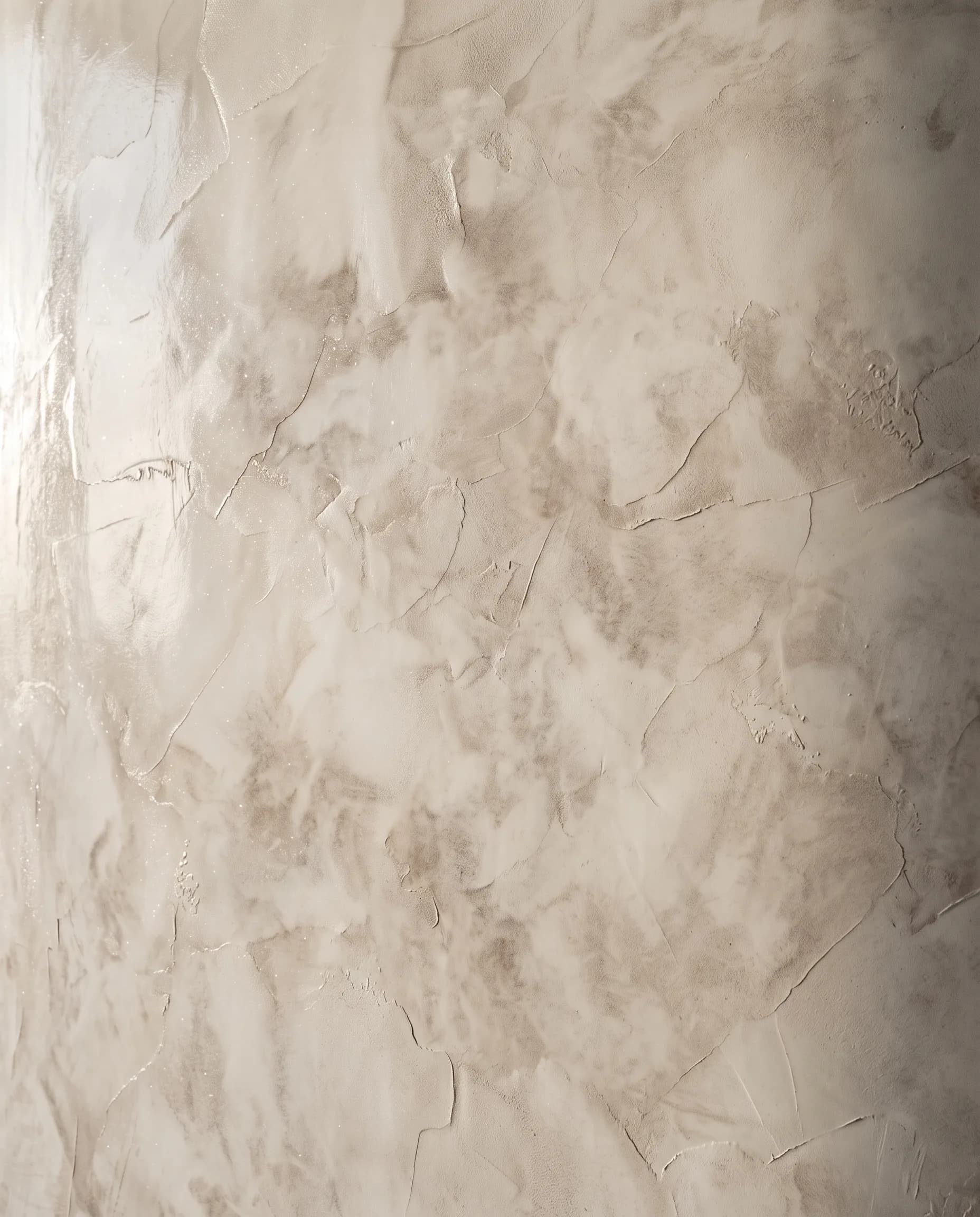
Finally it is treated with black soap made from olive oil. The soap reacts with the lime to form a surface that sheds water. The result is soft to the touch, gently uneven, with a low sheen and slight variations in colour.
In a shower
Properly applied and maintained, tadelakt is used inside showers and wet rooms. But the tadelakt is not what keeps water out of the wall. Behind it goes a suitable backing board and a tanking system, detailed properly at corners, the floor and around the drain.
The bathroom guide compares tadelakt with sealed polished plaster and tiles.
Curves, niches and basins
Because tadelakt is shaped by hand, it can wrap a curved wall, a shower niche, a bench or a basin surround in one continuous surface. These shapes are built before the plaster goes on, so they are designed at the start.
Looking after it
Fine hairline crazing can appear in tadelakt over time. It is part of the character of a hand-made lime finish rather than a failure.
- Clean with mild soap and water. Black soap is ideal
- Never use acidic cleaners or limescale removers, which attack lime
- Re-treat with soap or wax from time to time, more often in a shower
- Keep the room well ventilated
Common questions
Is tadelakt waterproof?
It is highly water-resistant when properly applied and maintained, which is why it is used in showers. It is not a waterproofing layer. That job belongs to the tanking behind it.
Does tadelakt need a lot of maintenance?
More than tiles, less than people fear. It needs gentle cleaning without acids, and re-treating from time to time, more often where water hits it every day.
Can tadelakt go on a floor?
A floor sees far more wear and standing water than a wall. Whether tadelakt suits one depends on the product, the system beneath it and how the room is used, so we would look at your floor before saying yes.

Start with a conversation about your space
Tell us about the room, the surface and the look you are after. Rough measurements are enough to begin, and we will talk you through suitable finishes and the next steps.