How Venetian plaster is applied
Venetian plaster is applied in thin coats by hand, each left to dry before the next, then burnished to bring up the sheen, so a wall takes several visits rather than one long day.
Here is each stage, in order, and what it means for your home.
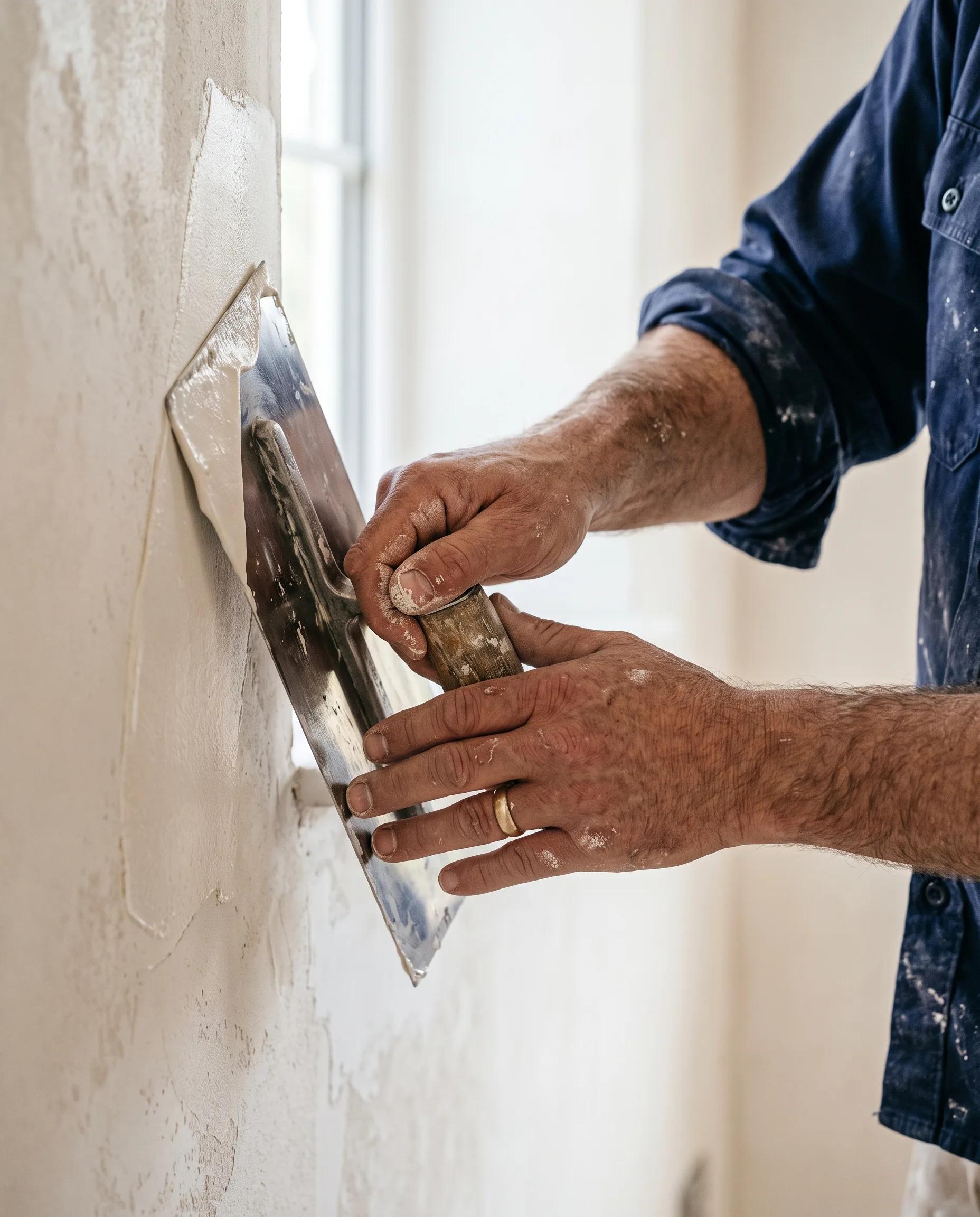
1. Protection
Floors, skirting, windows, sockets and anything close to the wall are covered and masked before anything else happens. Furniture near the wall is best moved out beforehand. The masking stays up until the finish is complete.
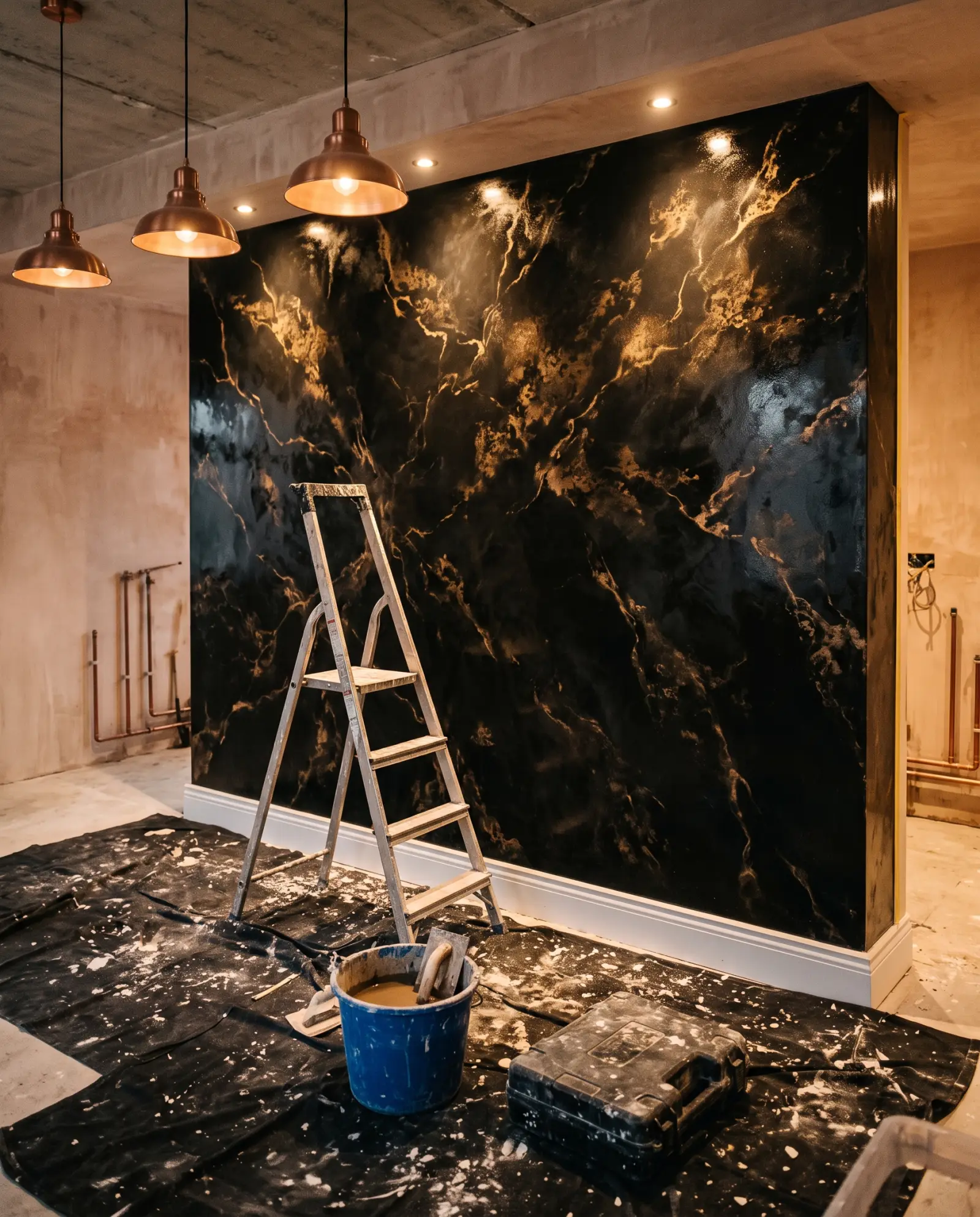
2. Preparation
The wall is checked, and any cracks, hollow areas or damaged plaster are repaired. The surface is made flat and sound, and a primer or key coat suited to the finish is applied. New plaster has to be completely dry first.
Behind the work is 25 years of professional plastering experience. This is the stage that decides whether the finish lasts, and it is never rushed.
3. Base and finishing coats
The plaster goes on in thin coats with a steel trowel. The first coats build the base. The later ones, thinner still, create the depth and movement. Each coat has to dry before the next, and how long that takes depends on the product, the temperature and the ventilation in the room.
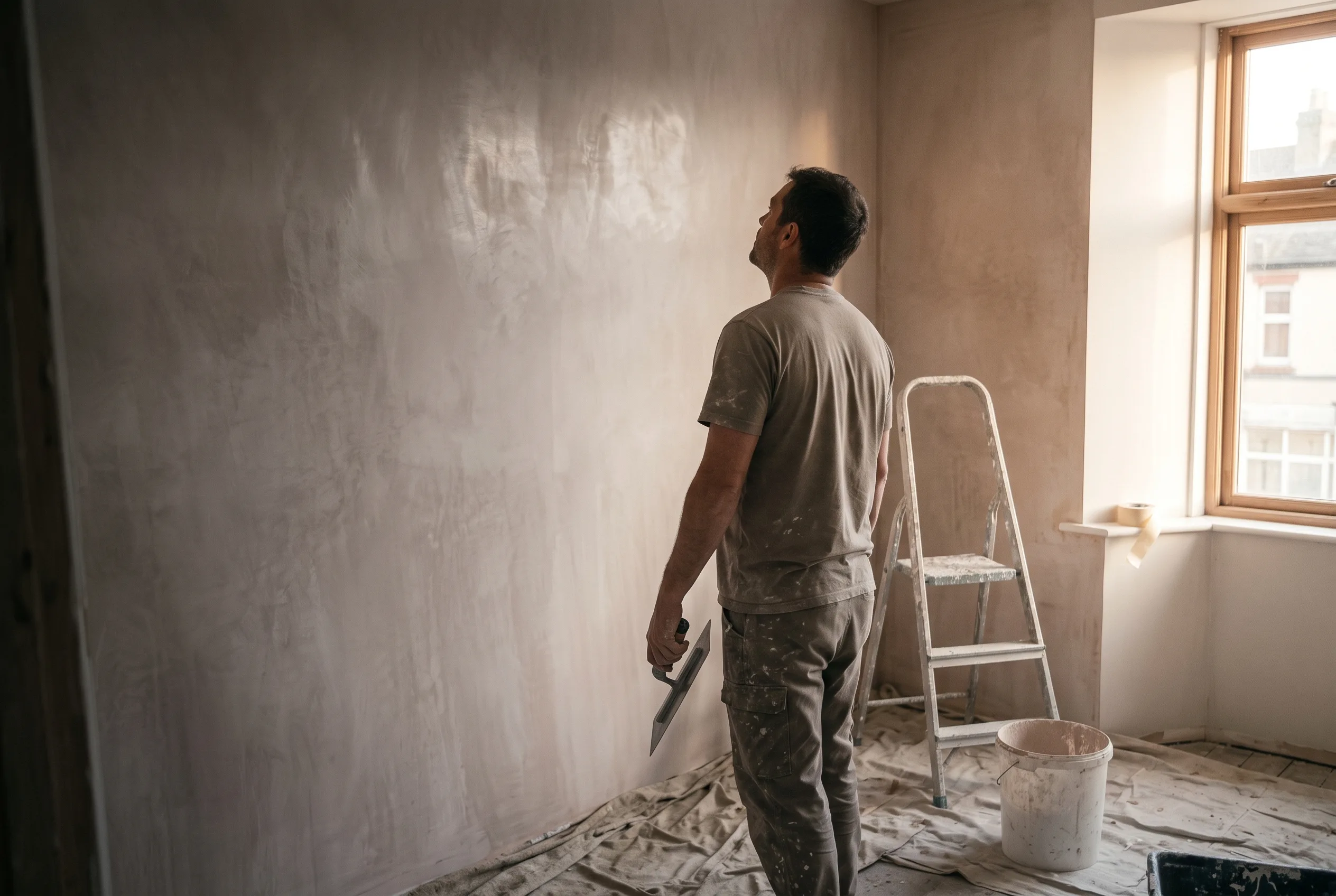
4. Burnishing
The final coat is burnished, by hand with the trowel and sometimes with a polishing machine, until the surface tightens and the sheen comes up. This is where the finish is read against the light and evened out.
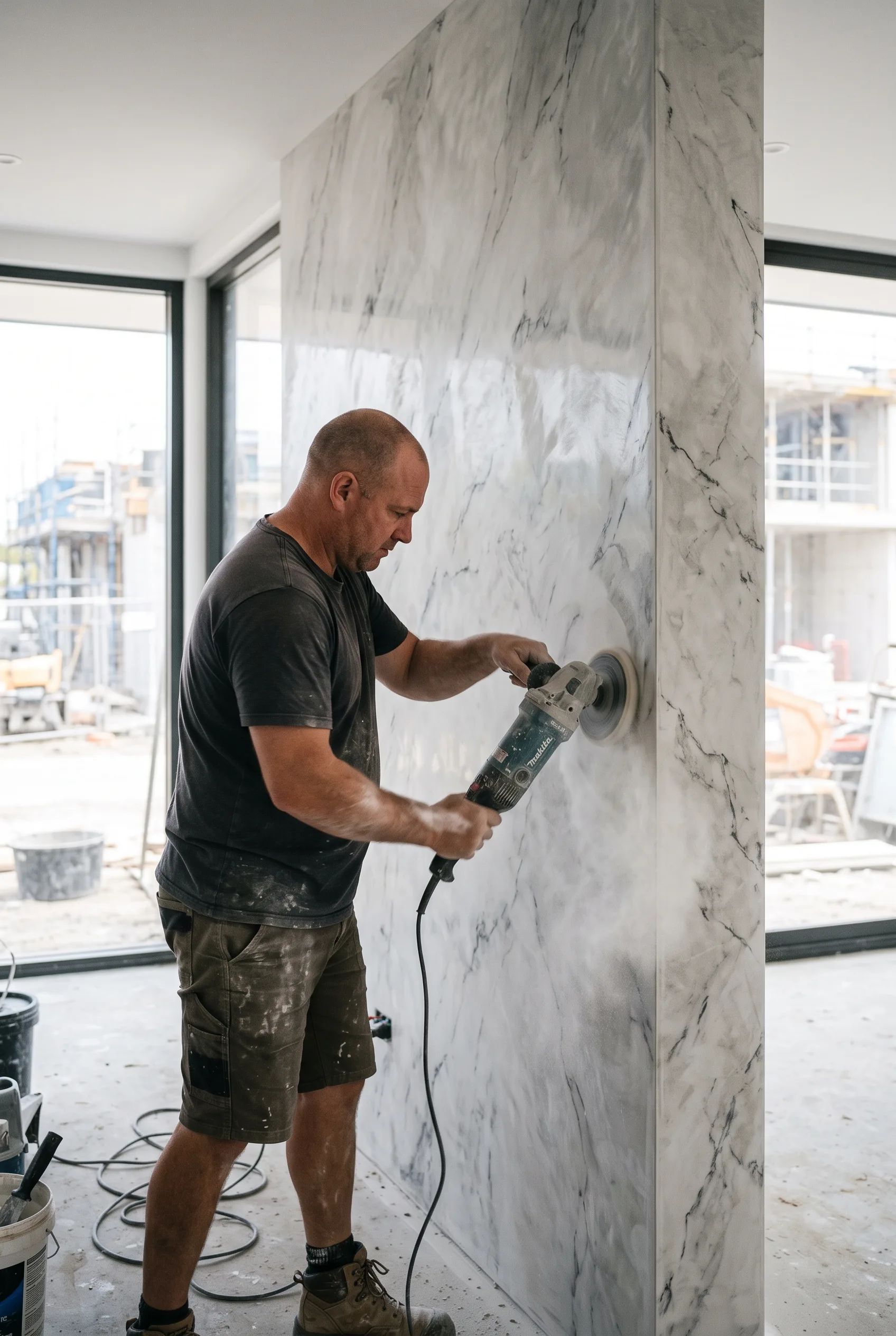
5. Sealing or waxing
Depending on the finish and the room, the surface may be sealed or waxed to make it easier to clean. Kitchens, bathrooms and busy hallways usually are. Some matt finishes are left open. Then the masking comes down and the room is cleared.
Can you apply Venetian plaster yourself?
Some people do, usually on a small wall, and DIY kits are sold for it. The skill is in the last coats and the burnishing: laying each coat thin and even, judging the moment it is ready to burnish, and reading the light so the movement looks deliberate rather than patchy. That takes practice, and a coat that has set is hard to undo.
If you want to try, start on a spare board or a small wall out of the way, and follow the product's own instructions for preparation and drying. For a feature wall, a fireplace or anything in a main room, a professional finish is usually easier to live with than a patchy one. See what it costs, and the difference between the plaster and Venetian plaster paint.
What it is like to live with
The room being worked on is out of use while the masking is up. Preparation can make some dust, but the decorative coats themselves are quiet, low-dust work. The room needs to stay reasonably warm and ventilated so the coats dry, without heaters blowing directly onto the wall.
The number of visits depends on the finish and the wall, and is agreed before work starts.
Common questions
How long does Venetian plaster take?
It takes several visits rather than one day, because each coat must dry before the next. The exact number depends on the finish, the size of the wall, its condition and the drying conditions, and is agreed once the wall has been seen.
Do I need to move out?
No. Only the room being worked on is out of use, and the decorative coats are quiet, low-dust work.
When can I hang pictures or put furniture back?
Furniture can go back once the masking is down. Fixings into the wall should wait until the finish has fully cured, which depends on the product. You will be told on the day.
Worth reading next

Start with a conversation about your space
Tell us about the room, the surface and the look you are after. Rough measurements are enough to begin, and we will talk you through suitable finishes and the next steps.