Venetian plaster media walls
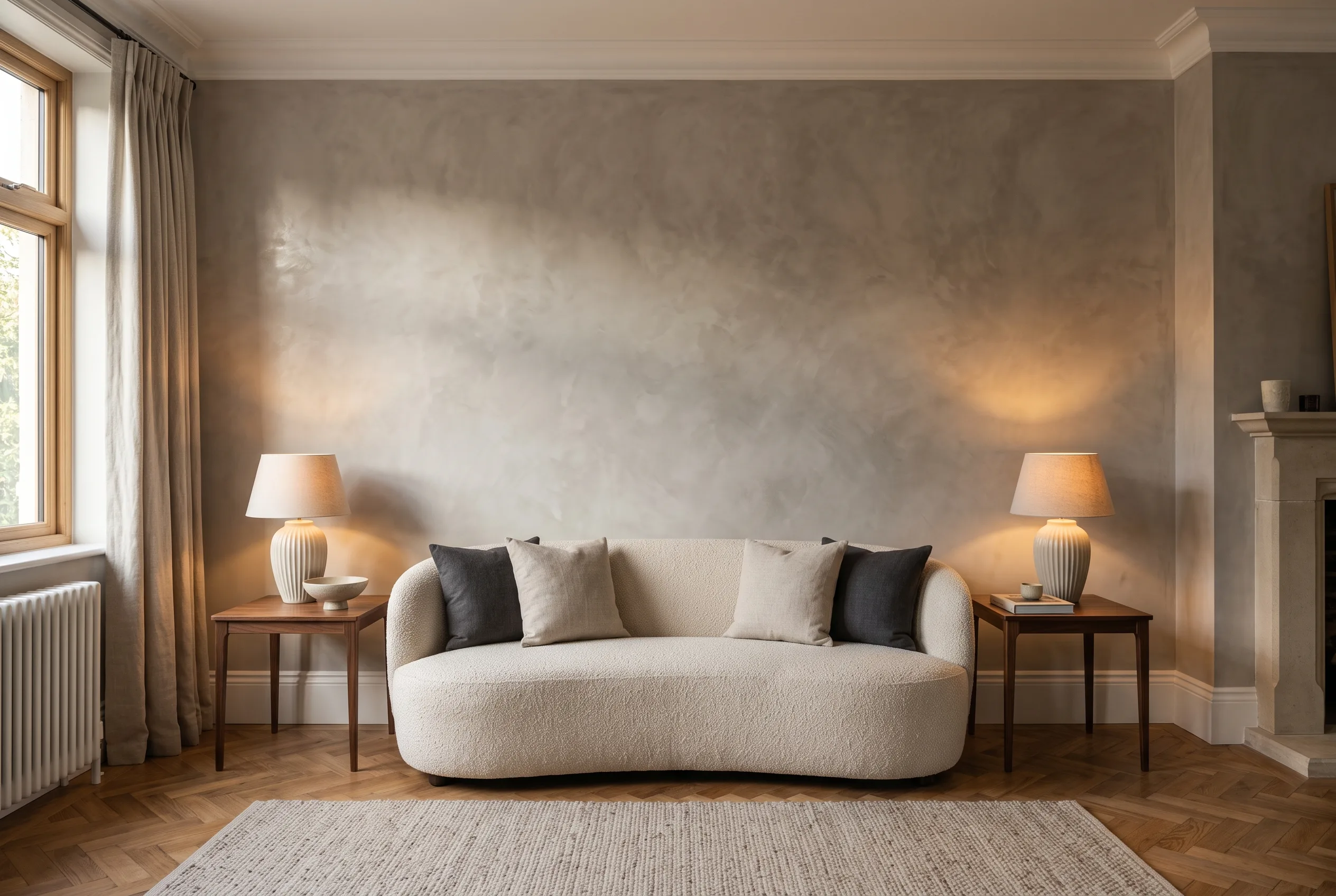
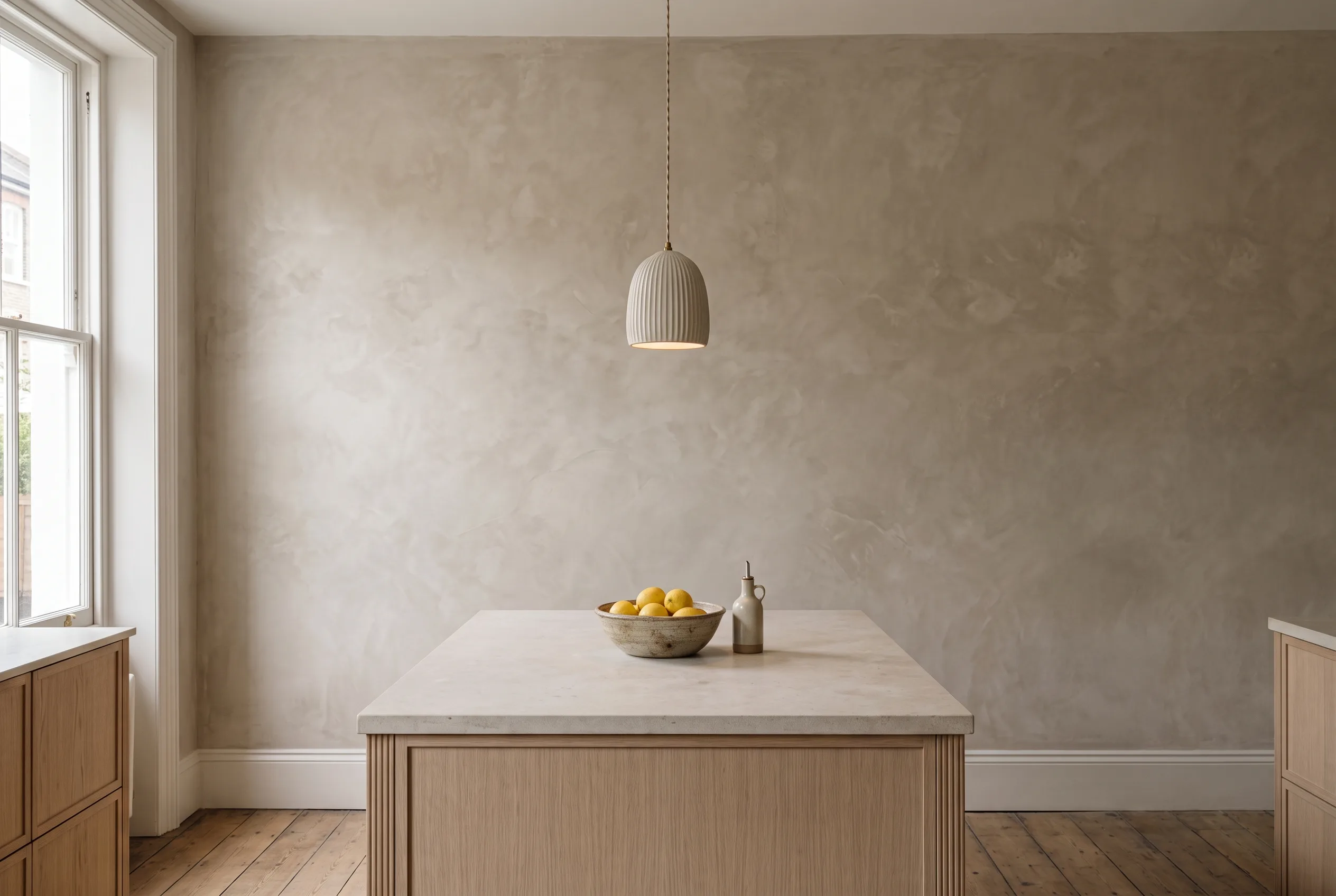
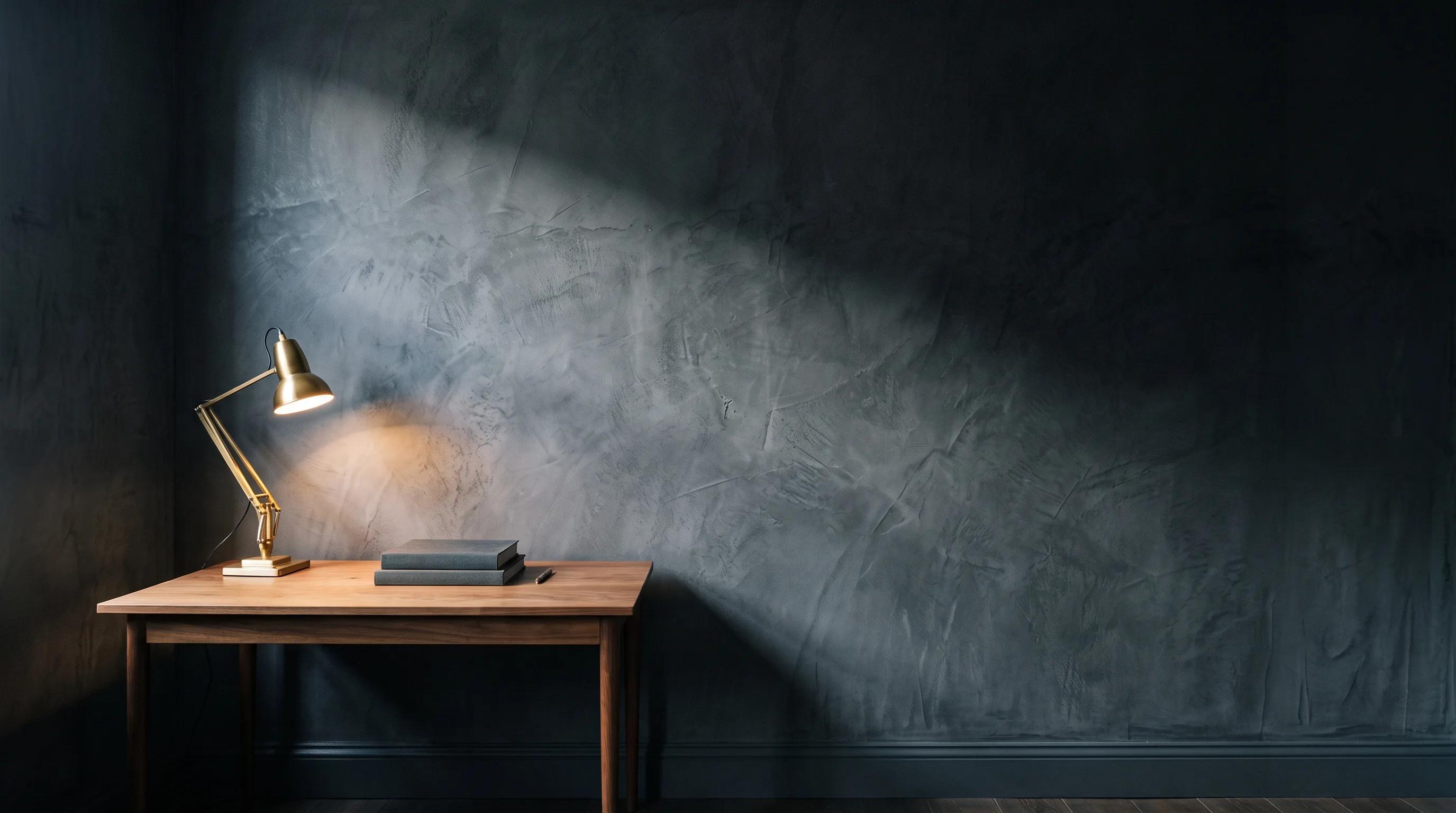
Venetian plaster on a media wall takes a framed and boarded wall, with its recessed screen and fire, and gives it one continuous stone-like surface, so it reads as part of the room rather than furniture.
We finish media walls across Chesterfield and north Derbyshire, working with whoever is building the frame.
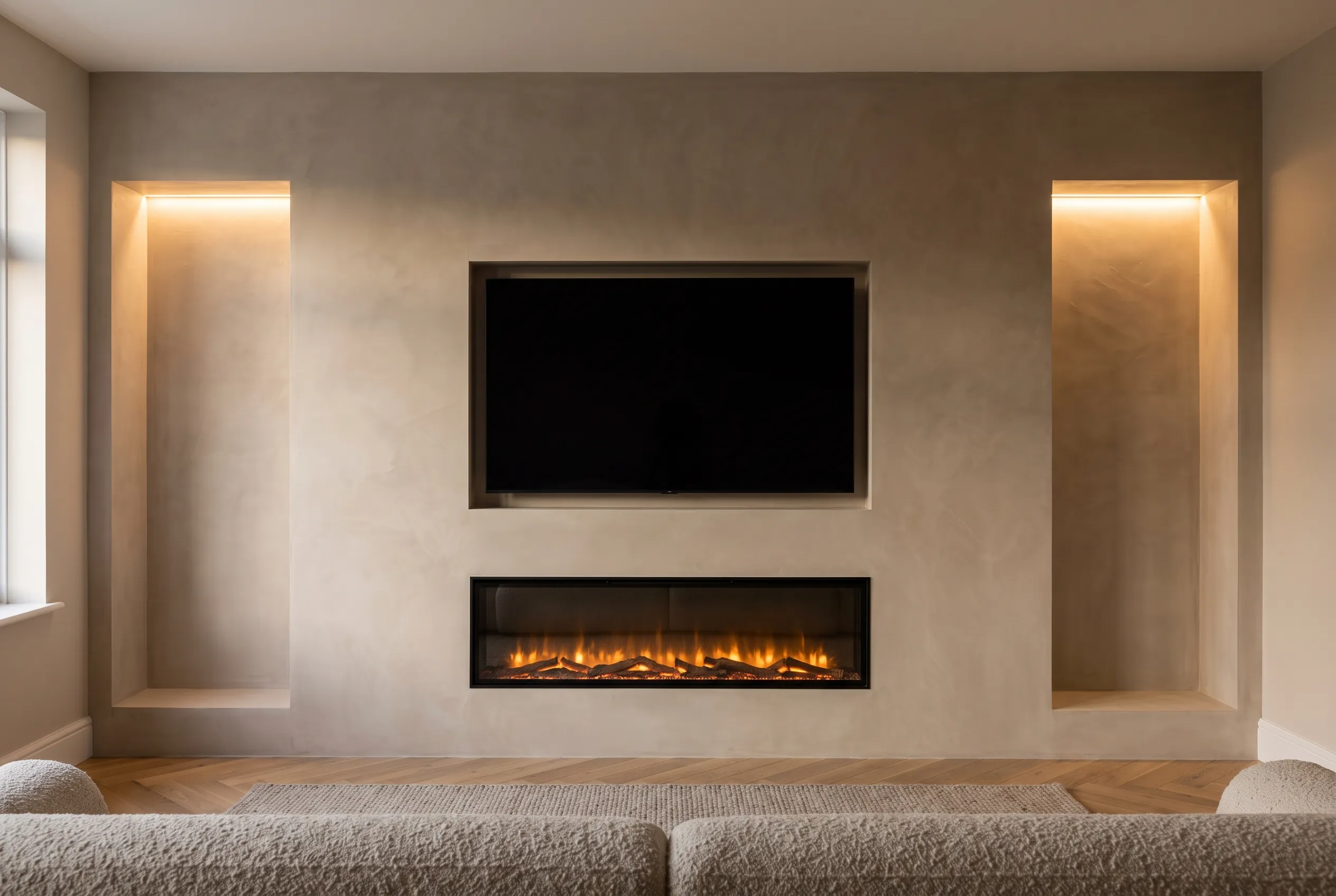
The board underneath decides the result
Most media walls are a timber or metal frame covered in plasterboard. Plasterboard moves slightly at its joints, and a polished finish shows any crack that movement causes. The joints need to be properly taped and the board fixed firmly, so that the finish goes onto a surface that will stay still.
If the wall is being built by a joiner or a media wall installer, it helps to talk before the boards go up. A few decisions at the framing stage save problems later.
Plan the fixings, cables and fire first
Everything that fixes to or passes through the wall should be settled before the finish goes on: the television bracket and the timber behind it, cable routes, sockets, speakers and lighting. Cutting into a finished polished surface leaves marks that are hard to disguise.
Electric fires have their own installation instructions, including ventilation and distances to surrounding materials. Those apply whatever the finish is, and they are checked before the plaster is chosen.
Choosing a finish around a screen
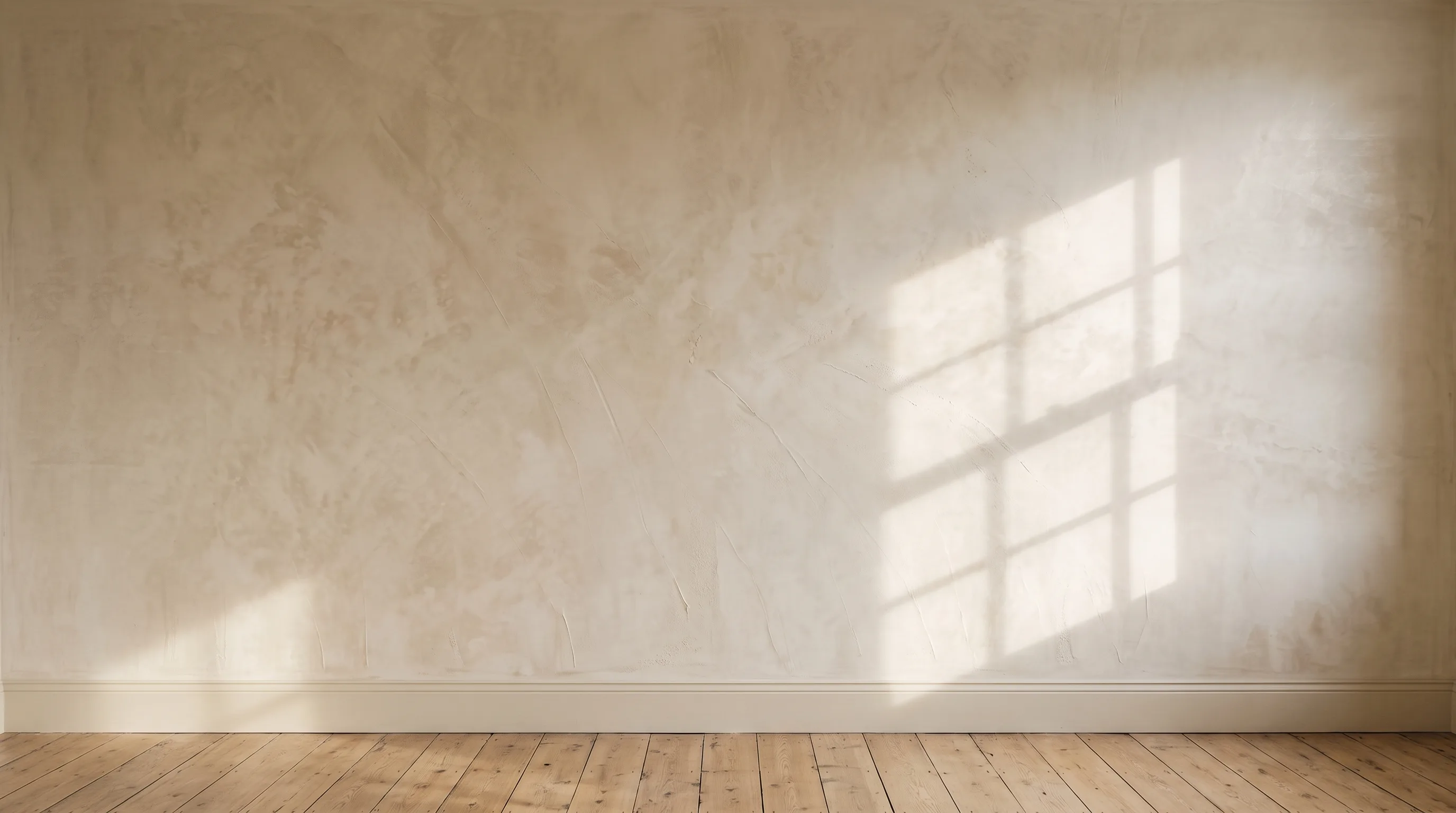
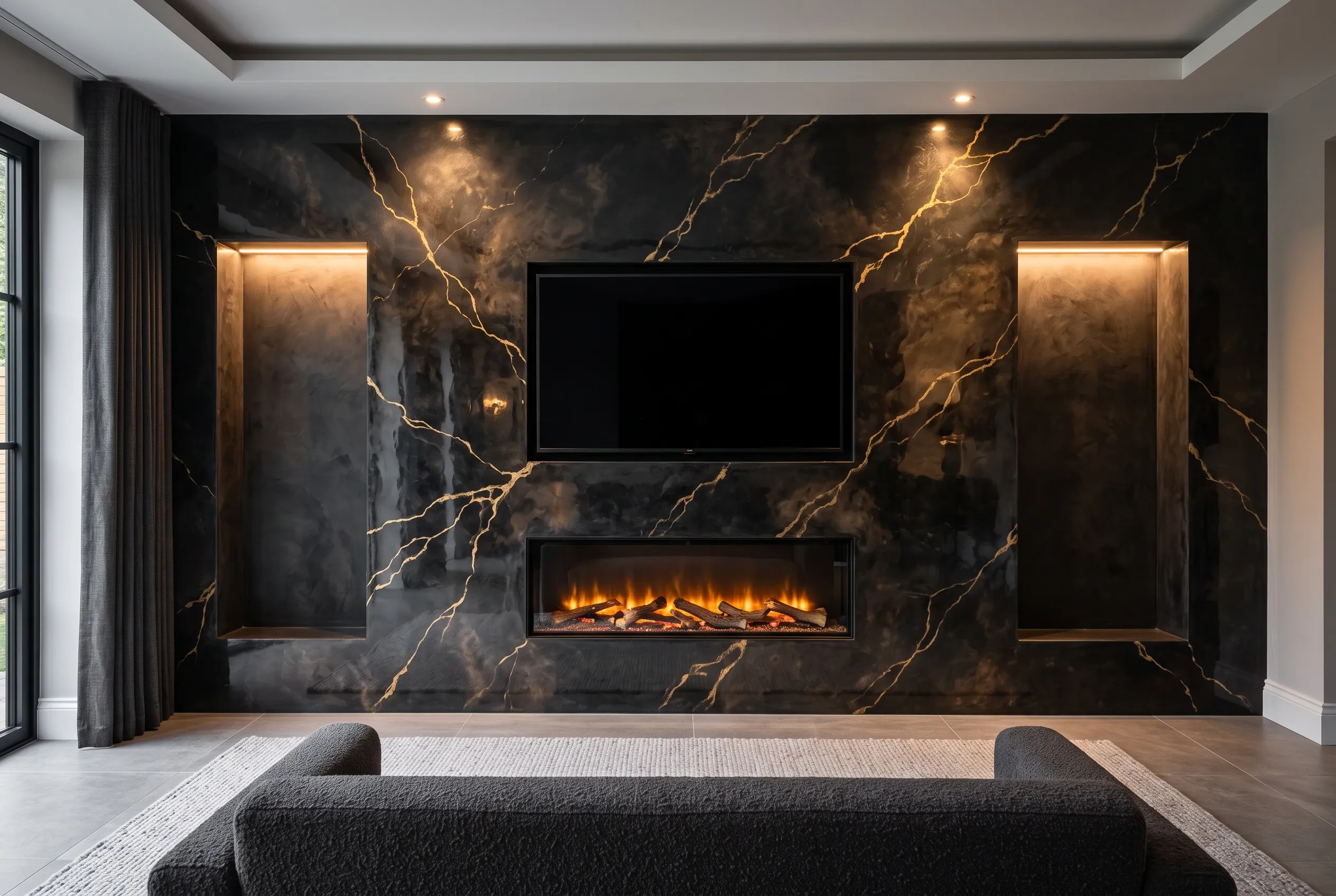
A high-polish finish can pick up reflections from a window or a lamp, which is not what you want around a screen. A satin or matt finish such as Marmorino or stone-effect plaster often works better, with the depth coming from texture rather than shine. Warm greys and stone colours are the most common choices.
Recesses and edges
The recesses for the screen, the fire and any shelves are finished inside as well as on the face, so they look carved from one piece. Clean, straight edges at those openings take time and are part of what separates a good media wall from an ordinary one.
Common questions
Do you build the media wall itself?
Our part is the finish. We work with whoever frames and boards the wall, and are happy to talk to them before the boards go up.
Will it crack at the plasterboard joints?
It should not if the board is firmly fixed and the joints are properly taped and prepared. Movement in the frame is the usual cause of cracks, which is why the boarding stage matters.
Can it go around an electric fire?
Usually, following the fire's installation instructions for ventilation and distances. These are checked before a finish is recommended.
Start with a conversation about your space
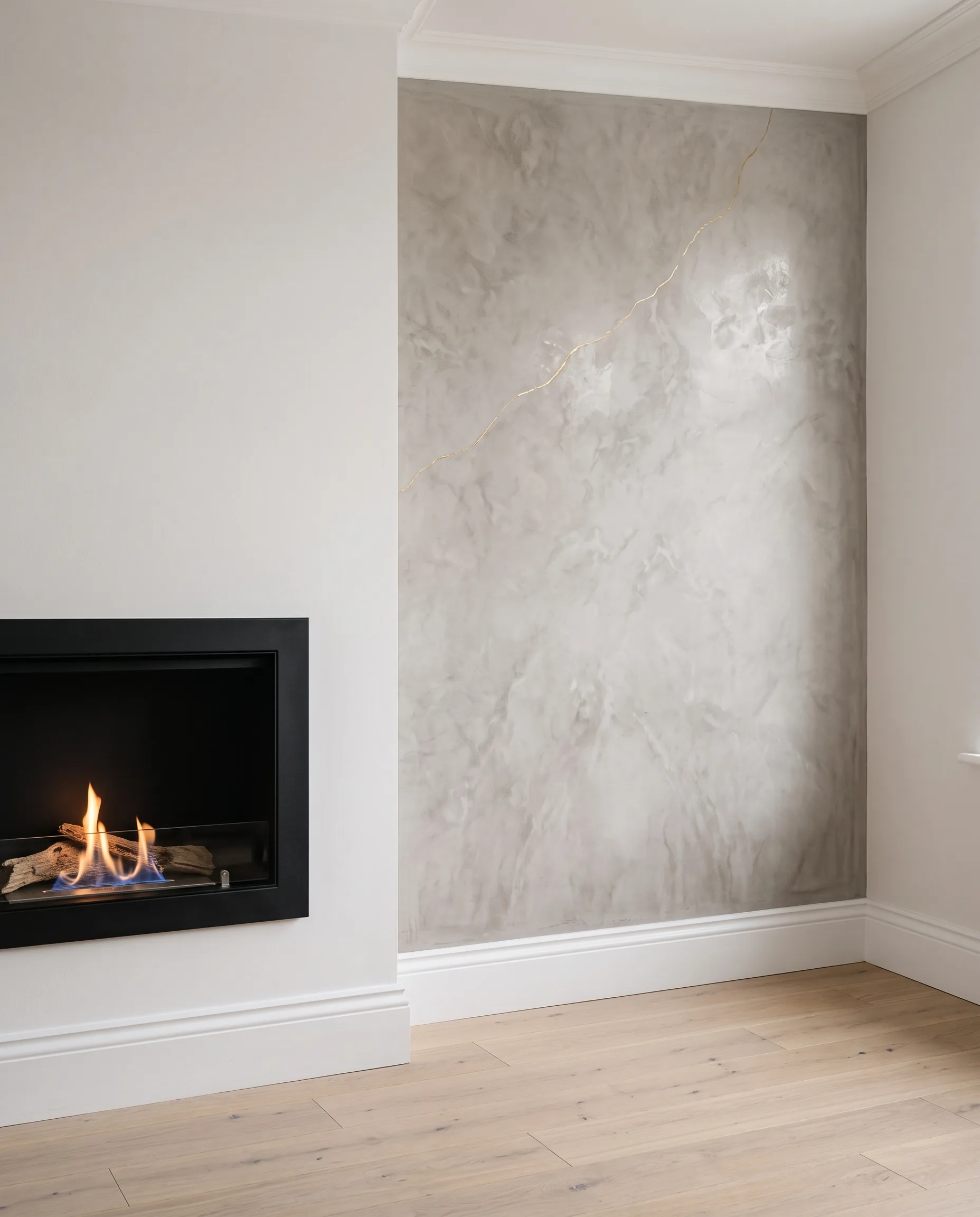
Tell us about the room, the surface and the look you are after. Rough measurements are enough to begin, and we will talk you through suitable finishes and the next steps.