Venetian plaster repair
Venetian plaster repair is often possible without redoing the whole wall, because lime-based finishes can be patched and re-burnished into the surface around them.
We repair chips, scratches, stains and cracks in polished plaster across Chesterfield and north Derbyshire, including finishes applied by someone else.
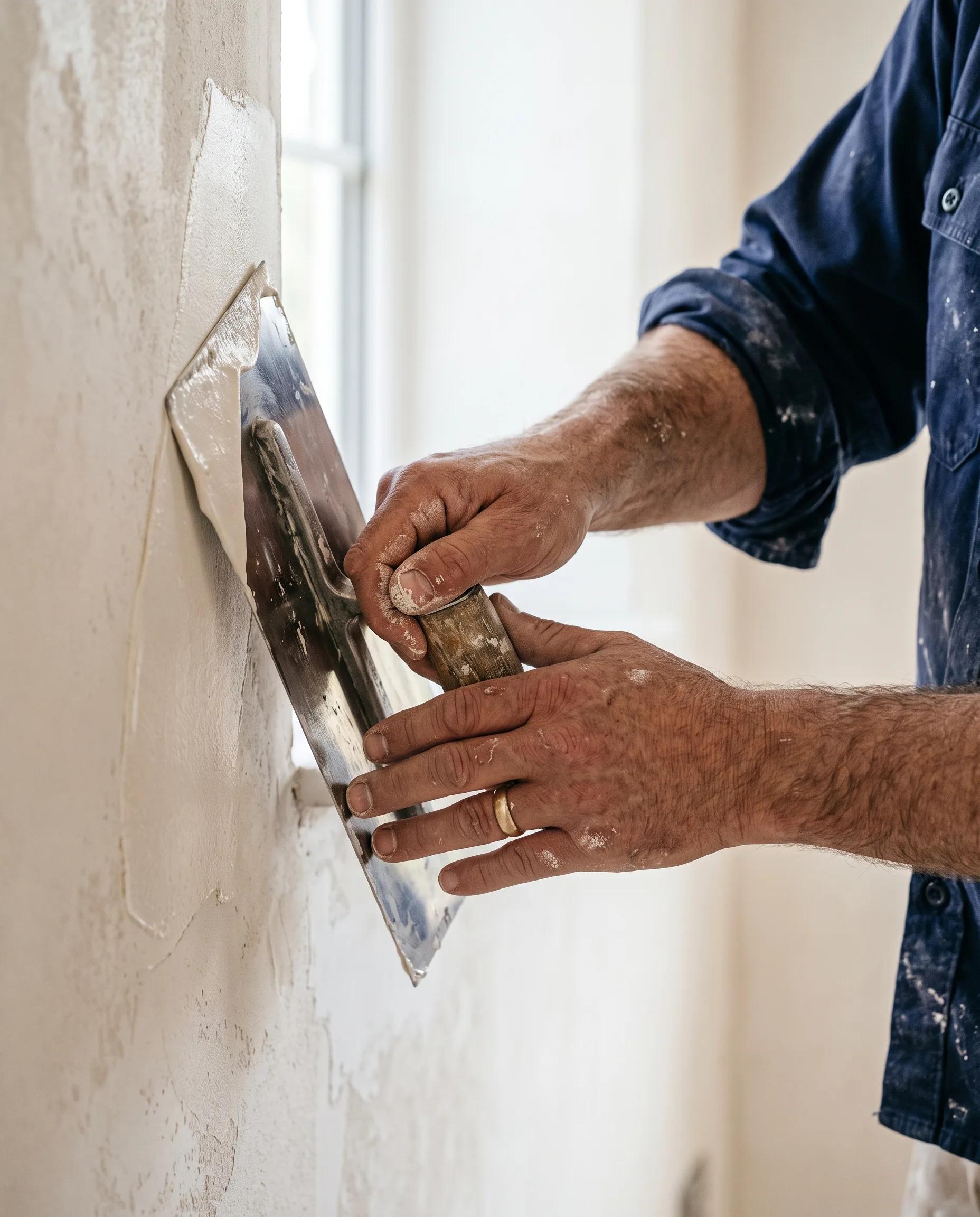
What can usually be repaired
Most damage to a polished finish is local, and can be dealt with locally. These are the repairs that come up most.
- Chips and knocks, from furniture, doors and bags
- Scratches and scuffs in the surface
- Marks and stains that will not wipe away
- Fine cracks, once the cause has been dealt with
- Areas damaged by a leak, once the wall has dried
The honest part: matching
The hard part of a repair is not filling the damage. It is matching the colour, texture and sheen so that the patch disappears. Polished plaster changes a little as it ages, and the original product and colour are often unknown.
Small repairs on a lime-based finish can often be blended in well. Where a patch would still show, the better answer can be to refinish a section of wall to a natural break, such as a corner or an edge, so there is no visible join. You will be told which is likely before any work is agreed.

Cracks have a cause
A crack in the finish usually comes from the wall behind it: movement in plasterboard joints, settlement, or old plaster coming away. Filling the crack without dealing with the cause means it comes back. The cause is looked for first.
Finishes we did not apply
Many repair enquiries are for finishes applied by someone else. That is fine. Identifying what the finish is, lime-based or acrylic, polished or waxed, is the first step, because it decides how it can be repaired.
To start, send photographs, close up and from a distance, and say roughly how old the finish is and what happened. That is usually enough for a first view.
Common questions
Will the repair be invisible?
Sometimes. Small repairs on lime-based finishes often blend in well. Where matching is doubtful, refinishing a section to a natural break gives a better result than a visible patch. You will be told honestly before work is agreed.
Can you repair acrylic Venetian plaster?
Often, but the approach differs from lime-based finishes, and matching can be harder. Identifying the product comes first.



Start with a conversation about your space
Tell us about the room, the surface and the look you are after. Rough measurements are enough to begin, and we will talk you through suitable finishes and the next steps.