Polished plaster for stairwells and hallways
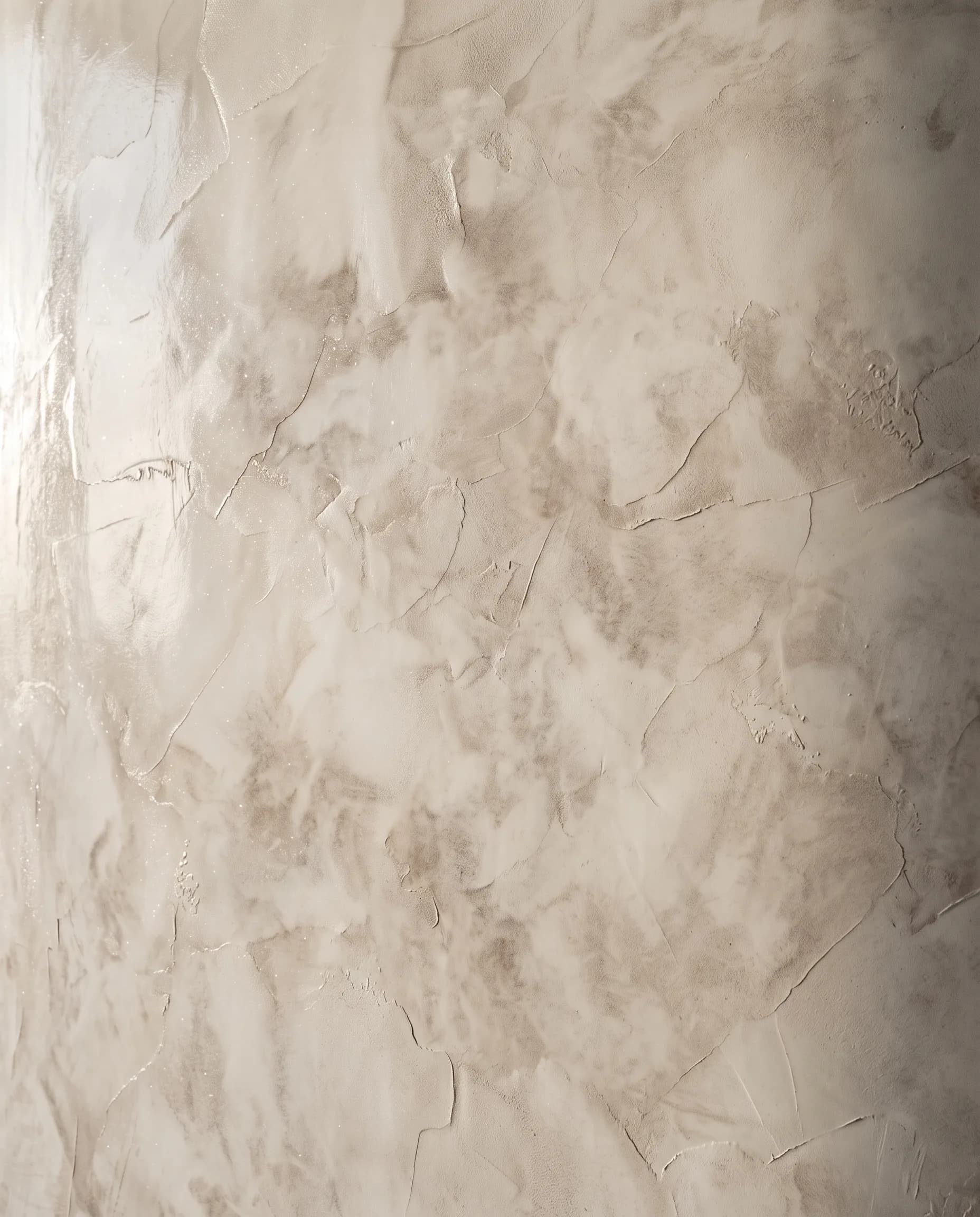
Polished plaster in a stairwell or hallway gives the first space anyone sees a surface with depth, and it follows a curved wall without a single joint.
It is also a busy, awkward space, so the finish, the colour and the access all need planning.
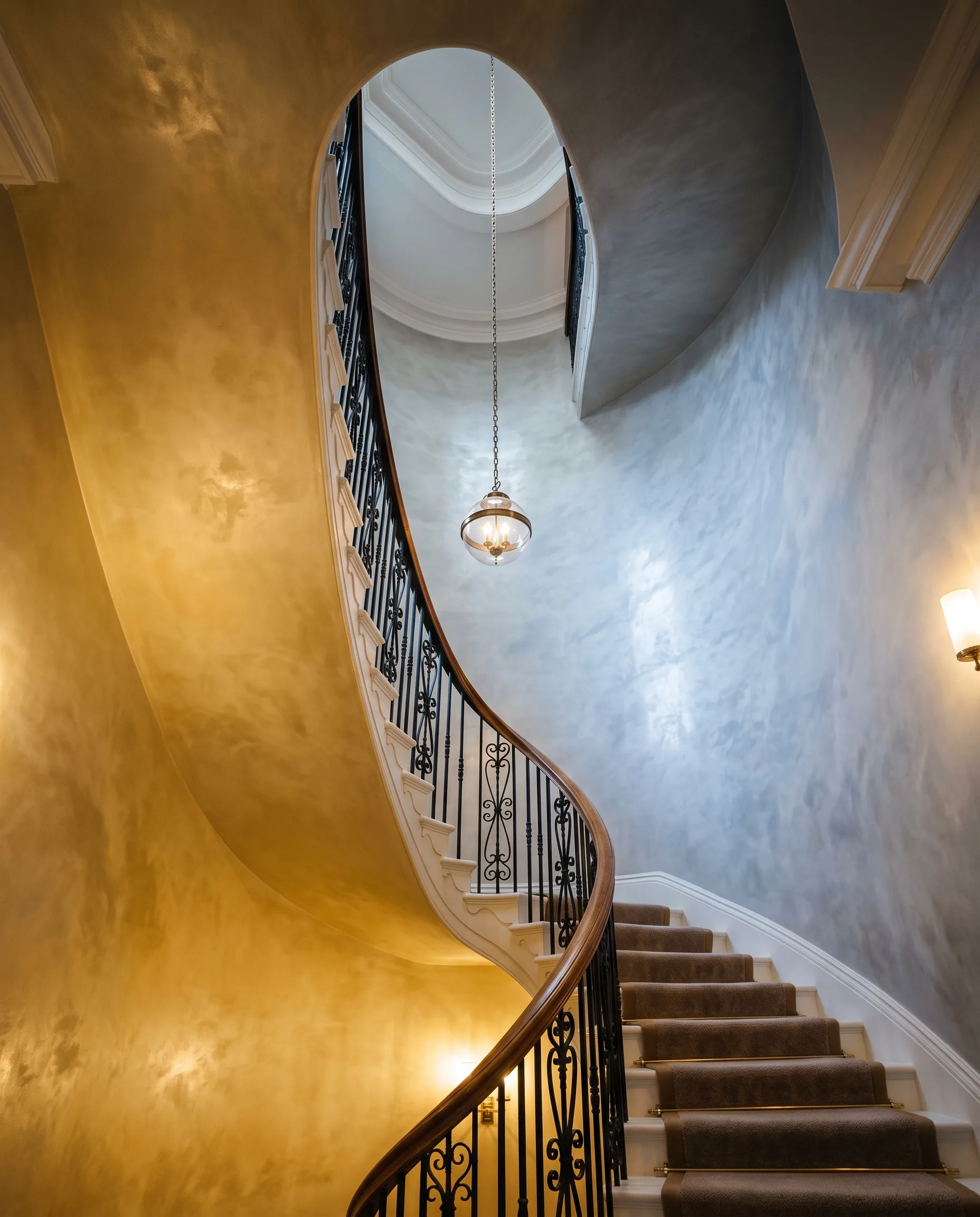
Curves and tall walls
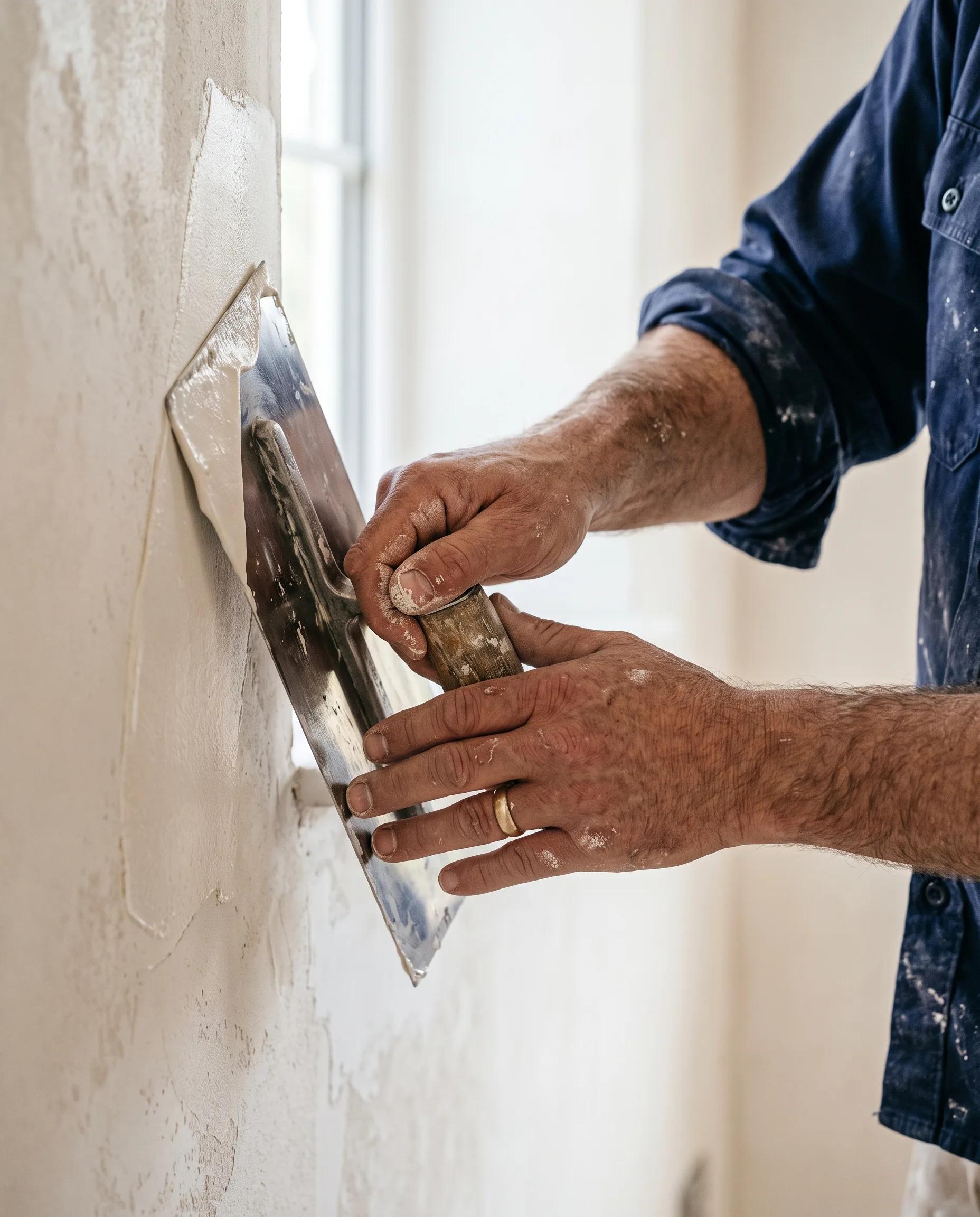
Trowelled finishes suit curves better than almost anything else, because they are applied by hand and follow the wall rather than being cut to fit it. The light turns gradually round a curve instead of breaking at a corner.
Tall walls over a staircase need safe access, usually a stair platform or a tower, which is set up before work starts. That affects the time and the price, so it is part of the first conversation.
Scuffs and hands
A hallway takes bags, shoulders and hands at a steady height. A sealed finish copes better with this than an open, chalky one, and a slightly deeper colour hides more. A two-tone approach, with a darker, harder-wearing lower section and a lighter finish above, is practical as well as good looking.
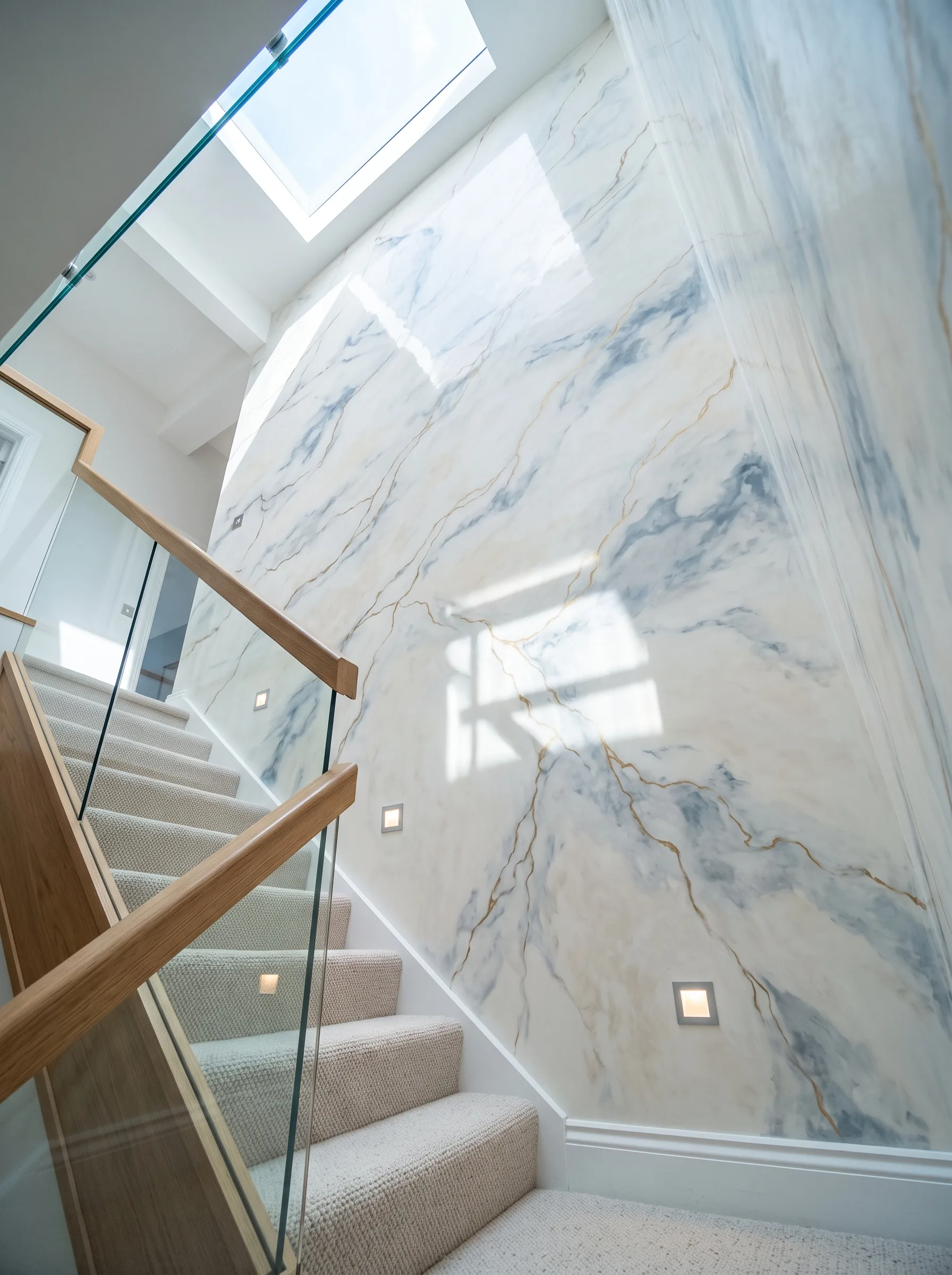
Light in a hallway
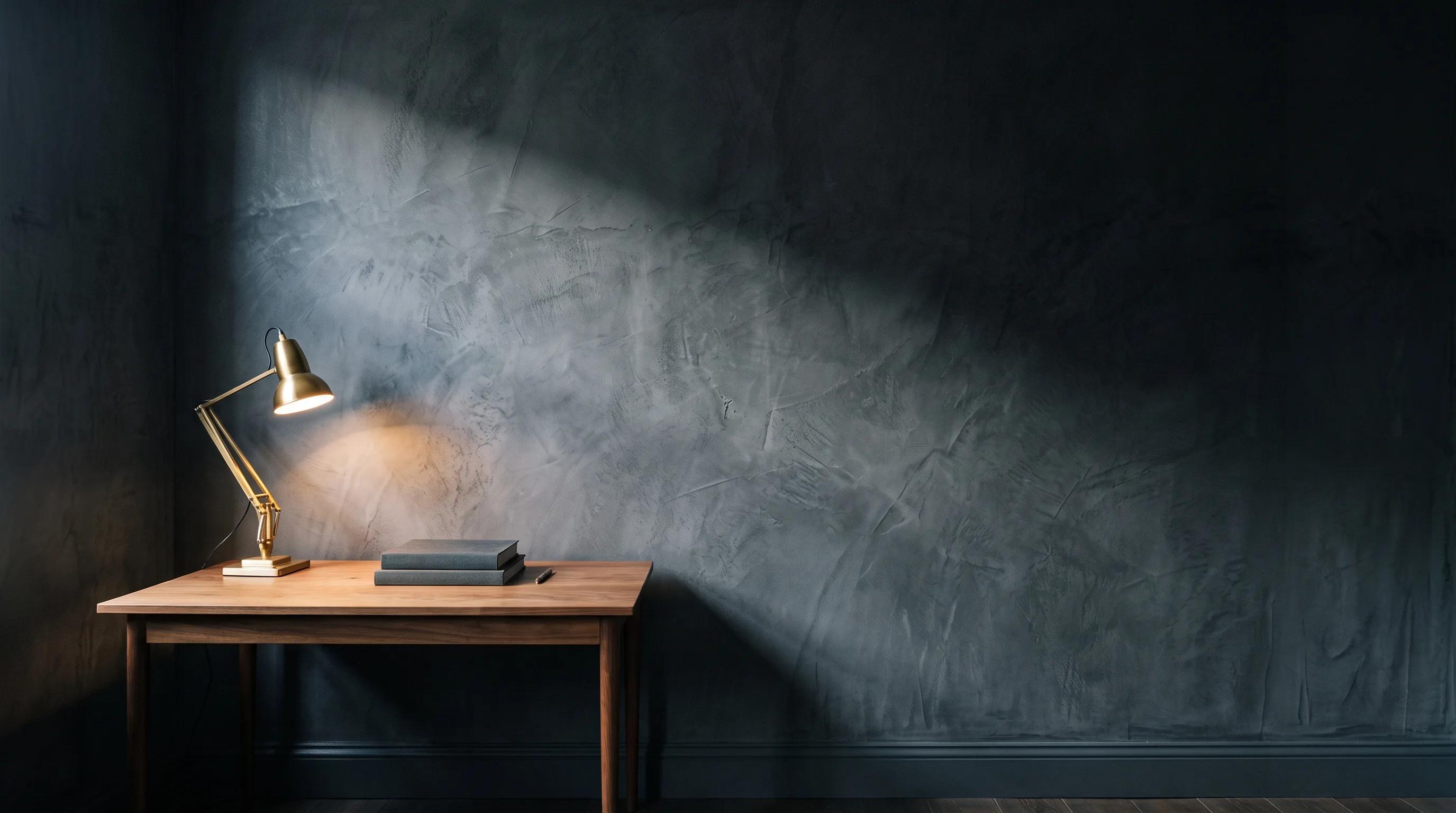
Hallways are often lit from one window or a fanlight, and from overhead at night. A lighter finish with some sheen spreads the light further, and side light from a window shows off the movement in the plaster.
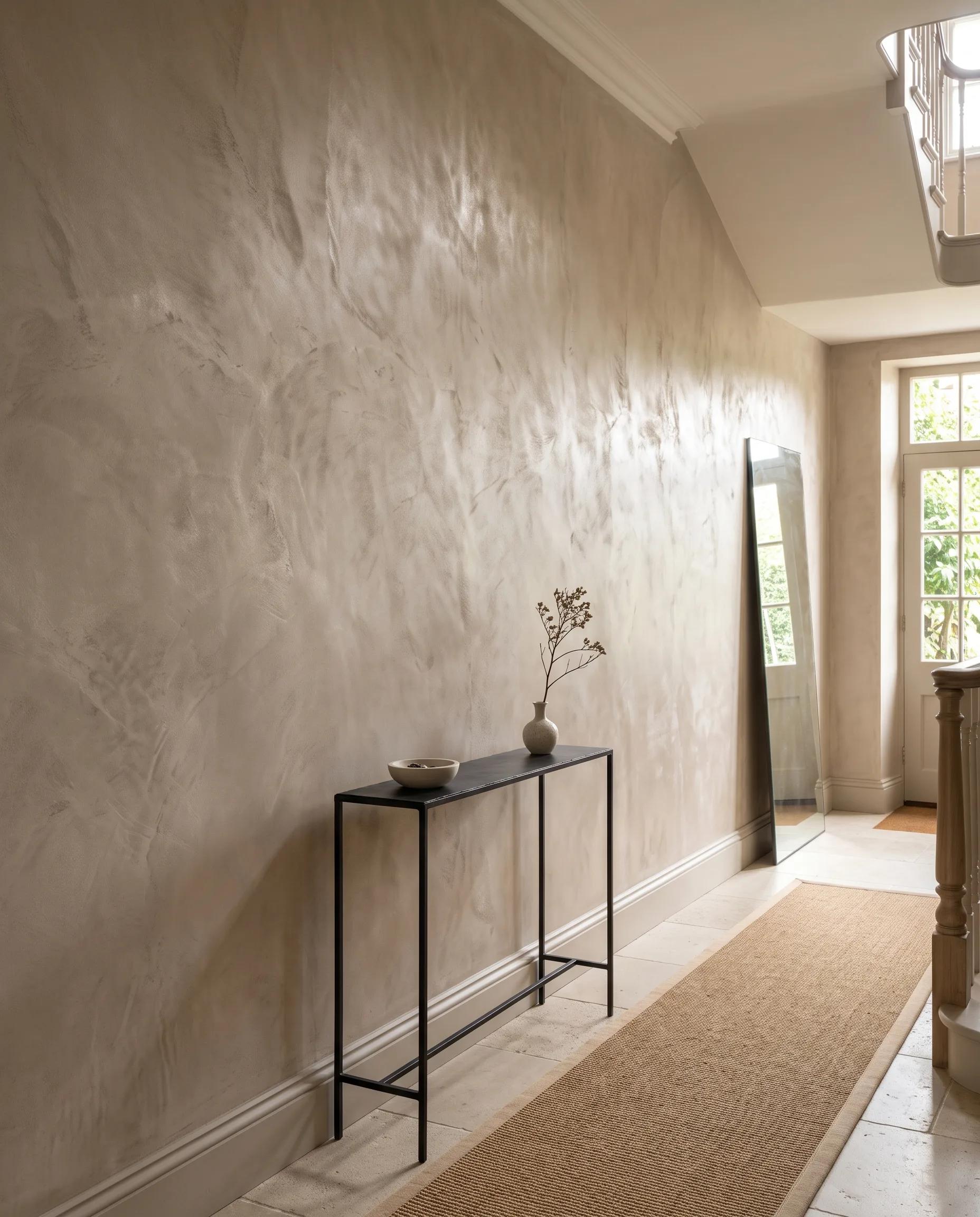
Entrance halls
An entrance hall is a good place for a finish with more presence than you would choose for a living room, because you pass through it rather than sit in it. See the finishes compared for the options.
Common questions
Can the whole stairwell be done at once?
Yes, and it is usually better, because a stairwell reads as one space and matching later work exactly is not guaranteed.
Will it mark where people brush past?
Any wall does. A sealed finish and a deeper colour at hand height make marks less visible and easier to wipe away.
Start with a conversation about your space
Tell us about the room, the surface and the look you are after. Rough measurements are enough to begin, and we will talk you through suitable finishes and the next steps.