Marmorino polished plaster
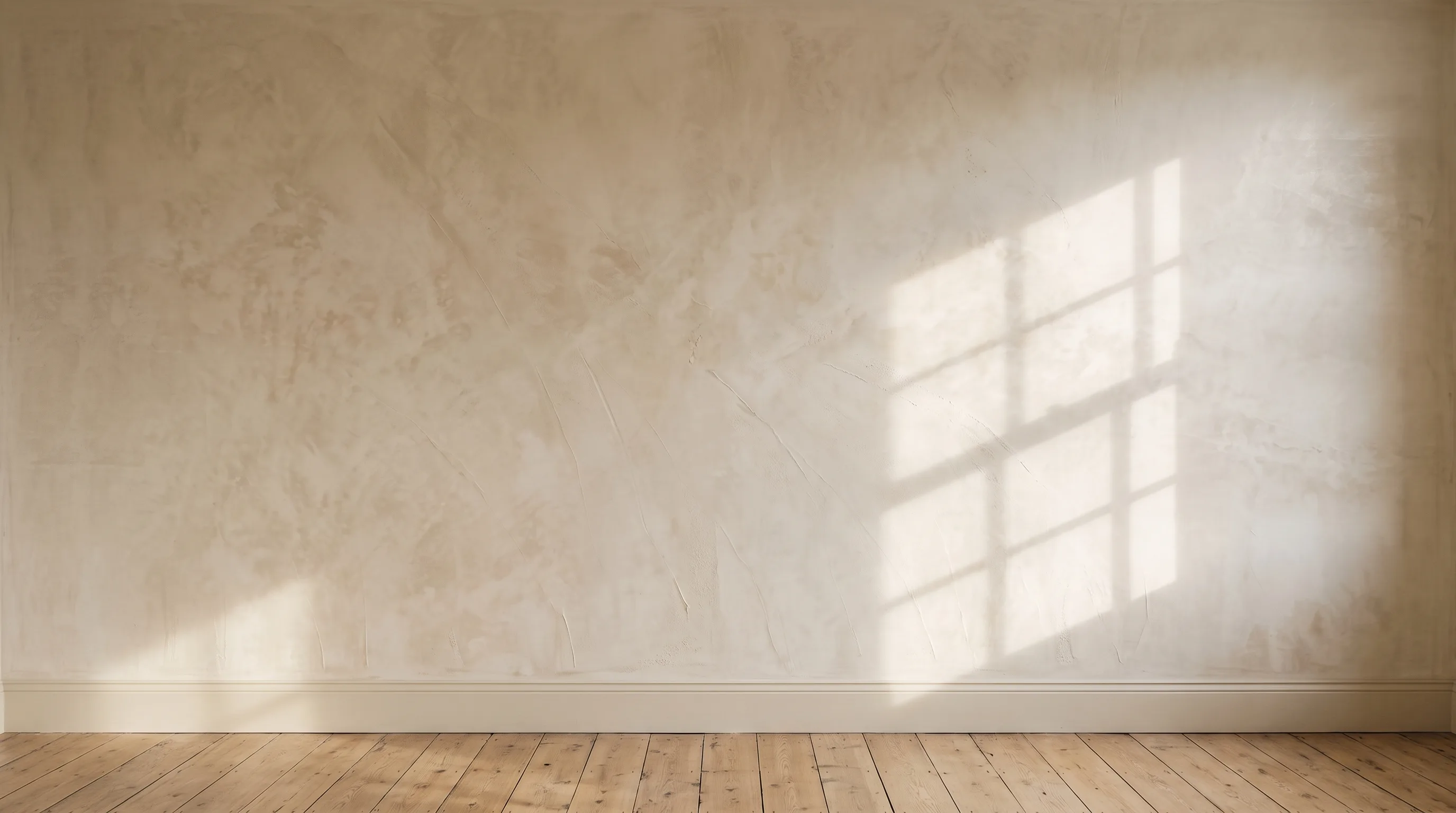
Marmorino polished plaster is a lime and marble finish with a coarser grain than polished Venetian plaster, giving a matt to satin surface with the calm character of natural stone.
We apply Marmorino in homes and interiors across Chesterfield and north Derbyshire, where a wall needs texture and warmth more than shine.
What Marmorino is
Marmorino has been used in Venice for centuries, inside buildings and out. Like Venetian plaster it is made from lime and crushed marble, but the marble is coarser, so the surface has more visible grain and less gloss.
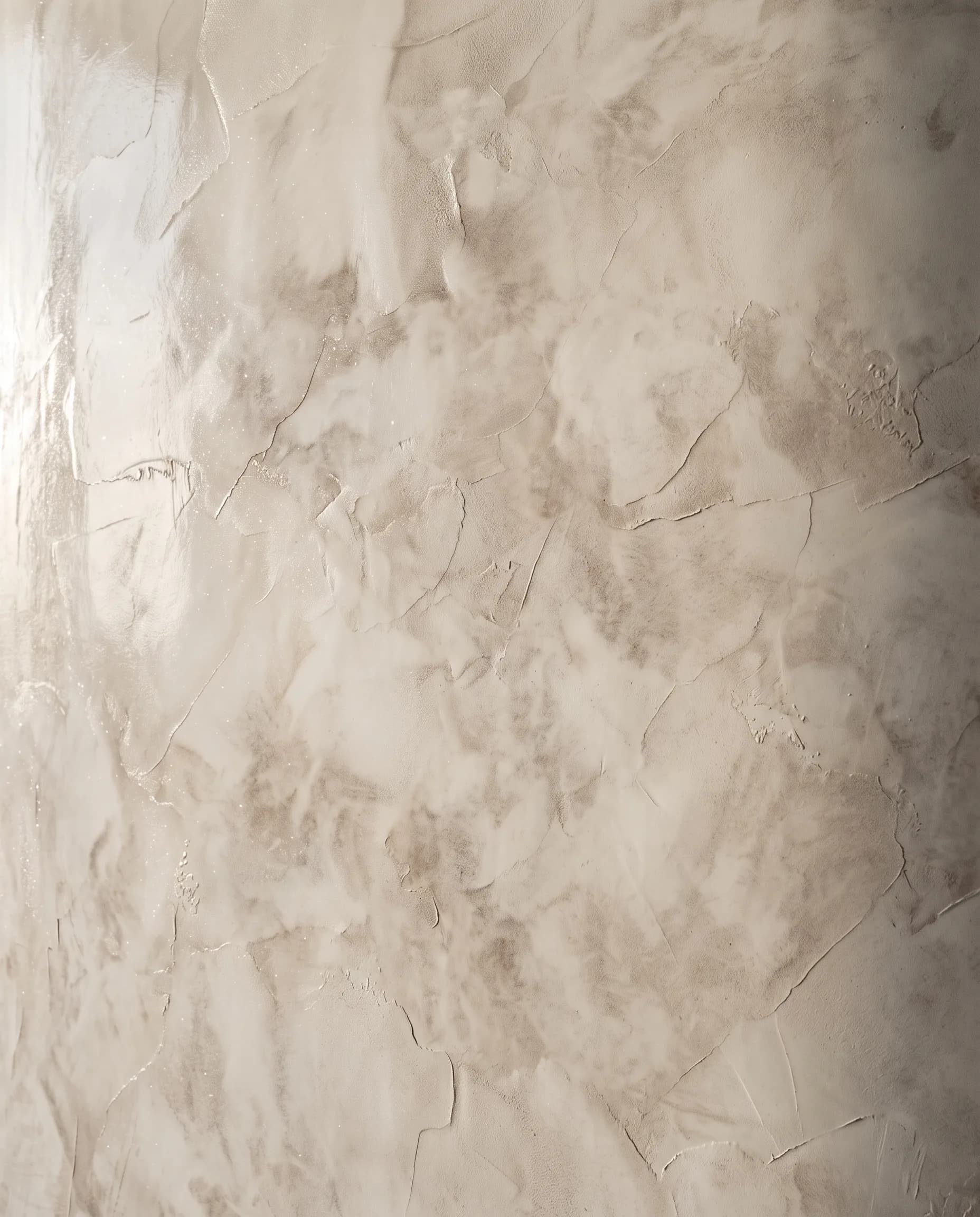
It can be left matt and chalky, or compacted with the trowel to a soft satin sheen. Either way the texture stays, and it looks closer to honed stone than to polished marble.
The colour is mixed through the plaster, so Marmorino can be anything from white and soft off-whites to warm stone, clay and grey. White Marmorino keeps its grain, so a pale wall still has texture rather than looking flat.
Where it suits
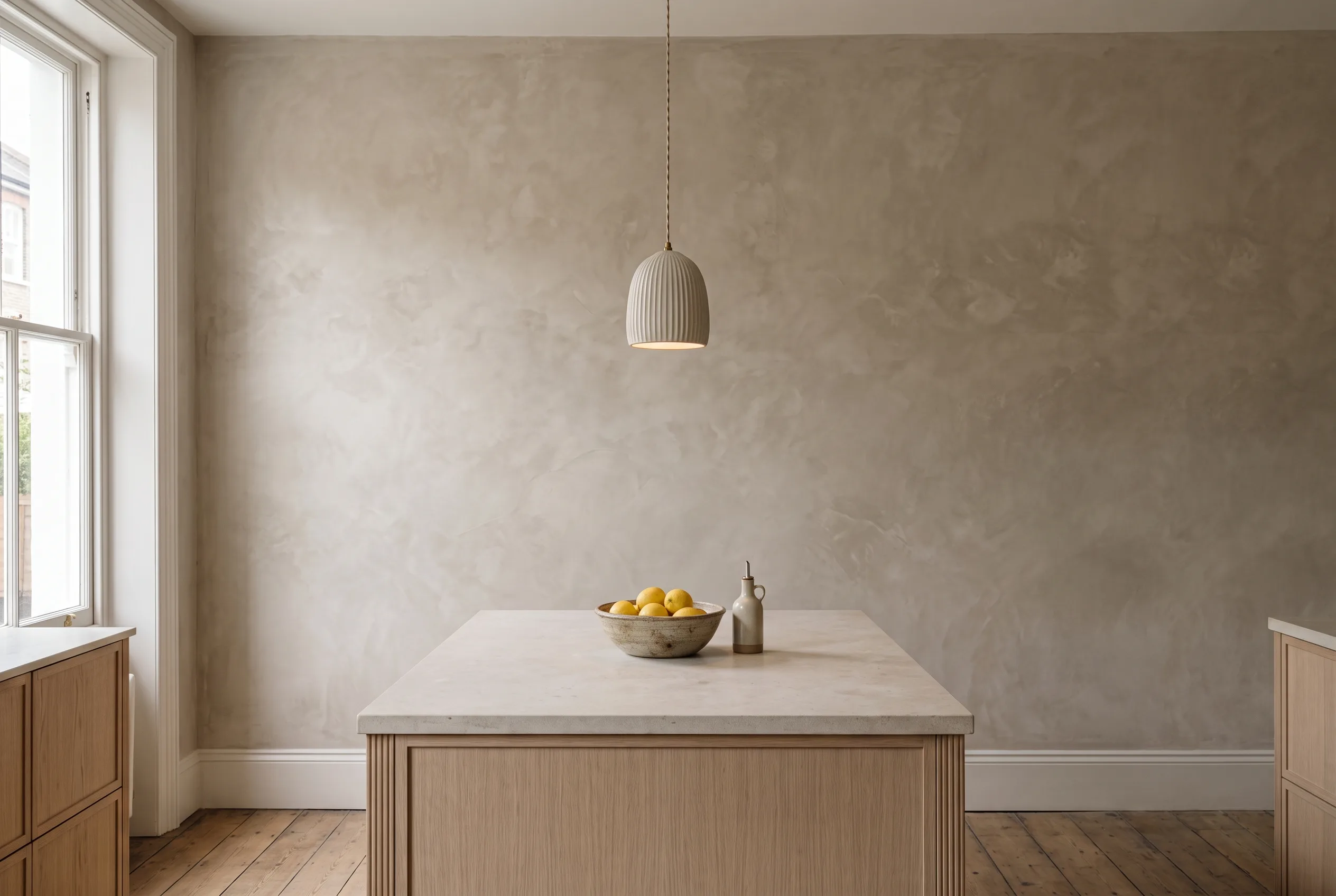
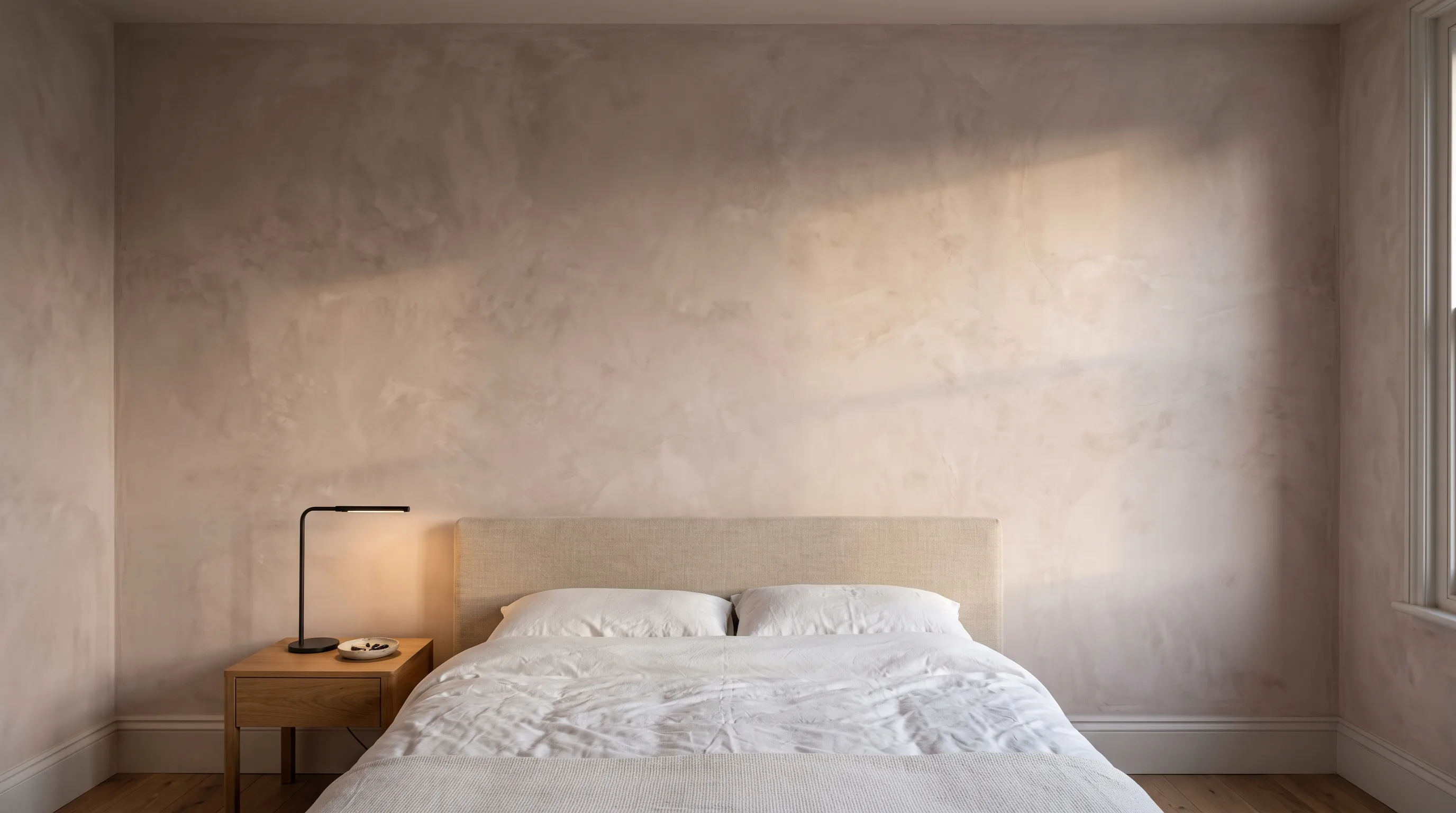
Marmorino suits rooms where you want warmth and texture without reflections: living rooms, dining rooms and bedrooms, the wall behind a kitchen island, and around a fireplace. Because it is not highly polished, it is forgiving under bright or low lighting.
In older, solid-walled houses, a lime-based finish can be a sympathetic choice, because lime lets a wall breathe in a way many modern paints do not. Whether it is right for a particular wall depends on its condition and what is on it now, which is checked first.
Marmorino against Venetian plaster
Both are lime and marble. The difference is the grain and the finish.
| Marmorino | Polished Venetian plaster | |
|---|---|---|
| Grain | Coarser, visible texture | Fine, smooth |
| Sheen | Matt to satin | Satin to high polish |
| Character | Honed stone | Polished marble with depth |
| Under bright light | Forgiving, few reflections | Can reflect lamps and windows |
Care
Dust it or wipe it gently with a soft damp cloth. A sealed or waxed Marmorino is easier to keep clean in busy rooms and kitchens. Avoid scourers and strong cleaners, and never use anything acidic on a lime finish.
Common questions
Is Marmorino the same as Venetian plaster?
They are close relatives, both lime and marble. Marmorino uses a coarser marble, so it has more texture and less shine.
Can Marmorino go in a bathroom?
Sealed, it can suit bathroom walls away from direct water. Inside a shower, tadelakt is the usual lime finish. See polished plaster for bathrooms.

Start with a conversation about your space
Tell us about the room, the surface and the look you are after. Rough measurements are enough to begin, and we will talk you through suitable finishes and the next steps.